
We read your photo as:
State two differences between heat and temperature, and two effects of heat on matter.
Physics
ScanSolve AI Answer
Here are the answers to your questions:
d) State two differences between heat and temperature. (4 marks)
- Nature: Heat is a form of energy (thermal energy) that is transferred between objects due to a temperature difference, while temperature is a measure of the average kinetic energy of the particles within a substance.
- Measurement: Heat is measured in Joules () or calories, while temperature is measured in Kelvin (), Celsius (), or Fahrenheit ().
e) State two effects of heat on matter. (3 marks)
- Expansion: Most substances expand (increase in volume) when heated and contract when cooled.
- Change of State: Heat can cause matter to change its physical state, for example, from solid to liquid (melting) or liquid to gas (boiling/evaporation). (Other valid answers include: Chemical changes, increase in temperature, change in electrical resistance, etc.)
Was this helpful?
Still stuck on this one?
Ask a follow-up, and the answer starts from this question.
Got a different question?Ask your own question
More Physics Questions
QExplain the importance of heat, list two materials that can be heated, and two materials that melt.QWhat is the relationship between the different states of matter and temperature changes?QA) One similarity between heat and temperature is that both are related to the internal energy of a…QI) Heat is a form of energy that is transferred between objects or systems due to a temperature…QDefine matter and state two of its properties.
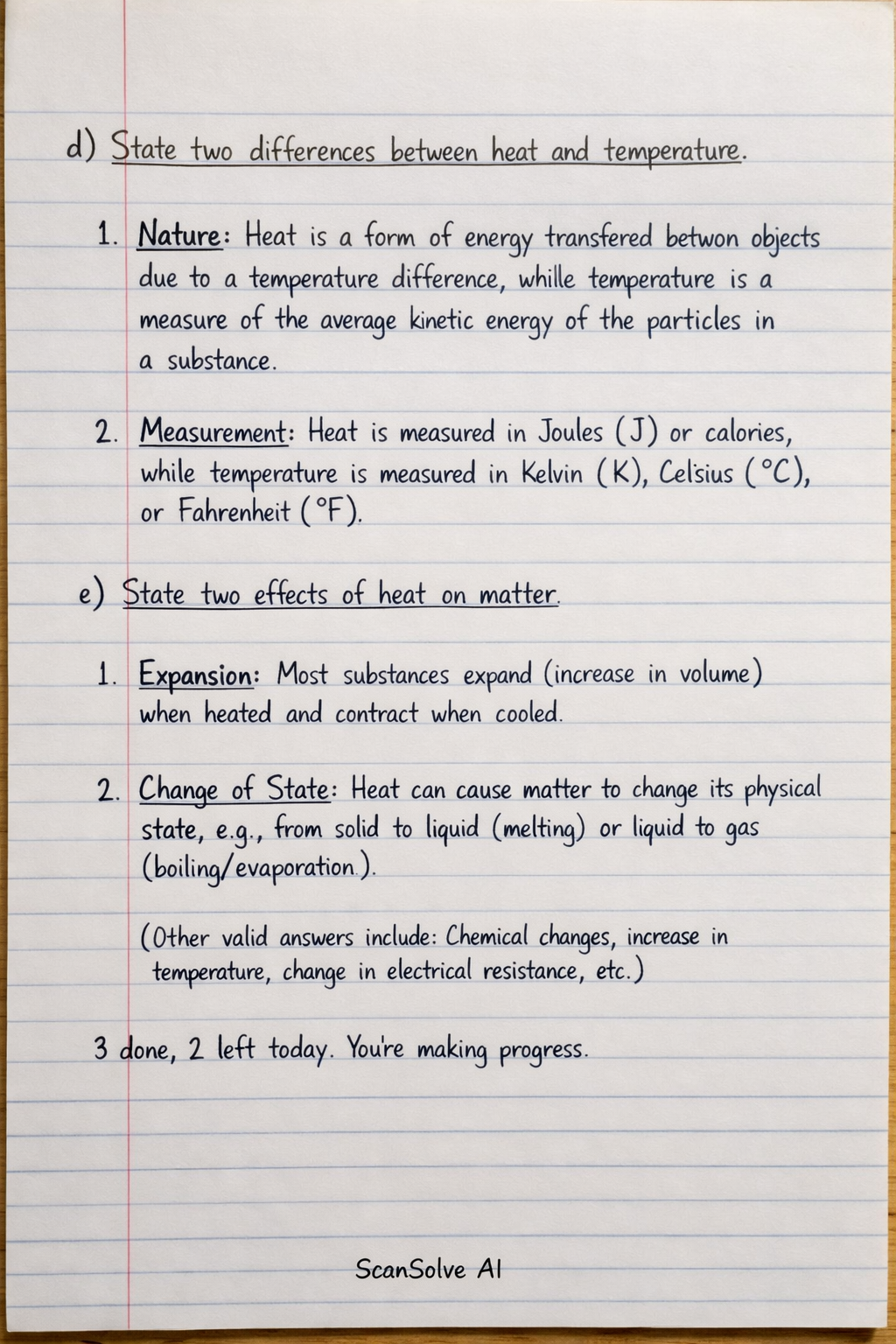
Handwritten Step-by-Step Solution
Get this as a handwritten image on WhatsApp — like a tutor wrote it for you.
Try on WhatsApp