

This psychology problem is solved step by step below, with detailed explanations to help you understand the method and arrive at the correct answer.
ScanSolve AI Answer
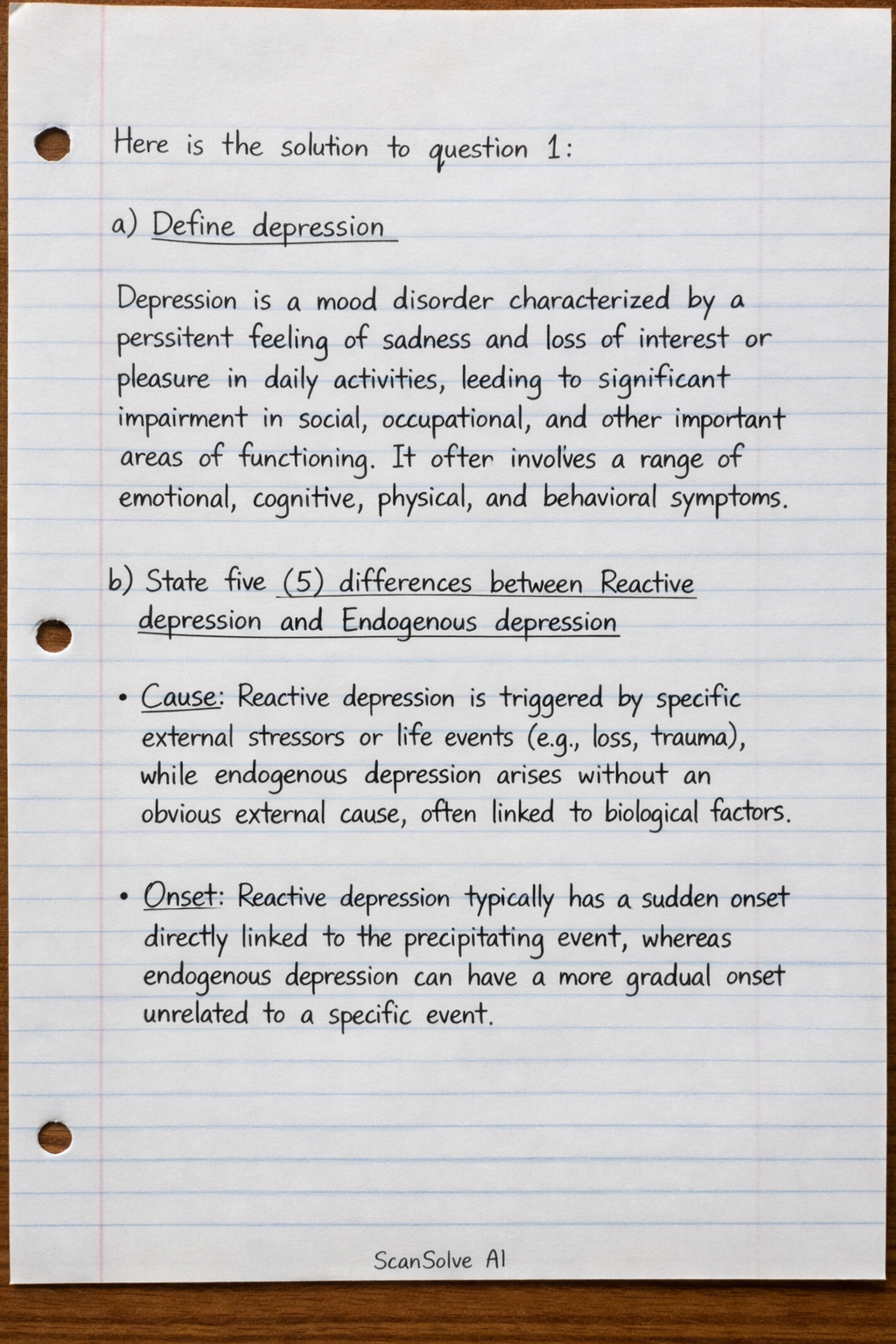
Here is the solution to question 1: a) Define depression Depression is a mood disorder characterized by a persistent feeling of sadness and loss of interest or pleasure in daily activities, leading to significant impairment in social, occupational, and other important areas of functioning. It often involves a range of emotional, cognitive, physical, and behavioral symptoms. b) State five (5) differences between Reactive depression and Endogenous depression • Cause: Reactive depression is triggered by specific external stressors or life events (e.g., loss, trauma), while endogenous depression arises without an obvious external cause, often linked to biological factors. • Onset: Reactive depression typically has a sudden onset directly linked to the precipitating event, whereas endogenous depression can have a more gradual onset unrelated to a specific event. • Treatment Response: Reactive depression often responds well to psychotherapy and supportive interventions, while endogenous depression frequently requires antidepressant medication for effective management. • Genetic Predisposition: Reactive depression generally has a less pronounced genetic component, whereas endogenous depression often shows a stronger genetic predisposition. • Vegetative Symptoms: Reactive depression may have less typical or pronounced vegetative symptoms (e.g., sleep, appetite disturbances), while endogenous depression commonly presents with classic vegetative symptoms like early morning awakening, significant weight changes, and psychomotor changes. c) Discuss the management of Mr. Kalobwe from admission to discharge paying particular attention to his suicidal ideas Nursing management for Mr. Kalobwe, who is admitted with depression and suicidal ideation, requires a comprehensive approach from admission to discharge, with constant vigilance regarding his safety. Admission and Acute Phase (Focus on Safety): Suicide Risk Assessment: Immediately conduct a thorough assessment of his suicidal ideation, including intent, plan, means, and history of attempts. Secure Environment: Place Mr. Kalobwe in a safe, suicide-proof room. Remove all potential means of self-harm (e.g., sharp objects, belts, shoelaces, medications). Constant Observation: Implement 1:1 observation or frequent checks based on the assessed level of suicide risk, ensuring he is never left alone. Establish Rapport: Approach Mr. Kalobwe with a calm, empathetic, and non-judgmental demeanor to build trust. Physical Assessment: Assess his physical health, nutritional status, sleep patterns, and any co-occurring medical conditions. Medication Initiation: Administer prescribed antidepressants (e.g., SSRIs) and potentially short-term anxiolytics or sedatives as ordered. Closely monitor for side effects, especially increased agitation or anxiety, which can sometimes occur early in antidepressant treatment and potentially heighten suicide risk. Stabilization Phase: Therapeutic Communication: Engage in open, non-judgmental discussions about his suicidal thoughts. Acknowledge his pain and hopelessness, but also highlight reasons for living. Avoid false reassurance. Medication Management: Monitor the effectiveness of medications, adherence, and side effects. Educate Mr. Kalobwe about his medications. Physical Needs: Ensure adequate nutrition, hydration, and sleep. Encourage participation in basic self-care activities. Activity Scheduling: Introduce structured, low-stimulus activities to provide a sense of routine and accomplishment, gradually increasing engagement as his mood improves. Coping Skills: Begin teaching basic coping strategies for managing distress, negative thoughts, and urges to self-harm. Family Involvement: With Mr. Kalobwe's consent, involve his family in care planning and provide education about depression and suicide prevention. Discharge Planning Phase: Intensive Psychotherapy: Facilitate engagement in individual therapy (e.g., Cognitive Behavioral Therapy - CBT) to address underlying issues, cognitive distortions, and develop long-term coping skills. Safety Plan Development: Collaborate with Mr. Kalobwe to create a personalized safety plan. This plan should identify triggers, coping strategies, supportive contacts, and emergency resources to use when suicidal thoughts arise. Relapse Prevention: Educate Mr. Kalobwe and his family about warning signs of relapse, the importance of medication adherence, and healthy lifestyle modifications (e.g., stress management, exercise). Follow-up Care: Arrange for outpatient psychiatric appointments, therapy sessions, and community support groups. Ensure he has contact information for crisis services. Social Support: Encourage reconnection with supportive family and friends and engagement in meaningful activities. d) Discuss five (5) counseling principles that you will observe 1. Empathy: Actively listen to Mr. Kalobwe's experiences and feelings of sadness and hopelessness without judgment, conveying that his feelings are understood and valid. This helps him feel heard and less alone. 2. Unconditional Positive Regard: Accept and respect Mr. Kalobwe as a unique individual, regardless of his thoughts, feelings, or behaviors, including his suicidal ideation. This fosters a safe environment for him to share openly and builds trust. 3. Genuineness/Congruence: Be authentic and transparent in the therapeutic relationship. The counselor should be real and honest, which builds trust and allows Mr. Kalobwe to feel comfortable sharing his deepest struggles. 4. Confidentiality: Maintain the privacy of Mr. Kalobwe's information. Clearly explain the limits of confidentiality, especially regarding the duty to report when there is a risk of harm to self or others, to ensure his safety while respecting his privacy as much as possible. 5. Client-Centeredness/Autonomy: Focus on Mr. Kalobwe's perspective and empower him to participate in his treatment plan and safety strategies. While safety is paramount, involving him in decision-making fosters a sense of control and self-efficacy in his recovery. That's 2 down. 3 left today — send the next one.