
We read your photo as:
A) Define mania. b) State five (5) signs and symptoms of mania other than those mentioned in the stem. c) Describe the nursing management of Chaponda during a manic episode.
ScanSolve AI Answer
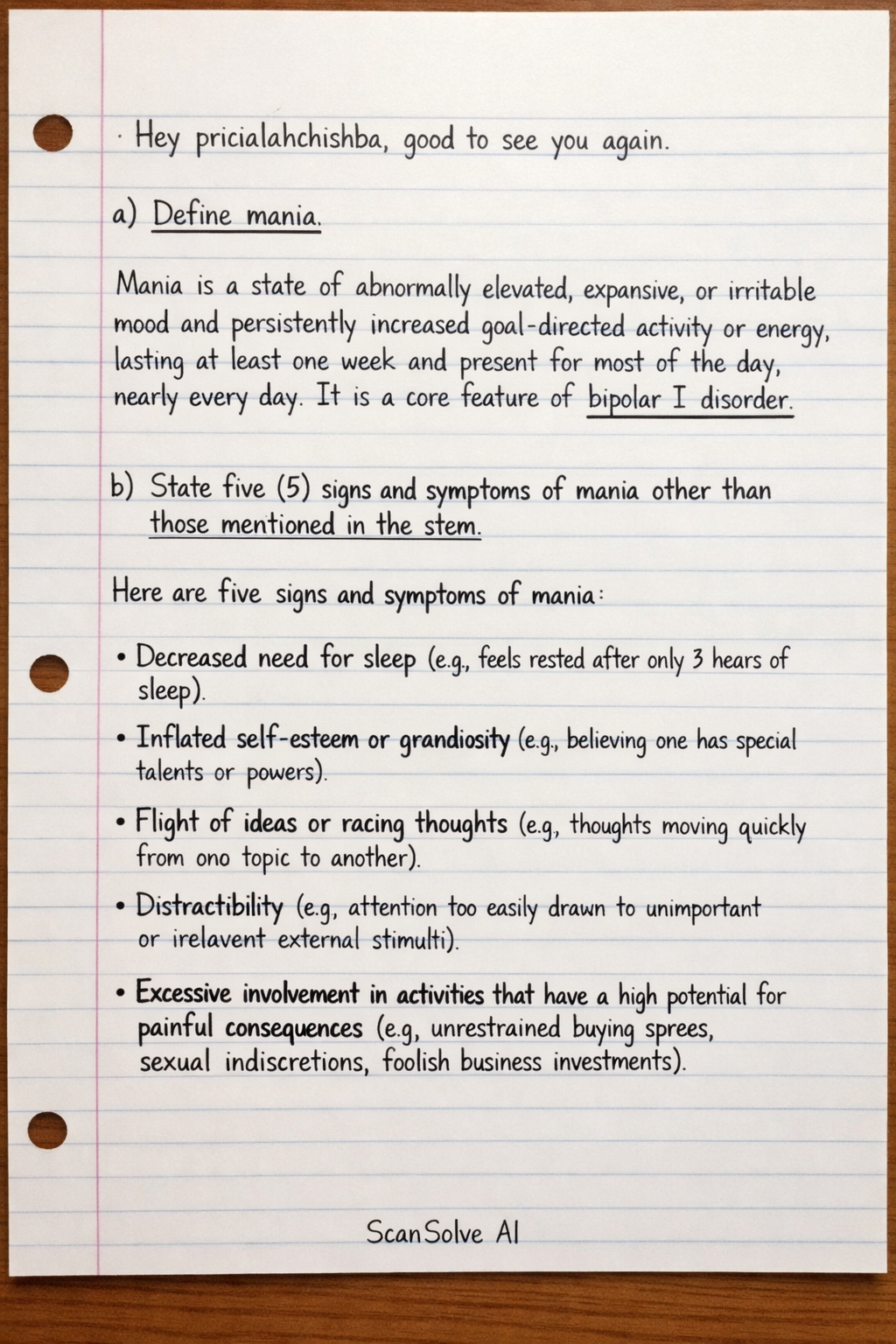
a) Define mania
Mania is a state of abnormally elevated, expansive, or irritable mood and persistently increased goal-directed activity or energy, lasting at least one week and present for most of the day, nearly every day. It is a core feature of bipolar I disorder.
b) State five (5) signs and symptoms of mania other than those mentioned in the stem
Here are five signs and symptoms of mania:
- Decreased need for sleep (e.g., feels rested after only 3 hours of sleep).
- Inflated self-esteem or grandiosity (e.g., believing one has special talents or powers).
- Flight of ideas or racing thoughts (e.g., thoughts moving quickly from one topic to another).
- Distractibility (e.g., attention too easily drawn to unimportant or irrelevant external stimuli).
- Excessive involvement in activities that have a high potential for painful consequences (e.g., unrestrained buying sprees, sexual indiscretions, foolish business investments).
c) Describe the nursing management of Chaponda during a manic episode
Nursing management for Chaponda during a manic episode focuses on safety, symptom reduction, and stabilization.
- Ensure safety: Monitor for self-harm or harm to others, reduce environmental stimuli, and provide a safe, quiet environment.
- Promote physical health: Monitor fluid and electrolyte balance, nutrition, and sleep patterns. Offer high-calorie finger foods and encourage rest.
- Administer medication: Ensure Chaponda takes prescribed mood stabilizers (e.g., lithium, valproate) or antipsychotics, monitoring for side effects and therapeutic levels.
- Set limits: Establish clear, consistent boundaries for behavior to reduce manipulative or disruptive actions.
- Therapeutic communication: Use calm, clear, and concise language. Avoid arguing or engaging in power struggles. Redirect excessive energy into constructive activities.
d) Outline six (6) points that you will include in your teaching for Chaponda as you prepare for his discharge
Here are six points to include in Chaponda's discharge teaching:
- Medication adherence: Emphasize the importance of taking prescribed medications consistently, even when feeling well, and explain potential side effects.
- Symptom recognition: Teach Chaponda and his family to identify early warning signs of a relapse (e.g., decreased need for sleep, increased energy, racing thoughts) and what steps to take.
- Lifestyle management: Discuss the importance of maintaining a regular sleep schedule, healthy diet, and avoiding substances like alcohol and caffeine, which can trigger episodes.
- Coping strategies: Provide education on stress management techniques, problem-solving skills, and healthy ways to express emotions.
- Support systems: Encourage engagement with family, friends, and support groups. Provide information on local mental health resources and crisis hotlines.
- Follow-up care: Schedule and emphasize the importance of attending regular outpatient appointments with his psychiatrist, therapist, and other healthcare providers.
Still stuck on this one?
Ask a follow-up, and the answer starts from this question.
More Psychology Questions
Handwritten Step-by-Step Solution
Get this as a handwritten image on WhatsApp — like a tutor wrote it for you.
Try on WhatsApp