
We read your photo as:
Define Mania, outline five predisposing factors, and state five clinical manifestations.
ScanSolve AI Answer
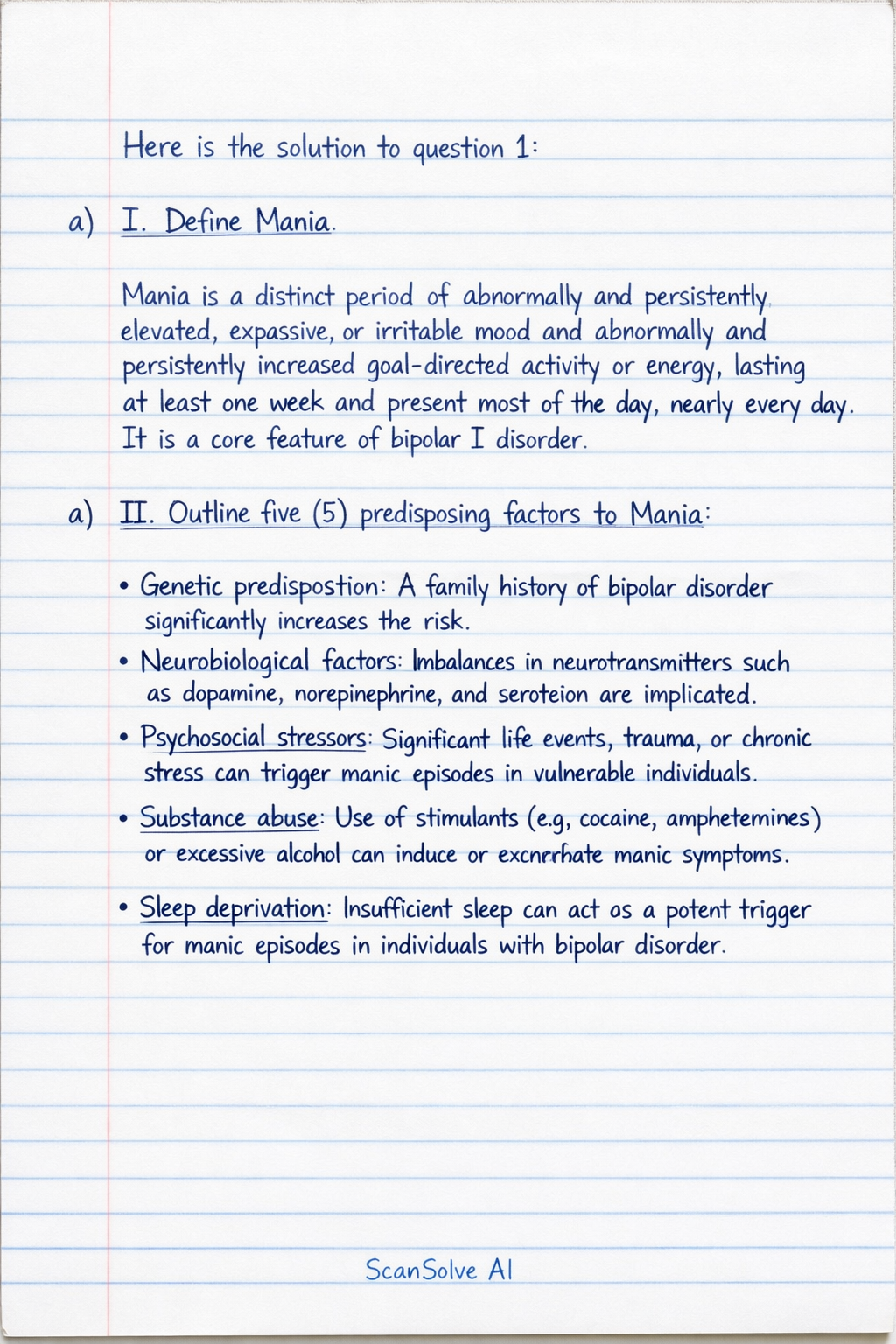
Here is the solution to question 1:
a) I. Define Mania
Mania is a distinct period of abnormally and persistently elevated, expansive, or irritable mood and abnormally and persistently increased goal-directed activity or energy, lasting at least one week and present most of the day, nearly every day. It is a core feature of bipolar I disorder.
a) II. Outline five (5) predisposing factors to Mania
- Genetic predisposition: A family history of bipolar disorder significantly increases the risk.
- Neurobiological factors: Imbalances in neurotransmitters such as dopamine, norepinephrine, and serotonin are implicated.
- Psychosocial stressors: Significant life events, trauma, or chronic stress can trigger manic episodes in vulnerable individuals.
- Substance abuse: Use of stimulants (e.g., cocaine, amphetamines) or excessive alcohol can induce or exacerbate manic symptoms.
- Sleep deprivation: Insufficient sleep can act as a potent trigger for manic episodes in individuals with bipolar disorder.
b) State five (5) clinical manifestations of mania
- Elevated or expansive mood: Characterized by euphoria, excessive cheerfulness, or an irritable mood.
- Grandiosity: Inflated self-esteem or beliefs of having special talents, powers, or importance.
- Pressured speech: Rapid, continuous, and often loud speech that is difficult to interrupt.
- Decreased need for sleep: Feeling rested after very little sleep, often only a few hours.
- Increased goal-directed activity or psychomotor agitation: Restlessness, excessive planning, or engaging in multiple activities simultaneously.
c) Mention three (3) drugs that may be given to Diana stating the dose, frequency and two (2) side effects of each drug
- Lithium (Mood Stabilizer)
- Dose: Initial 600-900 mg/day, typically titrated to 900-1200 mg/day for maintenance.
- Frequency: Usually administered two to three times daily (BID or TID).
- Side effects: Nausea, fine hand tremor.
- Valproate (Sodium Valproate/Divalproex Sodium) (Mood Stabilizer/Anticonvulsant)
- Dose: Initial 250-500 mg BID/TID, typically titrated to 1000-2500 mg/day.
- Frequency: Administered two to three times daily (BID or TID).
- Side effects: Nausea, weight gain.
- Olanzapine (Atypical Antipsychotic)
- Dose: Initial 5-10 mg once daily, typically 10-20 mg/day.
- Frequency: Once daily (usually at bedtime due to sedation).
- Side effects: Sedation, weight gain.
d) Discuss the Nursing Management you would give Diana
Nursing management for Diana, who is experiencing mania, focuses on ensuring safety, managing symptoms, and providing supportive care.
- Safety and Environment: Prioritize the safety of Diana and others. Reduce environmental stimuli by placing her in a quiet, private room with low lighting. Remove potential hazards or objects that could be used for self-harm or aggression. Closely observe Diana for escalating agitation or aggressive behaviors.
- Physical Needs: Due to increased activity and decreased need for sleep, Diana may neglect her physical needs.
- Sleep: Promote rest by providing a quiet environment and implementing a consistent sleep schedule. Administer prescribed sedatives as needed.
- Nutrition: Offer high-calorie, easily consumable finger foods and frequent fluids to prevent dehydration and malnutrition, as Diana may be too restless to sit for meals. Monitor her intake and weight.
- Hygiene: Encourage and assist with personal hygiene, as self-care may be neglected during a manic episode.
- Communication: Use a calm, firm, and consistent approach. Speak in short, concise sentences and avoid engaging in lengthy discussions or arguments, especially regarding grandiose delusions. Redirect Diana's energy and focus gently when she exhibits flight of ideas or pressured speech. Set clear, consistent limits on inappropriate or manipulative behaviors.
- Medication Management: Administer prescribed mood stabilizers and antipsychotics as ordered, monitoring closely for therapeutic effects and potential side effects. Educate Diana and her family about the purpose, dosage, and side effects of medications, emphasizing the importance of adherence.
- Activity and Engagement: Provide structured, non-competitive activities that allow for the safe expenditure of energy, such as walking or simple tasks. Avoid activities that are overly stimulating or competitive, which could exacerbate agitation.
- Psychoeducation and Support: Once Diana's acute symptoms have stabilized, provide psychoeducation to her and her family about bipolar disorder, its triggers, and the importance of medication adherence and early recognition of relapse signs. Offer support and resources to the family to help them cope with the illness.
Still stuck on this one?
Ask a follow-up, and the answer starts from this question.
More Psychology Questions
Handwritten Step-by-Step Solution
Get this as a handwritten image on WhatsApp — like a tutor wrote it for you.
Try on WhatsApp