
We read your photo as:
A. How would you adapt and implement a policy aimed at reducing teenage pregnancy in your school to ensure its effectiveness? B. Two community-based strategies to
Psychology
ScanSolve AI Answer
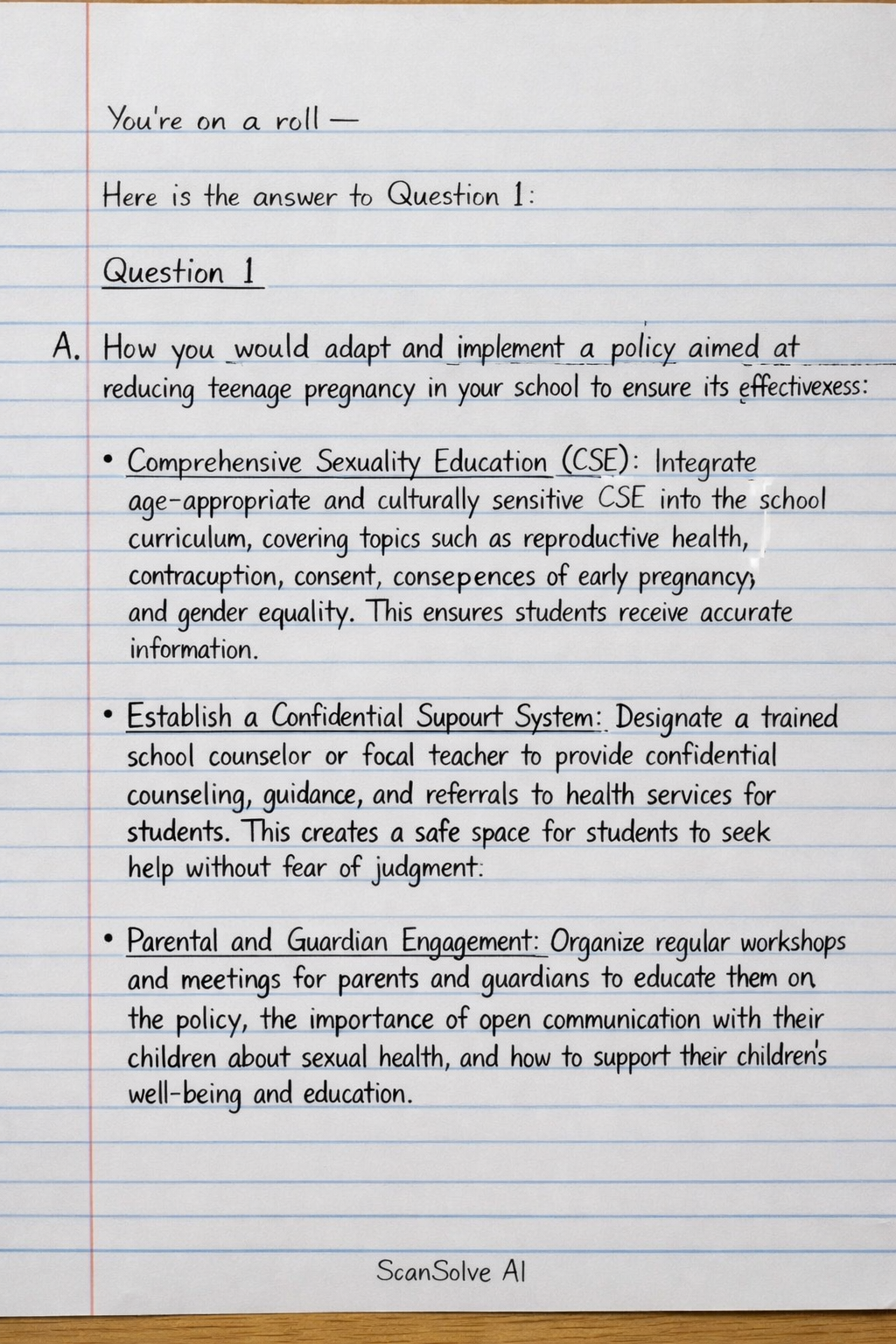
Here is the answer to Question 1:
Question 1
A. How you would adapt and implement a policy aimed at reducing teenage pregnancy in your school to ensure its effectiveness:
- Comprehensive Sexuality Education (CSE): Integrate age-appropriate and culturally sensitive CSE into the school curriculum, covering topics such as reproductive health, contraception, consent, consequences of early pregnancy, and gender equality. This ensures students receive accurate information.
- Establish a Confidential Support System: Designate a trained school counselor or a focal teacher to provide confidential counseling, guidance, and referrals to health services for students. This creates a safe space for students to seek help without fear of judgment.
- Parental and Guardian Engagement: Organize regular workshops and meetings for parents and guardians to educate them on the policy, the importance of open communication with their children about sexual health, and how to support their children's well-being and education.
- School Code of Conduct and Re-entry Policy: Develop a clear school code of conduct that addresses teenage pregnancy with a focus on support rather than punishment. Implement a flexible re-entry policy for pregnant students or young mothers, ensuring they can continue their education without discrimination.
B. Two community-based strategies to support this policy beyond the school environment:
- Community Health Partnerships: Collaborate with local health clinics, non-governmental organizations (NGOs), and community health workers to organize awareness campaigns and provide accessible, youth-friendly reproductive health services (e.g., family planning counseling, access to contraceptives, antenatal care) within the community. This ensures that teenagers have access to essential health information and services outside school hours.
- Youth Empowerment and Mentorship Programs: Establish or support community-based youth clubs and mentorship initiatives that offer safe spaces for teenagers. These programs can provide life skills training, vocational skills, recreational activities, and peer education on sexual and reproductive health, empowering youth to make informed decisions and reducing vulnerability to risky behaviors.
Was this helpful?
Still stuck on this one?
Ask a follow-up, and the answer starts from this question.
Got a different question?Ask your own question
More Psychology Questions
QPropose ways families and communities can reduce teenage pregnanciesQAnalyze the root causes and consequences of teenage pregnancy and propose societal solutions.QWays to prevent teenage pregnancyQWhat are the major causes and solutions for teenage pregnancy and drug abuse? Also, advise a student…QTopic about teenage pregnancy
Handwritten Step-by-Step Solution
Get this as a handwritten image on WhatsApp — like a tutor wrote it for you.
Try on WhatsApp