

This psychology problem is solved step by step below, with detailed explanations to help you understand the method and arrive at the correct answer.
ScanSolve AI Answer
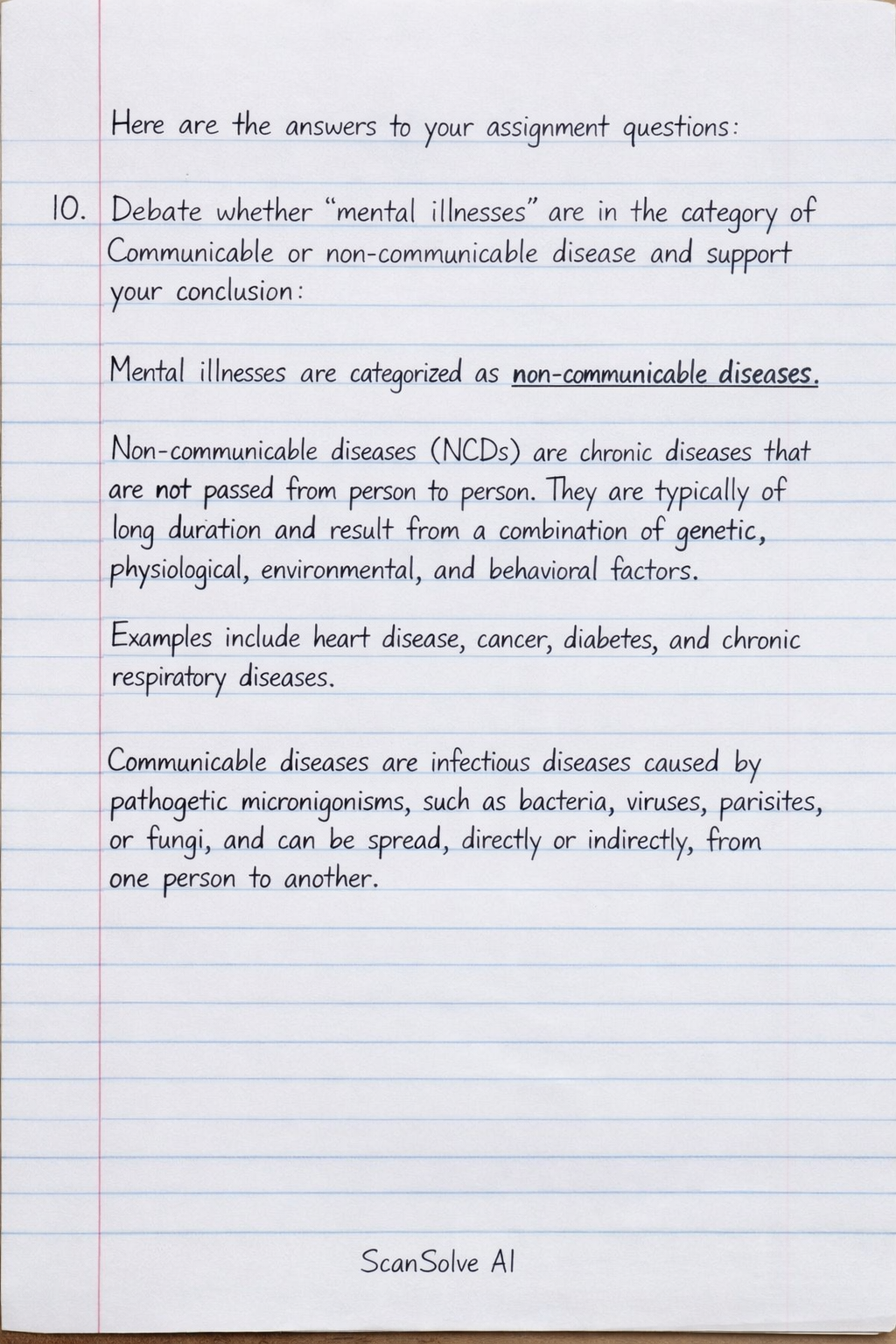
Here are the answers to your assignment questions: 10. Debate whether 'mental illnesses' are in the category of Communicable or non-communicable disease and support your conclusion. Mental illnesses are categorized as non-communicable diseases. Non-communicable diseases (NCDs) are chronic diseases that are not passed from person to person. They are typically of long duration and result from a combination of genetic, physiological, environmental, and behavioral factors. Examples include heart disease, cancer, diabetes, and chronic respiratory diseases. Communicable diseases are infectious diseases caused by pathogenic microorganisms, such as bacteria, viruses, parasites, or fungi, and can be spread, directly or indirectly, from one person to another. Mental illnesses, such as depression, anxiety disorders, schizophrenia, and bipolar disorder, are not caused by infectious agents and cannot be transmitted from one person to another. Instead, they arise from complex interactions of genetic predispositions, brain chemistry imbalances, psychological factors (like trauma or stress), and environmental influences. Therefore, they fit squarely into the definition of non-communicable diseases. 11. Discuss and outline the risk factors for mental illnesses. Risk factors for mental illnesses are multifaceted and can include: Genetic factors: A family history of mental illness can increase an individual's risk, suggesting a genetic predisposition. Biological factors: Imbalances in brain chemicals (neurotransmitters), brain injuries, or chronic medical conditions can contribute to mental health issues. Psychological factors: Trauma, abuse, neglect, severe stress, or a history of other mental health problems can significantly increase vulnerability. Environmental and social factors: Poverty, discrimination, social isolation, exposure to violence, substance abuse, and lack of access to education or healthcare can all be contributing factors. Lifestyle factors: Poor nutrition, lack of sleep, and insufficient physical activity can negatively impact mental well-being. 12. What would be your content when teaching the community about mental illnesses, cause/s, signs and symptoms, complications, management and prevention? When teaching the community about mental illnesses, the content would cover: Introduction to Mental Illnesses: Define mental illness as a health condition involving changes in thinking, emotion, or behavior that cause distress or impair functioning. Emphasize that they are real, treatable medical conditions, not a sign of weakness. Causes: Explain that mental illnesses often result from a combination of factors, including genetics, brain chemistry, life experiences (trauma, stress), and environmental influences. Avoid single-cause explanations. Signs and Symptoms: Describe common warning signs, such as persistent sadness or irritability, significant changes in sleep or appetite, withdrawal from social activities, loss of energy, excessive fear or worry, difficulty concentrating, and thoughts of self-harm. Provide examples relevant to different age groups. Complications: Discuss potential negative impacts if left untreated, including worsening symptoms, impaired daily functioning (work, school, relationships), substance abuse, homelessness, and increased risk of suicide. Management: Outline various treatment options, including psychotherapy (talk therapy), medication, support groups, lifestyle changes (exercise, diet, sleep), and stress management techniques. Emphasize that recovery is possible and often involves a combination of approaches. Prevention: Focus on promoting mental well-being through healthy coping mechanisms, stress reduction, strong social connections, early intervention, and reducing stigma to encourage help-seeking behavior. As a community health worker, when would you refer a member of the household who has a mental illness? As a community health worker, I would refer a member of the household with a mental illness when: Their symptoms are severe or worsening*, significantly impacting their daily functioning (e.g., inability to work, maintain hygiene, or care for dependents). There is any indication of self-harm or harm to others*, including suicidal ideation, threats, or aggressive behavior. They are experiencing psychotic symptoms* such as hallucinations, delusions, or severe disorientation. Current coping strategies are ineffective*, and the individual expresses a desire for professional help but does not know how to access it. They have a co-occurring substance use disorder* that complicates their mental health condition. The individual or family requests a higher level of care* or specialized treatment that is beyond the scope of community health worker support.