
We read your photo as:
Define disability and discrimination, list rights of people with disabilities, ways to support people with HIV/AIDS, effects of discrimination, and identify discrimination in a scenario.
ScanSolve AI Answer
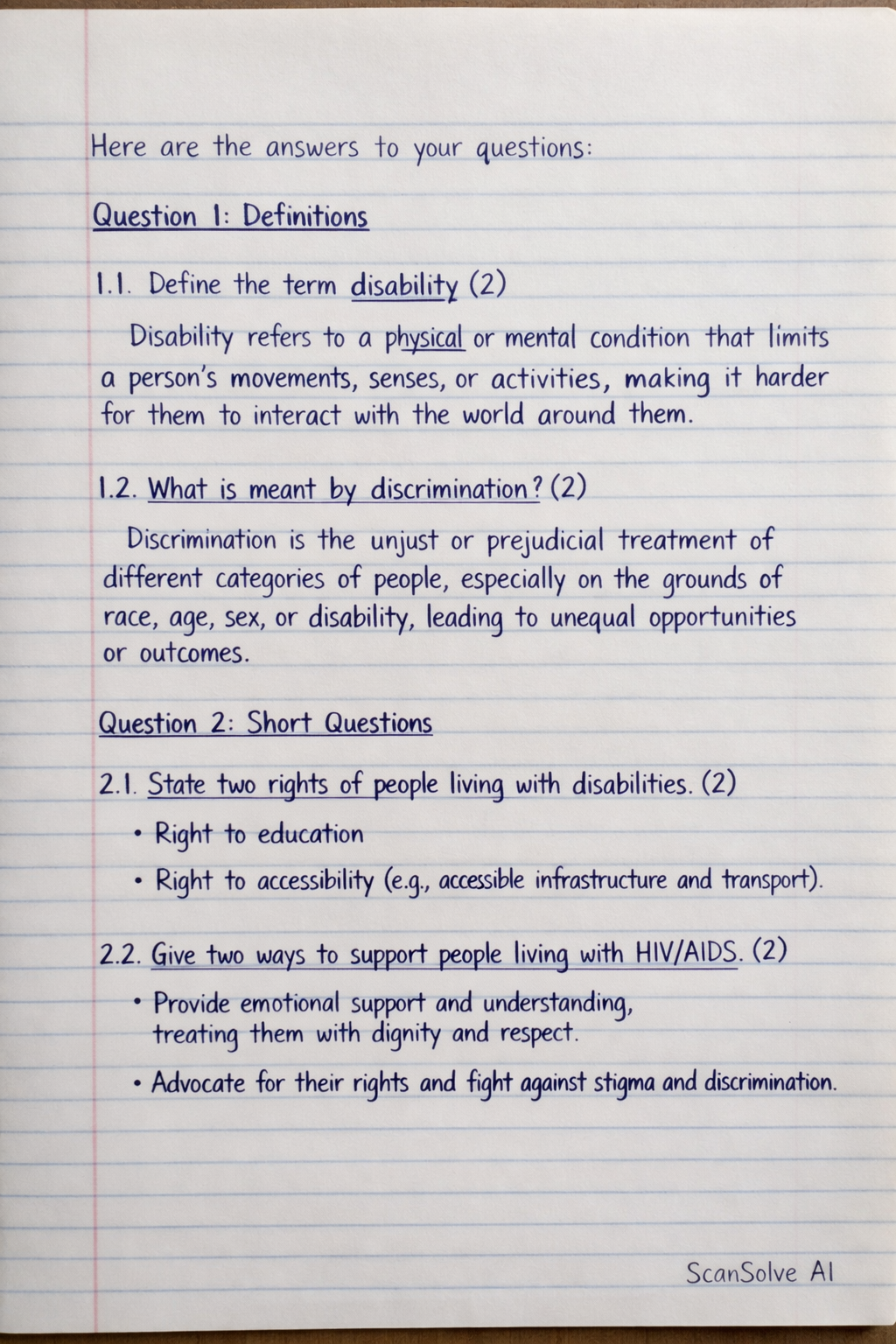
Here are the answers to your questions:
Question 1: Definitions
-
1.1 Define the term disability (2) Disability refers to a physical or mental condition that limits a person's movements, senses, or activities, making it harder for them to interact with the world around them.
-
1.2 What is meant by discrimination? (2) Discrimination is the unjust or prejudicial treatment of different categories of people, especially on the grounds of race, age, sex, or disability, leading to unequal opportunities or outcomes.
Question 2: Short Questions
-
2.1 State two rights of people living with disabilities. (2)
- Right to education
- Right to accessibility (e.g., accessible infrastructure and transport)
-
2.2 Give two ways to support people living with HIV/AIDS. (2)
- Provide emotional support and understanding, treating them with dignity and respect.
- Advocate for their rights and fight against stigma and discrimination.
-
2.3 Mention one effect of discrimination on a person. (1) One effect of discrimination is low self-esteem and psychological distress, such as anxiety or depression.
Question 3: Scenario-Based Question
-
3.1 Identify two forms of discrimination in the scenario. (2)
- Mockery/Bullying: Learners laughing at Lerato instead of helping her.
- Social exclusion/Avoidance: Learners avoiding playing with Musa because he is living with HIV.
-
3.2 Suggest two ways learners can show respect and inclusion. (2)
- Offer practical help to Lerato, such as reading text aloud for her or ensuring she has access to larger print materials.
- Include Musa in games and activities, treating him as an equal peer without fear or prejudice.
-
3.3 Explain why it is important to respect the rights of all people, including those living with disabilities and HIV/AIDS. (2) It is important to respect the rights of all people because it promotes a just and equitable society where everyone is treated with dignity and has equal opportunities. This prevents harm, fosters inclusion, and upholds fundamental human rights for all individuals.
Still stuck on this one?
Ask a follow-up, and the answer starts from this question.
More Psychology Questions
Handwritten Step-by-Step Solution
Get this as a handwritten image on WhatsApp — like a tutor wrote it for you.
Try on WhatsApp