
Genetic lineage Questions 1) Define the following terms: a) pedigree b) mutation 2) Describe each of the following: a) harmful mutation b) harmless mutation c) useful mutation 3) Give one example of a genetic disorder caused by the following: a) genetic mutation b) chromosomal mutation
ScanSolve AI Answer
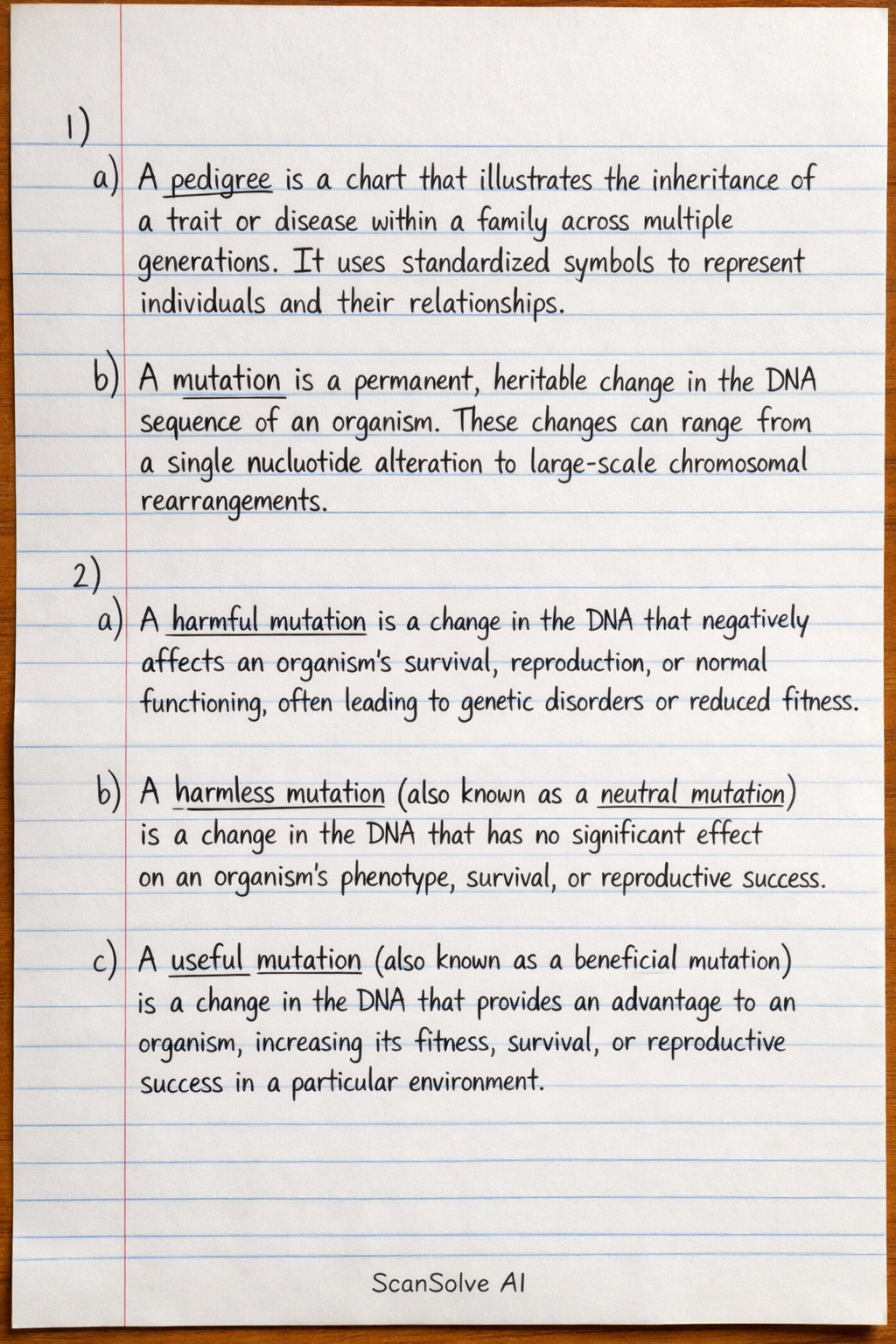
a) A pedigree is a chart that illustrates the inheritance of a trait or disease within a family across multiple generations. It uses standardized symbols to represent individuals and their relationships.
b) A mutation is a permanent, heritable change in the DNA sequence of an organism. These changes can range from a single nucleotide alteration to large-scale chromosomal rearrangements.
a) A harmful mutation is a change in the DNA that negatively affects an organism's survival, reproduction, or normal functioning, often leading to genetic disorders or reduced fitness.
b) A harmless mutation (also known as a neutral mutation) is a change in the DNA that has no significant effect on an organism's phenotype, survival, or reproductive success.
c) A useful mutation (also known as a beneficial mutation) is a change in the DNA that provides an advantage to an organism, increasing its fitness, survival, or reproductive success in a particular environment.
a) One example of a genetic disorder caused by a genetic mutation is cystic fibrosis.
b) One example of a genetic disorder caused by a chromosomal mutation is Down syndrome (Trisomy 21).
Still stuck on this one?
Ask a follow-up, and the answer starts from this question.
More Psychology Questions
Handwritten Step-by-Step Solution
Get this as a handwritten image on WhatsApp — like a tutor wrote it for you.
Try on WhatsApp