
We read your photo as:
The acquiring firm is taking proactive steps for cultural integration: a full culture audit, an integration manager, and structured workshops with managers from both companies. These actions aim to fa
Accounting
ScanSolve AI Answer
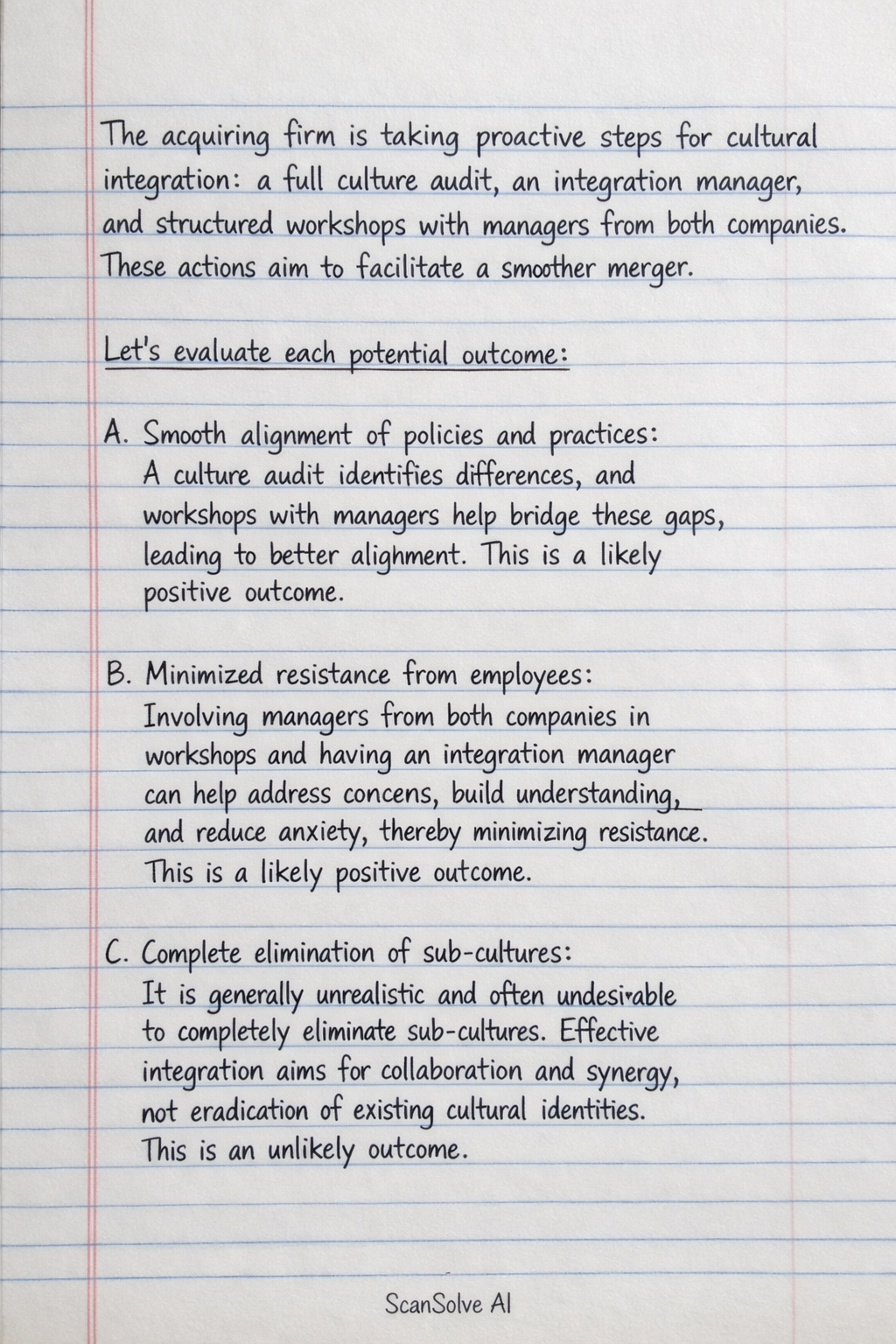
The acquiring firm is taking proactive steps for cultural integration: a full culture audit, an integration manager, and structured workshops with managers from both companies. These actions aim to facilitate a smoother merger.
Let's evaluate each potential outcome:
- A. Smooth alignment of policies and practices: A culture audit identifies differences, and workshops with managers help bridge these gaps, leading to better alignment. This is a likely positive outcome.
- B. Minimised resistance from employees: Involving managers from both companies in workshops and having an integration manager can help address concerns, build understanding, and reduce anxiety, thereby minimizing resistance. This is a likely positive outcome.
- C. Complete elimination of sub-cultures: It is generally unrealistic and often undesirable to completely eliminate sub-cultures. Effective integration aims for collaboration and synergy, not eradication of existing cultural identities. This is an unlikely outcome.
- D. Enhanced collaboration between merged teams: Structured workshops involving managers from both companies are specifically designed to foster communication, understanding, and teamwork, leading to enhanced collaboration. This is a likely positive outcome.
- E. Immediate adoption of dominant culture norms: Cultural change is a gradual process. Forcing immediate adoption can lead to resentment and resistance. The integration steps described suggest a more thoughtful approach than immediate assimilation. This is an unlikely outcome.
Based on this analysis, the most likely outcomes are A, B, and D.
Comparing this with the given options:
- A. Statements A, B, D: This matches our assessment of likely outcomes.
- B. Statements A, C, E: Includes C and E, which are unlikely.
- C. Statements C, D, E: Includes C and E, which are unlikely.
- D. Statements B, C, D: Includes C, which is unlikely.
Therefore, option A is the correct choice.
The final answer is
Was this helpful?
Still stuck on this one?
Ask a follow-up, and the answer starts from this question.
Got a different question?Ask your own question
More Accounting Questions
QTo achieve a truly multicultural organizational culture, management should prioritize actions that…QWhich level(s) of culture management must consider when expanding into a new region with strong…QWhat does it mean to embrace differences in the workplace, and which of the following actions best…QThe South African manufacturing company is expanding into other provinces. Employee behavior is…QCultural Differences*: Managing across borders requires understanding and adapting to diverse…
Handwritten Step-by-Step Solution
Get this as a handwritten image on WhatsApp — like a tutor wrote it for you.
Try on WhatsApp