
We read your photo as:
2.1 Malaria parasite belongs to the group of protozoa.
ScanSolve AI Answer
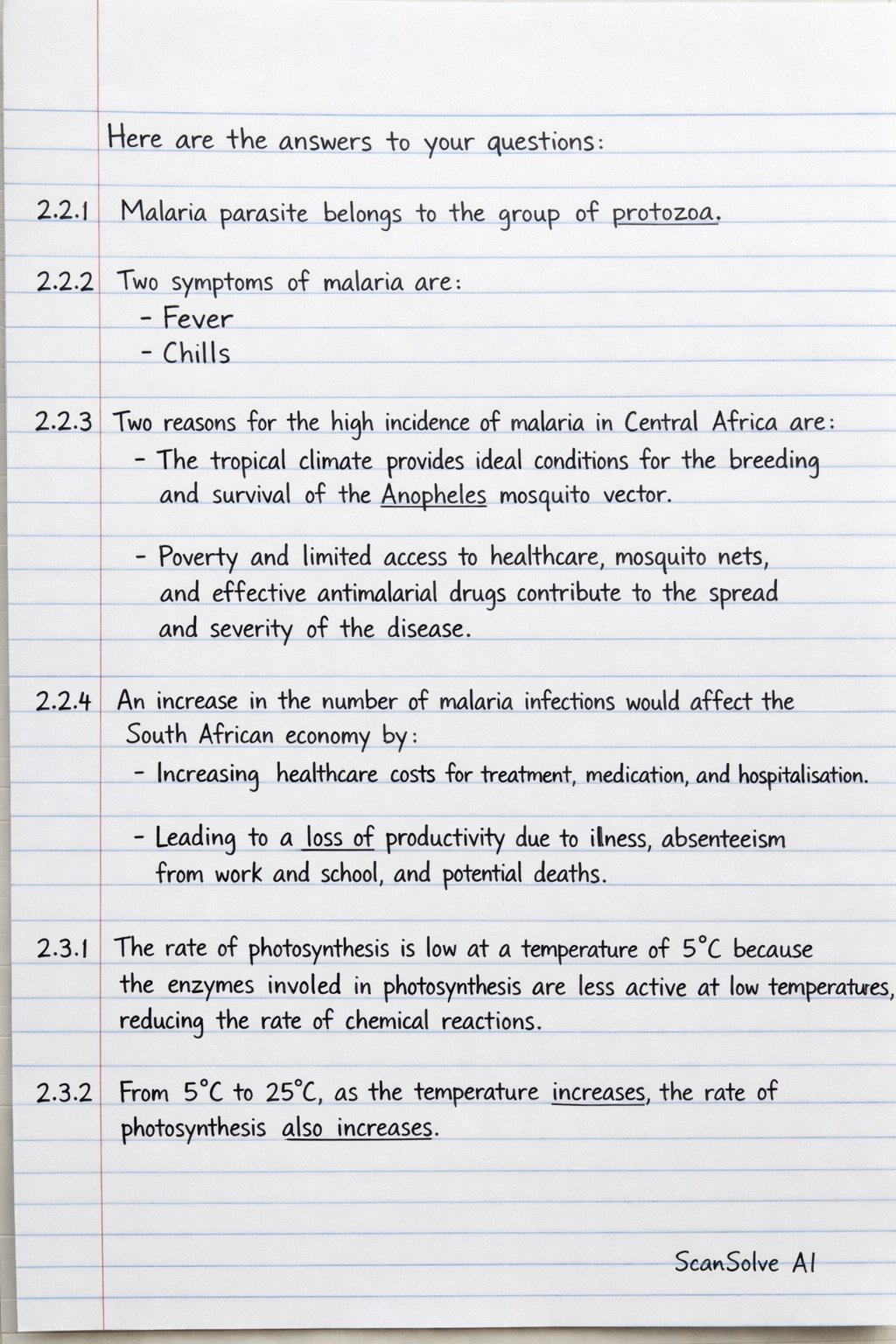
Here are the answers to your questions:
2.2.1 Malaria parasite belongs to the group of protozoa.
2.2.2 Two symptoms of malaria are:
- Fever
- Chills
2.2.3 Two reasons for the high incidence of malaria in Central Africa are:
- The tropical climate provides ideal conditions for the breeding and survival of the Anopheles mosquito vector.
- Poverty and limited access to healthcare, mosquito nets, and effective antimalarial drugs contribute to the spread and severity of the disease.
2.2.4 An increase in the number of malaria infections would affect the South African economy by:
- Increasing healthcare costs for treatment, medication, and hospitalisation.
- Leading to a loss of productivity due to illness, absenteeism from work and school, and potential deaths.
2.3.1 The rate of photosynthesis is low at a temperature of 5°C because the enzymes involved in photosynthesis are less active at low temperatures, reducing the rate of chemical reactions.
2.3.2 From 5°C to 25°C, as the temperature increases, the rate of photosynthesis also increases.
2.3.3 An increase in temperature from 25°C does not cause a further increase in the rate of photosynthesis because 25°C is the optimum temperature for the enzymes involved in photosynthesis under these conditions. Beyond this point, other factors such as carbon dioxide concentration or light intensity become limiting factors, or the enzymes may start to denature at higher temperatures, causing the rate to decrease.
Still stuck on this one?
Ask a follow-up, and the answer starts from this question.
More Biology Questions
Handwritten Step-by-Step Solution
Get this as a handwritten image on WhatsApp — like a tutor wrote it for you.
Try on WhatsApp