
We read your photo as:
3 Discuss the impact of vaping on the developing brain of a teenager compared to an adult brain.
ScanSolve AI Answer
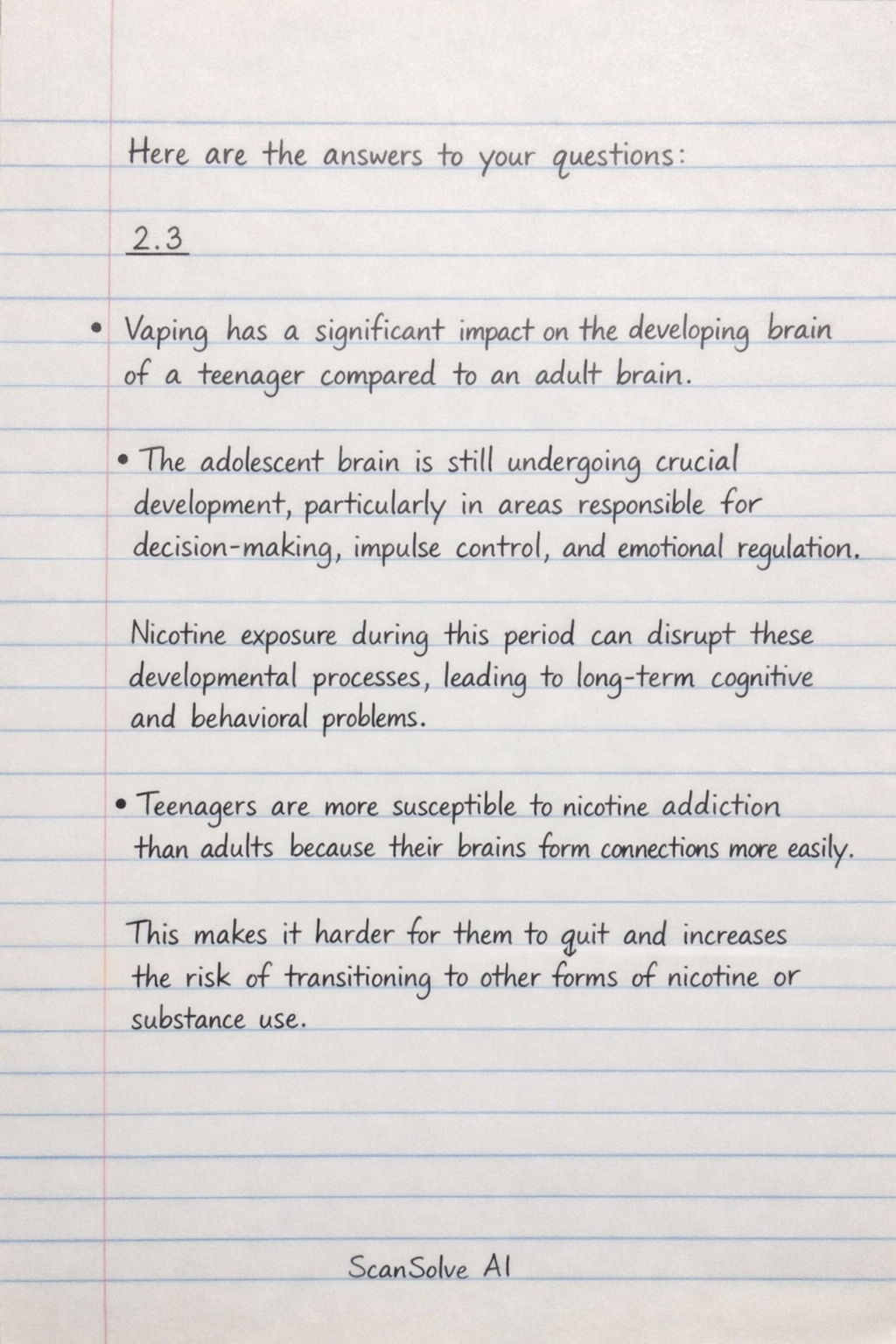
Here are the answers to your questions:
2.3
Vaping has a significant impact on the developing brain of a teenager compared to an adult brain.
- The adolescent brain is still undergoing crucial development, particularly in areas responsible for decision-making, impulse control, and emotional regulation. Nicotine exposure during this period can disrupt these developmental processes, leading to long-term cognitive and behavioral problems.
- Teenagers are more susceptible to nicotine addiction than adults because their brains form connections more easily. This makes it harder for them to quit and increases the risk of transitioning to other forms of nicotine or substance use.
2.4
THREE reasons how vaping may lead to poor lifestyle choices such as unhealthy eating are:
- Nicotine's effect on appetite and metabolism: Nicotine can suppress appetite, leading some users to skip meals or make unhealthy food choices, believing it aids in weight control.
- Reduced motivation for healthy activities: Addiction to vaping can lead to a preoccupation with obtaining and using the product, reducing motivation to engage in healthy habits like regular exercise or preparing nutritious meals.
- Association with other unhealthy habits: Vaping often occurs in social settings where other unhealthy behaviors, such as consuming sugary drinks or processed snacks, might be prevalent, reinforcing a cycle of poor lifestyle choices.
2.5
Social media plays a dual role in encouraging and discouraging vaping among learners.
Encouraging vaping:
- Influencer marketing and peer trends: Social media platforms are used by influencers and peers to showcase vaping as a cool, trendy, or socially acceptable activity, often glamorizing it and downplaying its risks.
- Misinformation and product promotion: Vaping companies and users can spread misinformation about the safety of vaping or promote new flavors and devices, making them appealing to young people. Discouraging vaping:
- Public health campaigns: Health organizations and schools use social media to launch anti-vaping campaigns, sharing factual information about the dangers and long-term health consequences.
- Sharing personal experiences: Learners and former users can share their negative experiences with vaping and addiction, providing authentic warnings that resonate with their peers.
2.6
TWO pieces of advice for peers on how to reduce risk behavior when they socialize with their friends are:
- Develop strong refusal skills: Practice saying "no" firmly and confidently to peer pressure, and have alternative suggestions for activities ready. It's important to understand that true friends respect your choices.
- Choose your friends wisely: Surround yourself with friends who share similar positive values and goals, and who encourage healthy choices rather than pressuring you into risky behaviors.
2.7
The statement that "vaping should be considered a safer alternative for smoking" among the youth is problematic and largely incorrect.
- Vaping products still contain nicotine, which is highly addictive and harmful to the developing adolescent brain, impacting memory, concentration, and impulse control.
- While often marketed as less harmful than traditional cigarettes, e-liquids contain various toxic chemicals, heavy metals, and ultrafine particles that can cause lung damage and other health issues, the long-term effects of which are still unknown.
- Vaping can act as a gateway to traditional cigarette smoking or other substance use for young people, as it normalizes nicotine consumption and addiction.
2.8
Critically discussing the legal and educational consequences for a minor caught in possession of drugs or vaping products on school property reveals serious repercussions.
- Educational consequences: A minor will likely face immediate school disciplinary action, ranging from suspension to expulsion, depending on the school's policy and the severity of the offense. This can negatively impact their academic record and future educational opportunities.
- Legal consequences: Depending on local laws, possession of drugs or vaping products by a minor on school property can lead to involvement of law enforcement. This could result in fines, mandatory drug education programs, or even a criminal record, which can affect future employment and opportunities.
- Mandatory intervention: Schools may require the minor to attend counseling, rehabilitation programs, or substance abuse education as a condition for returning to school or as part of their disciplinary action, aiming to address the underlying issues.
Still stuck on this one?
Ask a follow-up, and the answer starts from this question.
More Biology Questions
Handwritten Step-by-Step Solution
Get this as a handwritten image on WhatsApp — like a tutor wrote it for you.
Try on WhatsApp