
We read your photo as:
Define herbarium and explain its purpose. 2. Explain the different types of herbaria. 3. Explain five applications of herbaria in scientific research and practical work.
Biology
ScanSolve AI Answer
Step-by-step solution
3 stepsDefine herbarium and explain its purpose.
A herbarium is a collection of preserved plant specimens, typically dried and mounted on sheets, along with associated data such as collection location, date, and collector's name. Its primary purpose is to serve as a permanent reference for botanical research, allowing for the identification of plant species, documentation of plant diversity, and study of plant distribution and evolution over time.
Explain the different types of herbaria.
- General Herbaria: These are large collections that house a wide range of plant specimens from various geographical regions and taxonomic groups. They aim to represent global plant diversity.
- Specialized Herbaria: These focus on specific groups of plants (e.g., fungi, algae, mosses, or a particular family) or plants from a particular geographic area. They often contain a high density of specimens for their chosen focus.
- Virtual Herbaria: These are digital databases containing high-resolution images of herbarium specimens and their associated data. They provide online access to collections, facilitating research and education globally without physical handling of specimens.
Explain five applications of herbaria in scientific research and public education.
- Taxonomy and Identification: Herbaria are crucial for identifying unknown plant specimens by comparing them to authenticated samples. They also support taxonomic research by providing material for studying plant morphology, anatomy, and genetic relationships, leading to the description of new species and revisions of plant classifications.
- Floristics and Biogeography: Specimens in herbaria document the plant diversity of specific regions (floristics) and provide data on the geographical distribution of species over time. This information is vital for understanding plant migration patterns, range shifts, and the impact of environmental changes.
- Conservation Biology: Herbaria serve as historical records of plant populations, providing baseline data for assessing changes in species abundance and distribution. They help identify rare or endangered species, track habitat loss, and inform conservation strategies.
- Ethnobotany and Drug Discovery: Herbaria often contain specimens collected with traditional knowledge annotations, which can guide ethnobotanical research into the historical uses of plants by indigenous cultures. This can lead to the discovery of new medicinal compounds or other useful plant products.
- Education and Public Outreach: Herbaria are valuable educational resources for students and the public. They provide hands-on learning opportunities for botany courses, support public exhibitions, and help raise awareness about plant diversity, conservation, and the importance of plants in ecosystems.
Was this helpful?
Still stuck on this one?
Ask a follow-up, and the answer starts from this question.
Got a different question?Ask your own question
More Biology Questions
QExplain specimen preservation methods and identify a herbarium.Qc) Describe THREE steps followed when preparing a plant specimen for a herbarium.QIdentify excretory substances and organs. Explain grafting and its benefits. Discuss the importance…QList five biological wares and their uses. 2. Mention three ways of handling and caring for the…QDescribe the excretory system and plant propagation techniques. 2. Explain the importance of…
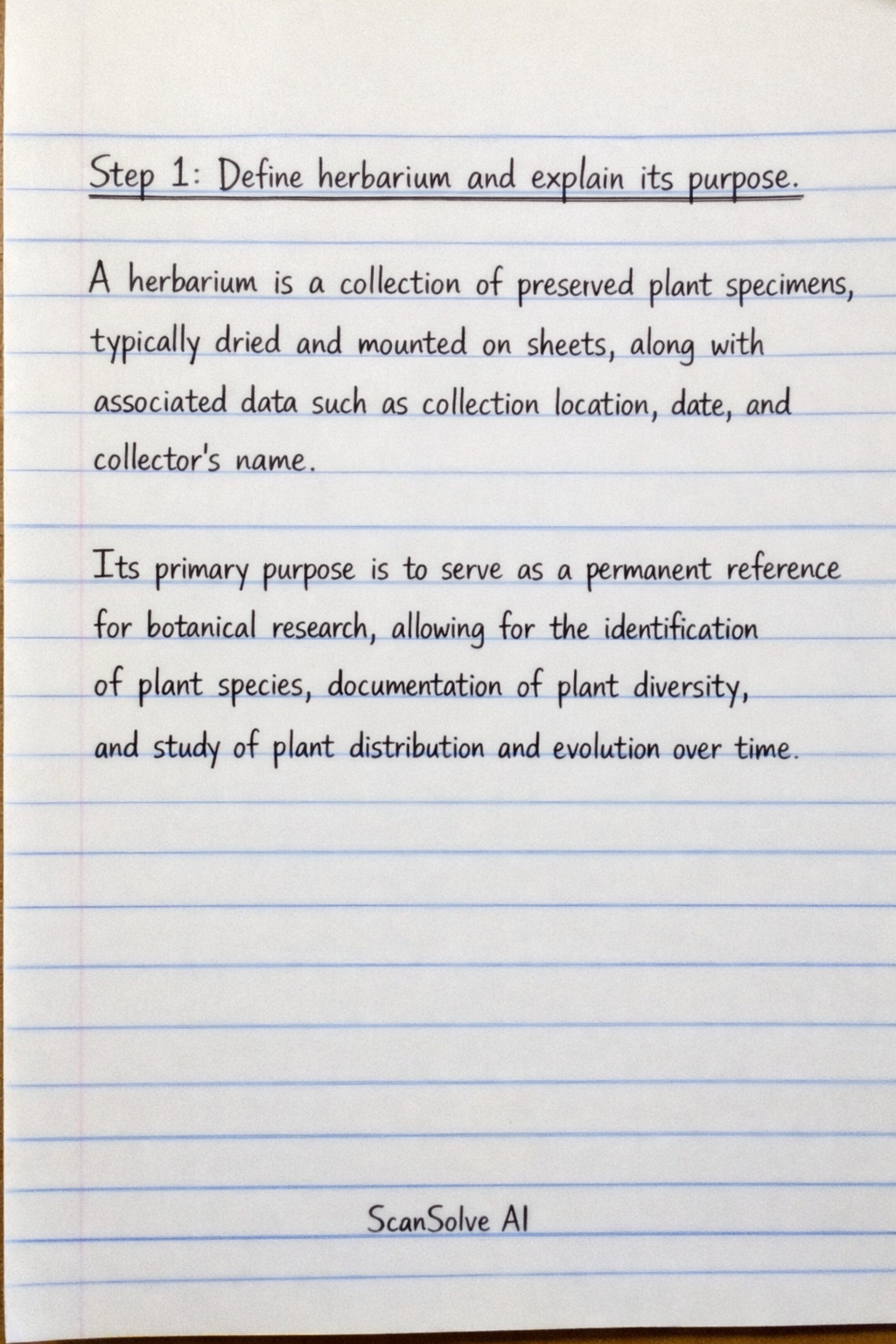
Handwritten Step-by-Step Solution
Get this as a handwritten image on WhatsApp — like a tutor wrote it for you.
Try on WhatsApp