
We read your photo as:
Explain Hypovolemic Shock, including its diagnosis, definition, symptoms, other types of shock, and common causes.
ScanSolve AI Answer
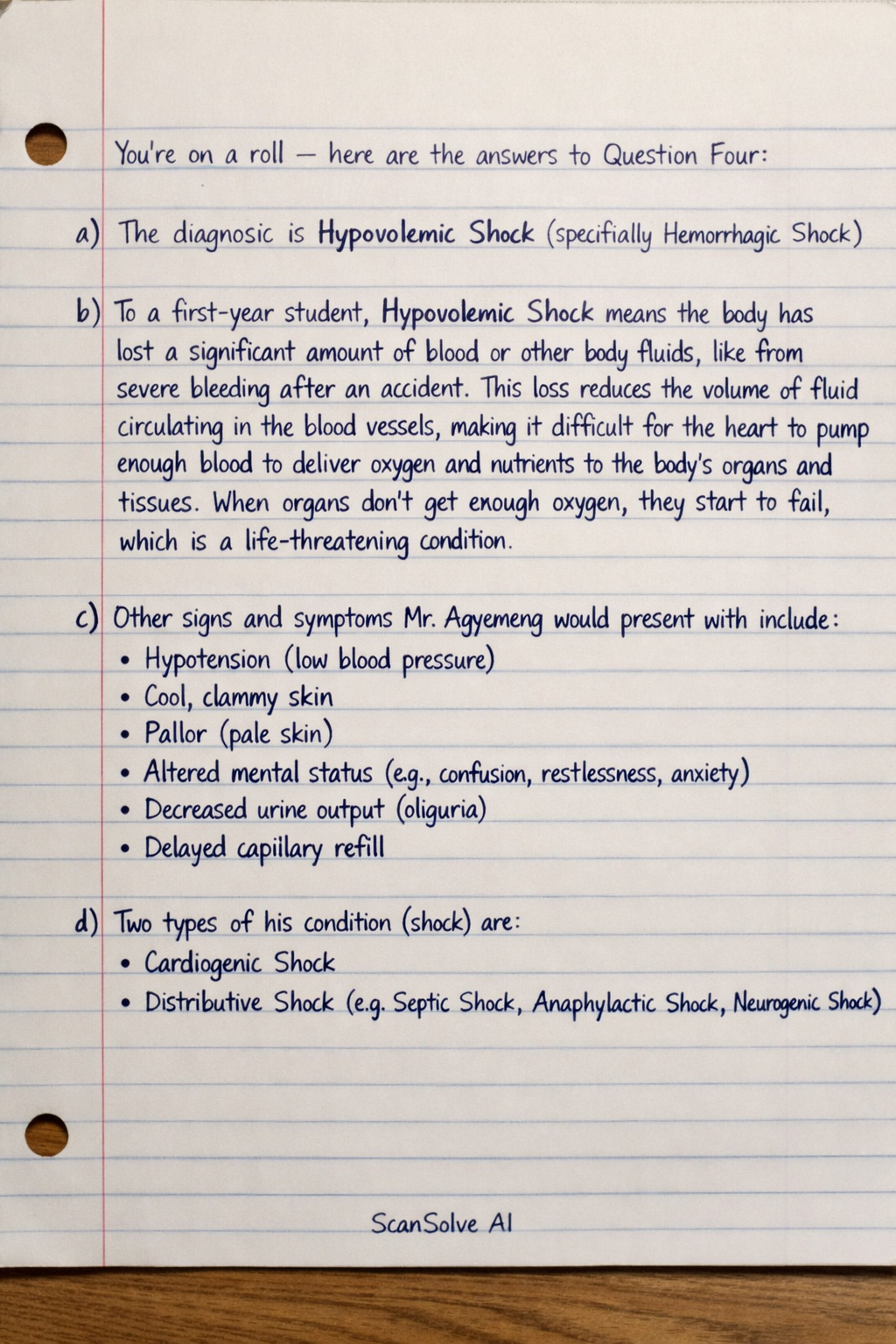
here are the answers to Question Four:
a) The diagnosis is Hypovolemic Shock (specifically Hemorrhagic Shock).
b) To a first-year student, Hypovolemic Shock means the body has lost a significant amount of blood or other body fluids, like from severe bleeding after an accident. This loss reduces the volume of fluid circulating in the blood vessels, making it difficult for the heart to pump enough blood to deliver oxygen and nutrients to the body's organs and tissues. When organs don't get enough oxygen, they start to fail, which is a life-threatening condition.
c) Other signs and symptoms Mr. Agyemeng would present with include:
- Hypotension (low blood pressure)
- Cool, clammy skin
- Pallor (pale skin)
- Altered mental status (e.g., confusion, restlessness, anxiety)
- Decreased urine output (oliguria)
- Delayed capillary refill
d) Two types of his condition (shock) are:
- Cardiogenic Shock
- Distributive Shock (e.g., Septic Shock, Anaphylactic Shock, Neurogenic Shock)
e) Four situations that can cause his condition (Hypovolemic Shock) are:
- Severe external bleeding (e.g., from trauma like a road traffic accident)
- Internal bleeding (e.g., ruptured ectopic pregnancy, gastrointestinal hemorrhage)
- Severe burns (leading to significant plasma loss)
- Severe vomiting or diarrhea (causing extreme fluid loss)
Still stuck on this one?
Ask a follow-up, and the answer starts from this question.
More Biology Questions
Handwritten Step-by-Step Solution
Get this as a handwritten image on WhatsApp — like a tutor wrote it for you.
Try on WhatsApp