
We read your photo as:
Identify the organ and hormones involved in blood glucose regulation, and explain the process of carbohydrate digestion.
ScanSolve AI Answer
Here are the answers to your questions:
2.4.1 Name:
*a) Organ A: Pancreas
*b) Hormone 1: Insulin
*c) Hormone 2: Glucagon
2.4.2 The disorder that results when organ A fails to release sufficient amounts of hormone 1 is diabetes mellitus.
2.4.3 When blood glucose levels are high, the pancreas (Organ A) releases insulin (Hormone 1). Insulin travels through the bloodstream to target cells, primarily in the liver and muscles. It stimulates these cells to take up glucose from the blood and convert it into glycogen for storage. This process removes glucose from the blood, thereby decreasing blood glucose levels.
2.5 The chemical breakdown of carbohydrates in the mouth begins with the secretion of saliva, which contains the enzyme salivary amylase (ptyalin). Salivary amylase starts to break down complex carbohydrates, such as starch, into smaller polysaccharides (dextrins) and disaccharides, primarily maltose. This enzymatic action is most effective in the slightly alkaline environment of the mouth.
Still stuck on this one?
Ask a follow-up, and the answer starts from this question.
More Biology Questions
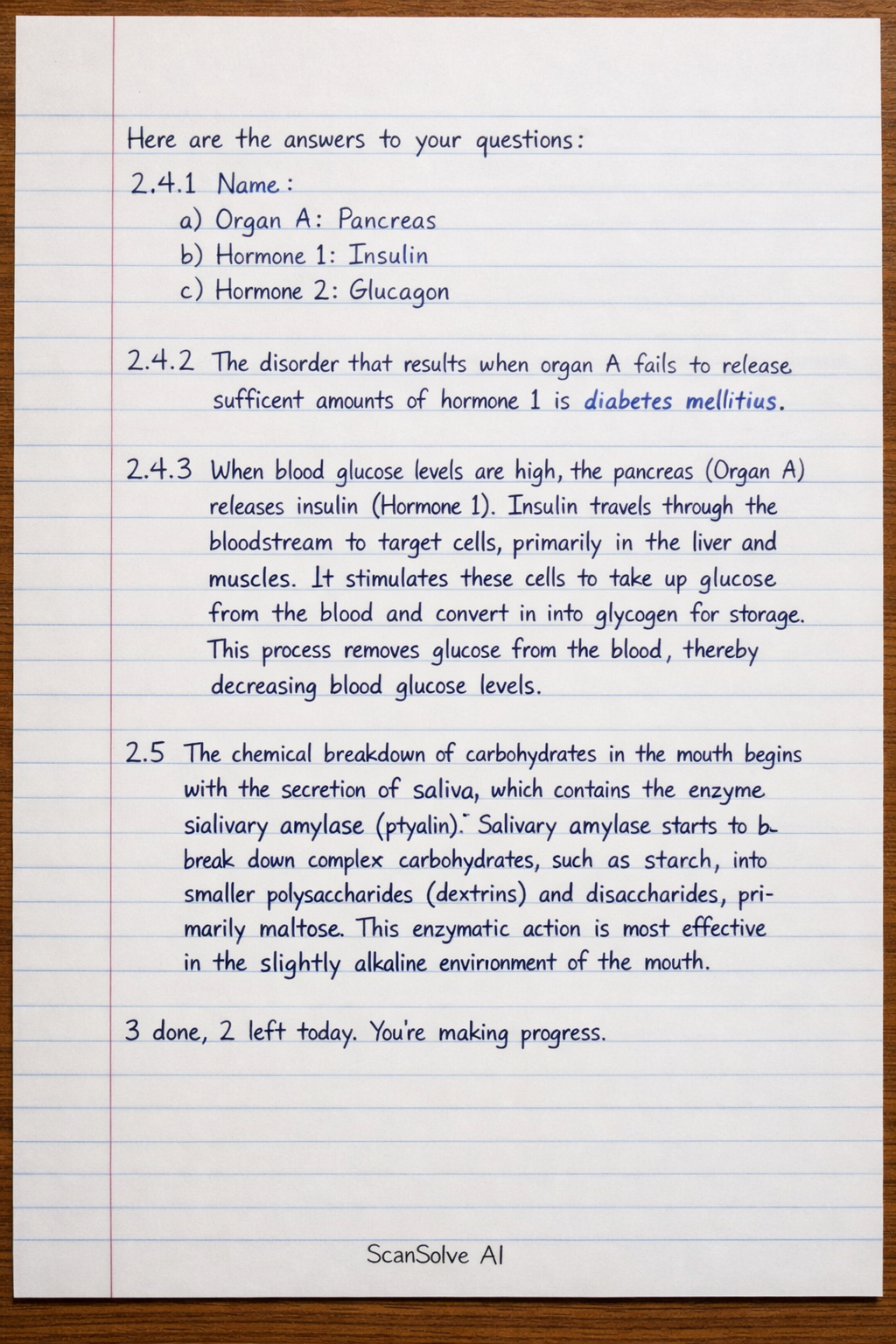
Handwritten Step-by-Step Solution
Get this as a handwritten image on WhatsApp — like a tutor wrote it for you.
Try on WhatsApp