
We read your photo as:
Explain the role of glycogen in glucose metabolism and describe the physiological events leading to increased glucose and glycogen levels after a meal.
Biology
ScanSolve AI Answer
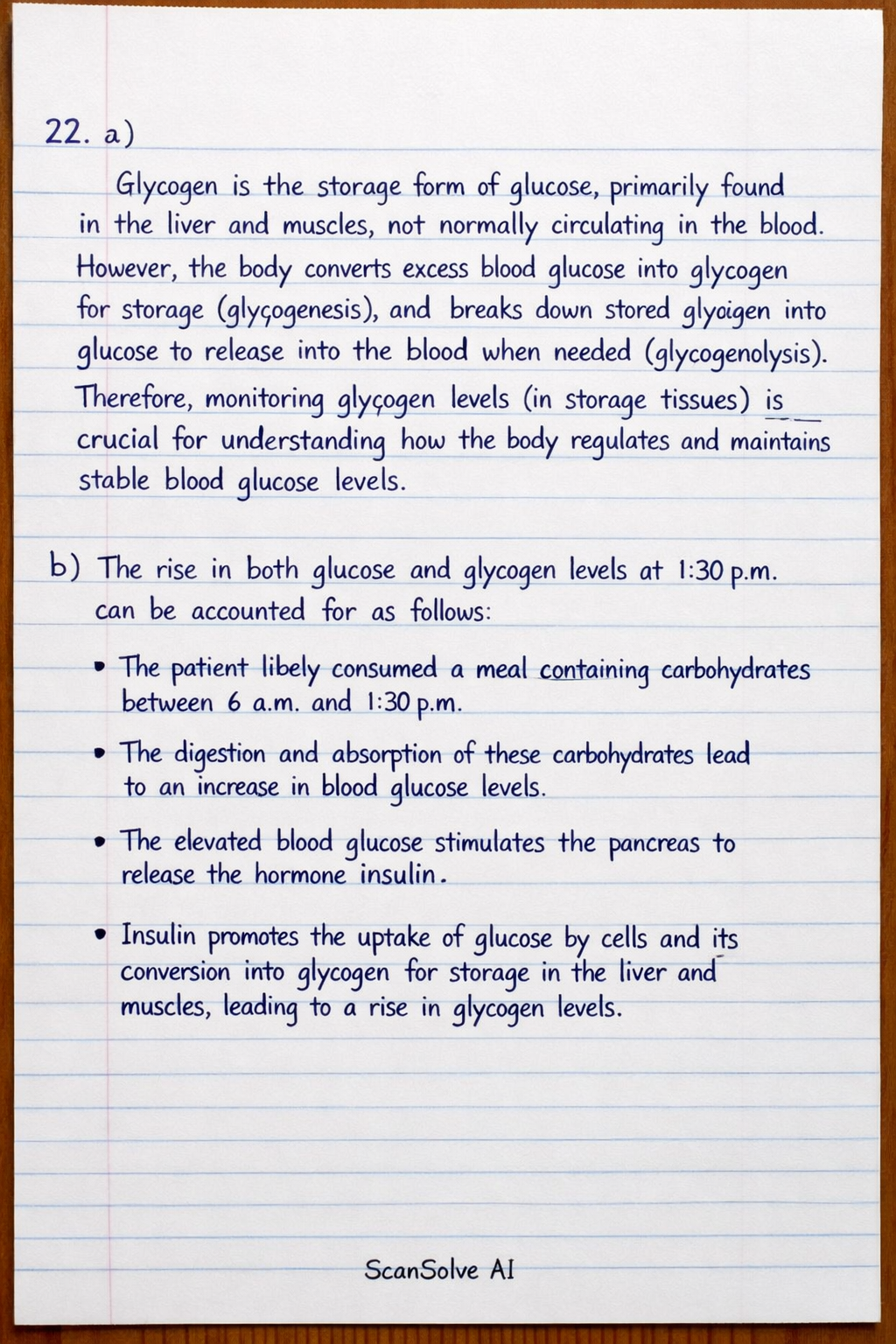
- a) Glycogen is the storage form of glucose, primarily found in the liver and muscles, not normally circulating in the blood. However, the body converts excess blood glucose into glycogen for storage (glycogenesis), and breaks down stored glycogen into glucose to release into the blood when needed (glycogenolysis). Therefore, monitoring glycogen levels (in storage tissues) is crucial for understanding how the body regulates and maintains stable blood glucose levels.
b) The rise in both glucose and glycogen levels at 1:30 p.m. can be accounted for as follows:
- The patient likely consumed a meal containing carbohydrates between 6 a.m. and 1:30 p.m.
- The digestion and absorption of these carbohydrates lead to an increase in blood glucose levels.
- The elevated blood glucose stimulates the pancreas to release the hormone insulin.
- Insulin promotes the uptake of glucose by cells and its conversion into glycogen for storage in the liver and muscles, leading to a rise in glycogen levels.
- The cell organelles responsible for the formation of the following are:
i) Lysosomes: Golgi apparatus
ii) Cilia and flagella: Basal bodies (derived from centrioles within the centrosome)
iii) Ribosomes: Nucleolus
Was this helpful?
Still stuck on this one?
Ask a follow-up, and the answer starts from this question.
Got a different question?Ask your own question
More Biology Questions
QA) Is glycogen normally present in blood? b) Explain the rise in glucose and glycogen levels at 1.30…QIdentify the organ and hormones involved in blood glucose regulation, and explain the process of…QA person exercises for an hour. Starting with the pancreas, what is the correct sequence of events…QExplain glycosylation and its significance in biological processes.QWhich hormone regulates blood glucose
Browse by topic:Biochemistry
Handwritten Step-by-Step Solution
Get this as a handwritten image on WhatsApp — like a tutor wrote it for you.
Try on WhatsApp