
We read your photo as:
(ii) State two ways in which the structure of blood vessel A differs from the structure of blood vessel J.
Biology
ScanSolve AI Answer
4. (a) (ii)
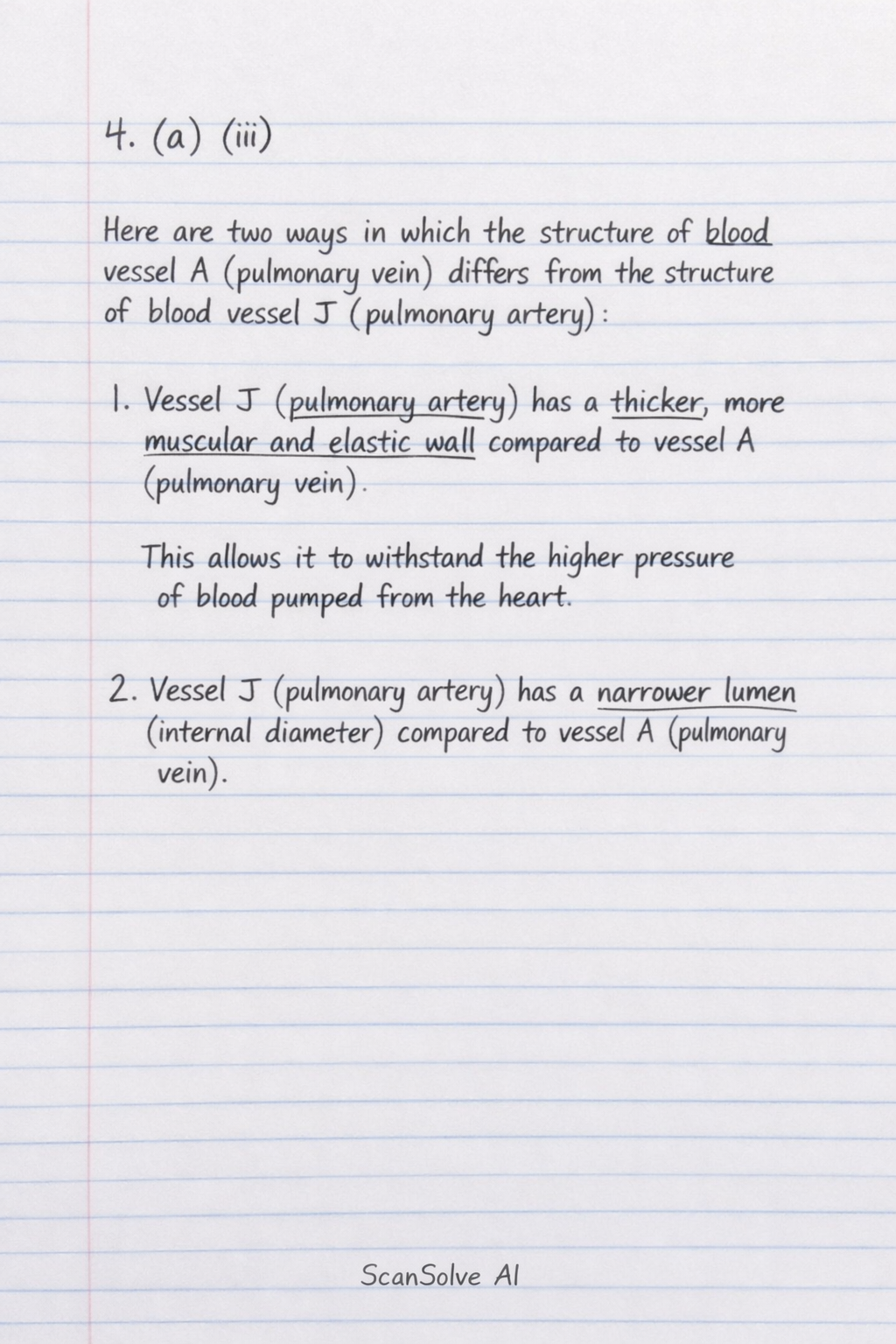
Here are two ways in which the structure of blood vessel A (pulmonary vein) differs from the structure of blood vessel J (pulmonary artery):
- Vessel J (pulmonary artery) has a thicker, more muscular and elastic wall compared to vessel A (pulmonary vein). This allows it to withstand the higher pressure of blood pumped from the heart.
- Vessel J (pulmonary artery) has a narrower lumen (internal diameter) compared to vessel A (pulmonary vein).
4. (b)
The change in the mean number of capillaries improves an athlete's performance in the following ways:
- The increase in the mean number of capillaries per mm² after training means there is a greater surface area for exchange between the blood and the muscle cells.
- This allows for more efficient delivery of oxygen and nutrients (like glucose) to the working muscles, which are essential for aerobic respiration and energy production.
- It also facilitates more efficient removal of metabolic waste products such as carbon dioxide and lactic acid from the muscles.
- Improved oxygen supply and waste removal mean muscles can perform aerobic respiration for longer, producing more ATP (energy) and delaying the onset of fatigue, thereby enhancing the athlete's endurance and overall performance.
Was this helpful?
Still stuck on this one?
Ask a follow-up, and the answer starts from this question.
Got a different question?Ask your own question
More Biology Questions
QState THREE structural differences between arteries and veins in mammals. Why does…QWhat are the key antigens for human blood groups and the structural differences between arteries and…QComplete Table 6.1 by stating the letter of the blood vessel that matches each statement.QHow does the structure of the artery in its function?QThe diagram below represents some gaseous exchange structures in humans. Name the structures…
Browse by topic:Anatomy
Handwritten Step-by-Step Solution
Get this as a handwritten image on WhatsApp — like a tutor wrote it for you.
Try on WhatsApp