
We read your photo as:
MCB 112 Explain the following: A. Microbes B. Microscope C. Pathogen D. Nucleus E. Mycoses F. Culture G. Vaccine
ScanSolve AI Answer
Here are the explanations for the terms:
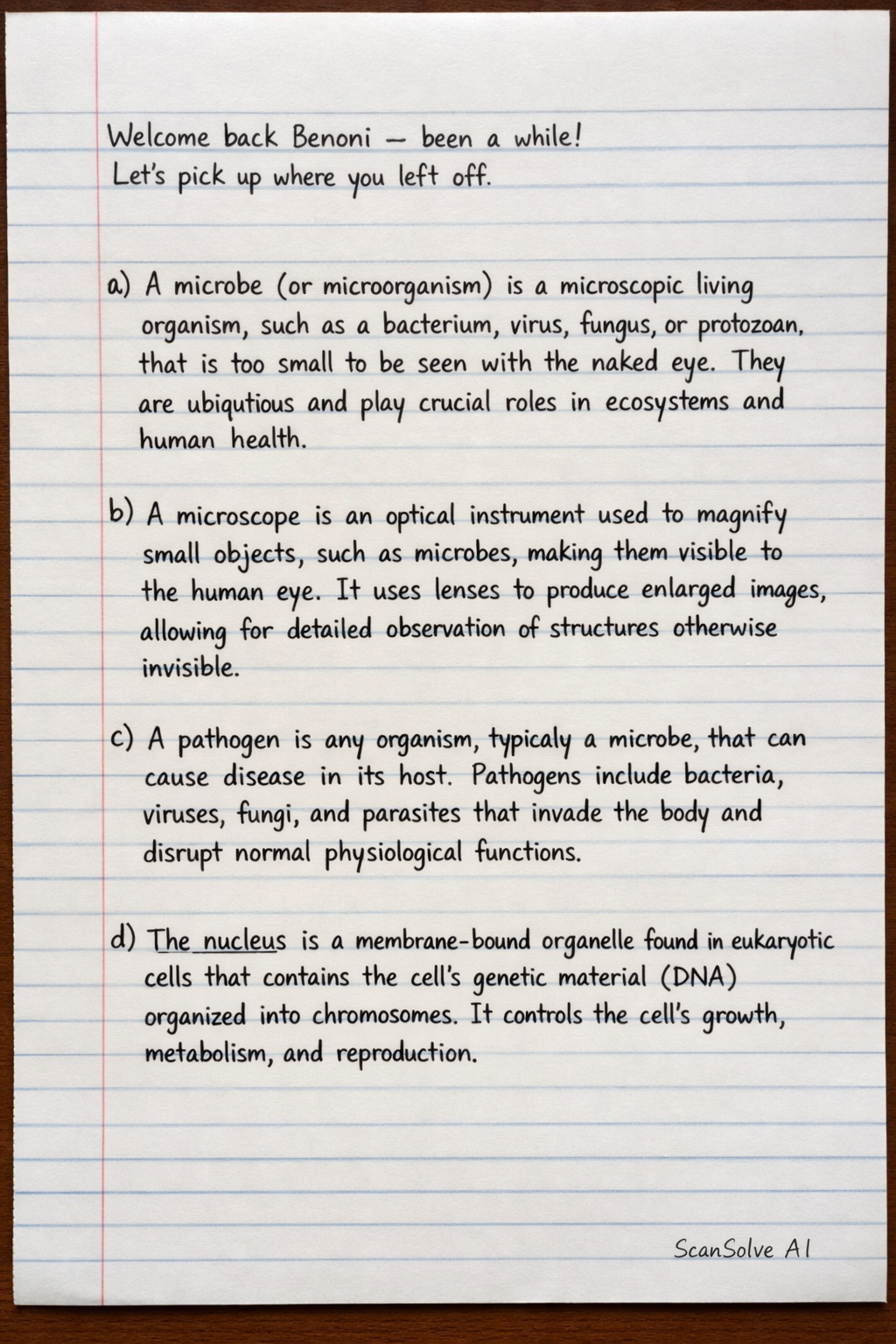
a) A microbe (or microorganism) is a microscopic living organism, such as a bacterium, virus, fungus, or protozoan, that is too small to be seen with the naked eye. They are ubiquitous and play crucial roles in ecosystems and human health.
b) A microscope is an optical instrument used to magnify small objects, such as microbes, making them visible to the human eye. It uses lenses to produce enlarged images, allowing for detailed observation of structures otherwise invisible.
c) A pathogen is any organism, typically a microbe, that can cause disease in its host. Pathogens include bacteria, viruses, fungi, and parasites that invade the body and disrupt normal physiological functions.
d) The nucleus is a membrane-bound organelle found in eukaryotic cells that contains the cell's genetic material (DNA) organized into chromosomes. It controls the cell's growth, metabolism, and reproduction.
e) Mycoses are diseases caused by fungi. These infections can range from superficial skin conditions (like athlete's foot) to systemic and life-threatening diseases affecting internal organs.
f) In microbiology, a culture refers to a population of microorganisms grown in a controlled environment, typically in a laboratory. This allows for the study, identification, and propagation of specific microbes.
g) A vaccine is a biological preparation that provides active acquired immunity to a particular infectious disease. It typically contains an agent that resembles a disease-causing microorganism, often made from weakened or killed forms of the microbe, its toxins, or one of its surface proteins.
Still stuck on this one?
Ask a follow-up, and the answer starts from this question.
More Biology Questions
Handwritten Step-by-Step Solution
Get this as a handwritten image on WhatsApp — like a tutor wrote it for you.
Try on WhatsApp