
We read your photo as:
Mention five (5) beneficial effects of micro-organism to humans. State five (5) harmful effects of micro-organism to plants
ScanSolve AI Answer
Here are the solutions to the Biology questions:
Question 1:
- a) What are micro-organisms? Micro-organisms are microscopic organisms that are too small to be seen with the naked eye. They are found almost everywhere, including in soil, water, air, and within other organisms.
- b) Name the groups of micro-organisms.
The main groups of micro-organisms include:
- Bacteria
- Fungi (e.g., yeasts, molds)
- Protozoa
- Algae
- Viruses
Question 2:
Differentiate between a carrier and a vector of a disease.
A carrier is an individual (human or animal) who harbors an infectious agent without showing symptoms of the disease but can transmit the infection to others. A vector, on the other hand, is an organism (often an arthropod like a mosquito or tick) that transmits an infectious agent from an infected host to a susceptible host.
Question 3:
Name three (3) carrier or vectors and the micro-organisms they carry, including the associated diseases.
- Vector: Anopheles mosquito
- Micro-organism: Plasmodium (a protozoan)
- Associated disease: Malaria
- Vector: Tsetse fly
- Micro-organism: Trypanosoma (a protozoan)
- Associated disease: African sleeping sickness
- Carrier: Humans (asymptomatic)
- Micro-organism: Salmonella typhi (a bacterium)
- Associated disease: Typhoid fever
Question 4:
State five (5) harmful effects of micro-organism to plants.
- Crop diseases: Micro-organisms like fungi, bacteria, and viruses cause various plant diseases, leading to reduced yield and quality (e.g., potato blight, bacterial wilt).
- Spoilage of harvested crops: Fungi and bacteria can cause decay and spoilage of fruits, vegetables, and grains after harvest, leading to significant economic losses.
- Root rot: Certain fungi and bacteria in the soil can infect plant roots, causing them to rot and impairing the plant's ability to absorb water and nutrients.
- Leaf spots and blights: Pathogenic micro-organisms can cause lesions, spots, and blights on leaves, reducing photosynthetic capacity and overall plant health.
- Wilting: Some bacteria can block the vascular tissues of plants, preventing water transport and causing the plant to wilt and eventually die.
Still stuck on this one?
Ask a follow-up, and the answer starts from this question.
More Biology Questions
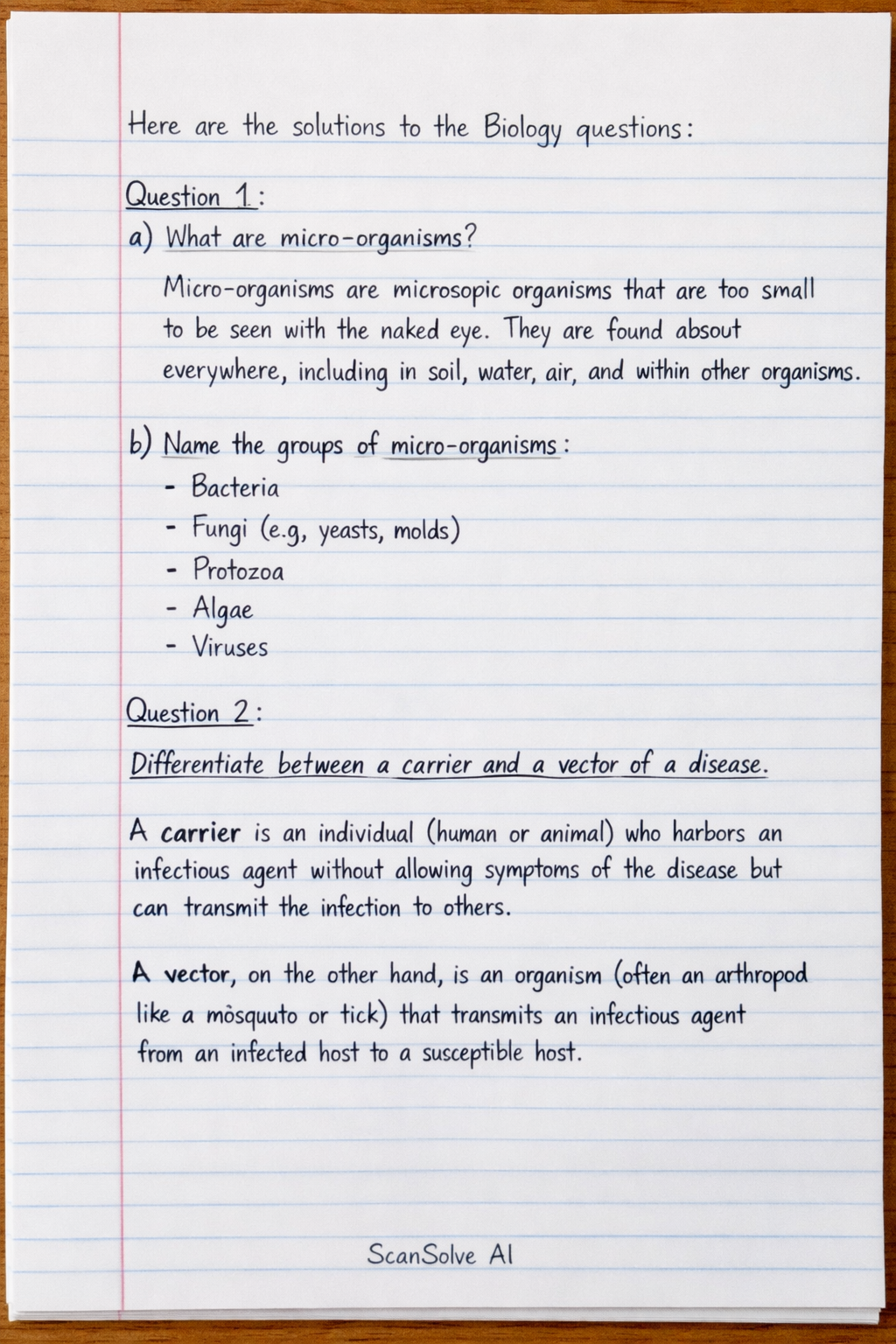
Handwritten Step-by-Step Solution
Get this as a handwritten image on WhatsApp — like a tutor wrote it for you.
Try on WhatsApp