

This biology question covers important biological concepts and processes. The step-by-step explanation below helps you understand the underlying mechanisms and reasoning.
ScanSolve AI Answer
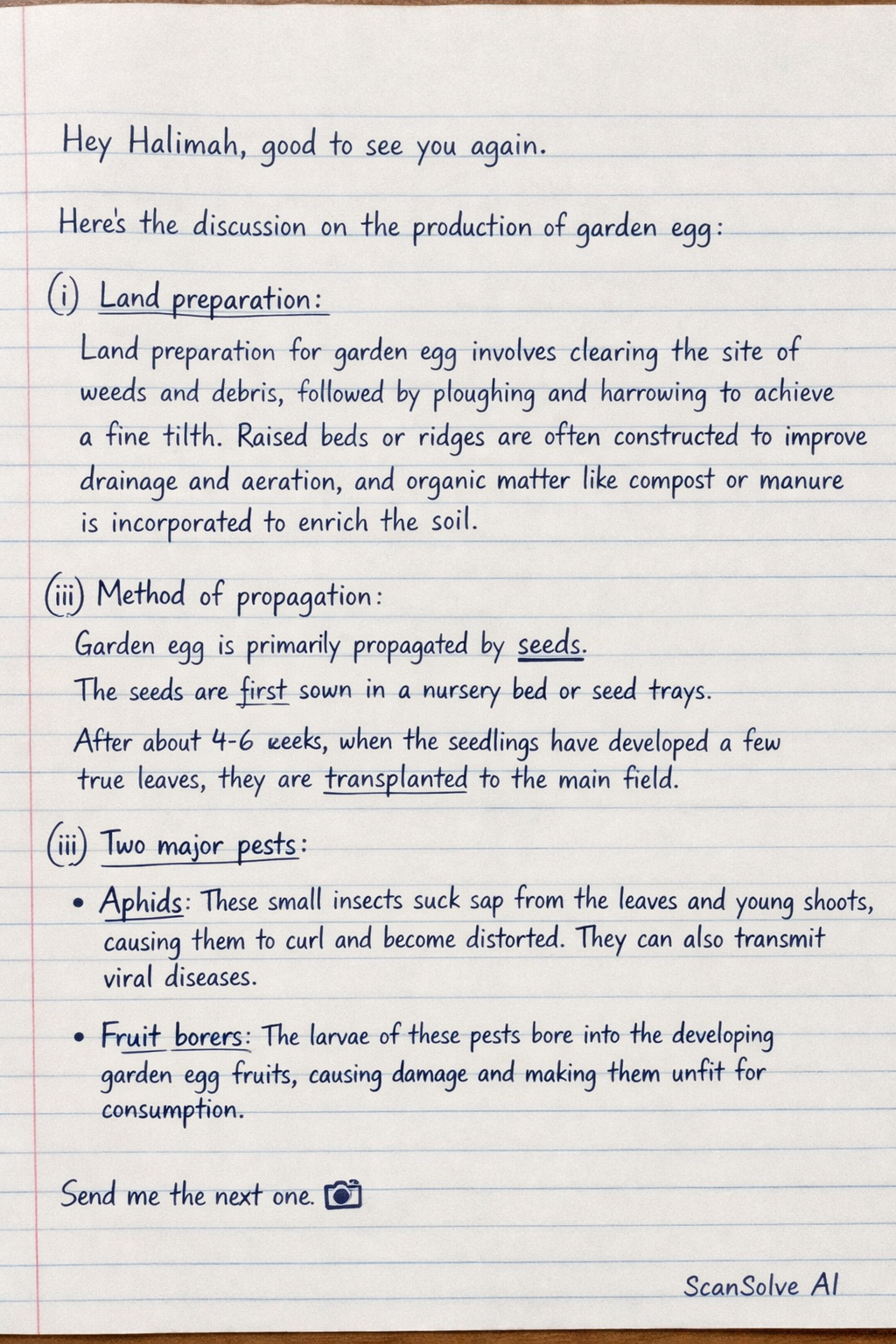
Here's the discussion on the production of garden egg: a) (i) Land preparation: Land preparation for garden egg involves clearing the site of weeds and debris, followed by ploughing and harrowing to achieve a fine tilth. Raised beds or ridges are often constructed to improve drainage and aeration, and organic matter like compost or manure is incorporated to enrich the soil. (ii) Method of propagation: Garden egg is primarily propagated by seeds. The seeds are first sown in a nursery bed or seed trays. After about 4-6 weeks, when the seedlings have developed a few true leaves, they are transplanted to the main field. (iii) Two major pests: • Aphids: These small insects suck sap from the leaves and young shoots, causing them to curl and become distorted. They can also transmit viral diseases. • Fruit borers: The larvae of these pests bore into the developing garden egg fruits, causing damage and making them unfit for consumption. Send me the next one 📸