
We read your photo as:
Describe the process of cellular respiration and where in the cell it takes place.
Biology
ScanSolve AI Answer
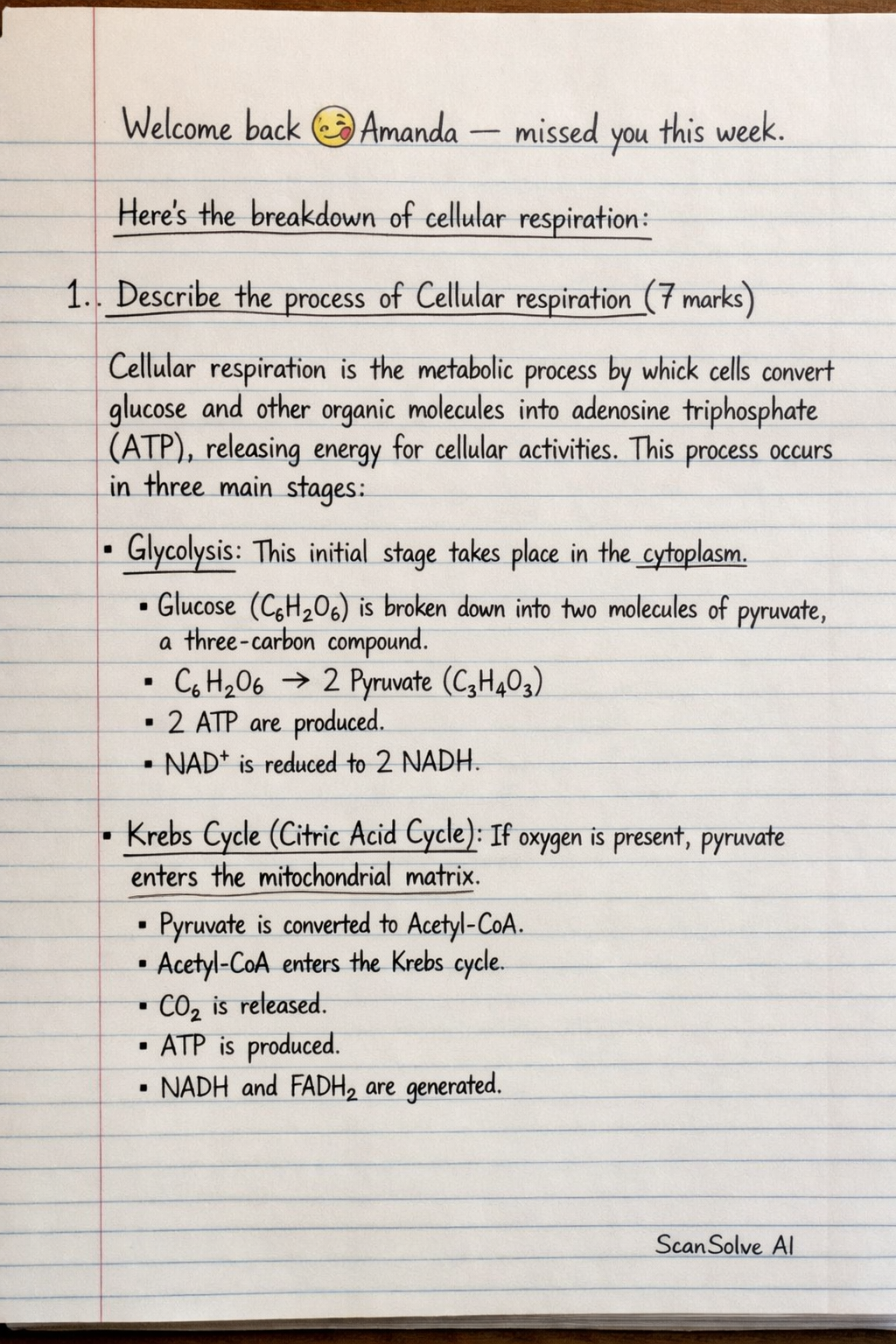
Here's the breakdown of cellular respiration:
-
Describe the process of Cellular respiration (7 marks) Cellular respiration is the metabolic process by which cells convert glucose and other organic molecules into adenosine triphosphate (ATP), releasing energy for cellular activities. This process occurs in three main stages:
- Glycolysis: This initial stage takes place in the cytoplasm. Glucose, a six-carbon sugar, is broken down into two molecules of pyruvate, a three-carbon compound. A small amount of ATP and NADH are produced.
- Krebs Cycle (Citric Acid Cycle): If oxygen is present, pyruvate enters the mitochondrial matrix. Pyruvate is converted to acetyl-CoA, which then enters the Krebs cycle. This cycle produces carbon dioxide, a small amount of ATP, and electron carriers (NADH and FADH).
- Oxidative Phosphorylation (Electron Transport Chain): This final stage occurs on the inner mitochondrial membrane. The NADH and FADH generated in the previous stages donate electrons to the electron transport chain. As electrons move down the chain, a proton gradient is established, which drives the synthesis of a large amount of ATP through chemiosmosis. Oxygen acts as the final electron acceptor, forming water.
-
Where in the cell does Cellular respiration take place
- Glycolysis occurs in the cytoplasm.
- The Krebs cycle and oxidative phosphorylation occur in the mitochondria.
-
Name the types of Cellular respiration The two main types are:
- Aerobic respiration
- Anaerobic respiration
-
describes the conditions required for each. (4 marks)
- Aerobic respiration: This type of respiration requires the presence of oxygen. Oxygen acts as the final electron acceptor in the electron transport chain, allowing for the complete breakdown of glucose and the production of a large amount of ATP.
- Anaerobic respiration: This type of respiration occurs in the absence of oxygen. Cells use other electron acceptors or fermentation pathways to produce ATP. It yields significantly less ATP than aerobic respiration and can result in byproducts like lactic acid or ethanol.
Was this helpful?
Still stuck on this one?
Ask a follow-up, and the answer starts from this question.
Got a different question?Ask your own question
More Biology Questions
QPlease provide a detailed explanation of the process of cellular respiration, including the main…QIdentify the mitochondrion and its parts, explain cellular respiration, and differentiate between…QWhere does respiration occur in?QWhat are the stages of cellular respiration?QIdentify the organelles and processes involved in photosynthesis and cellular respiration, and the…
Browse by topic:Biochemistry
Handwritten Step-by-Step Solution
Get this as a handwritten image on WhatsApp — like a tutor wrote it for you.
Try on WhatsApp