
We read your photo as:
Describe the process of determining genotype using electrophoresis from a blood sample.
ScanSolve AI Answer
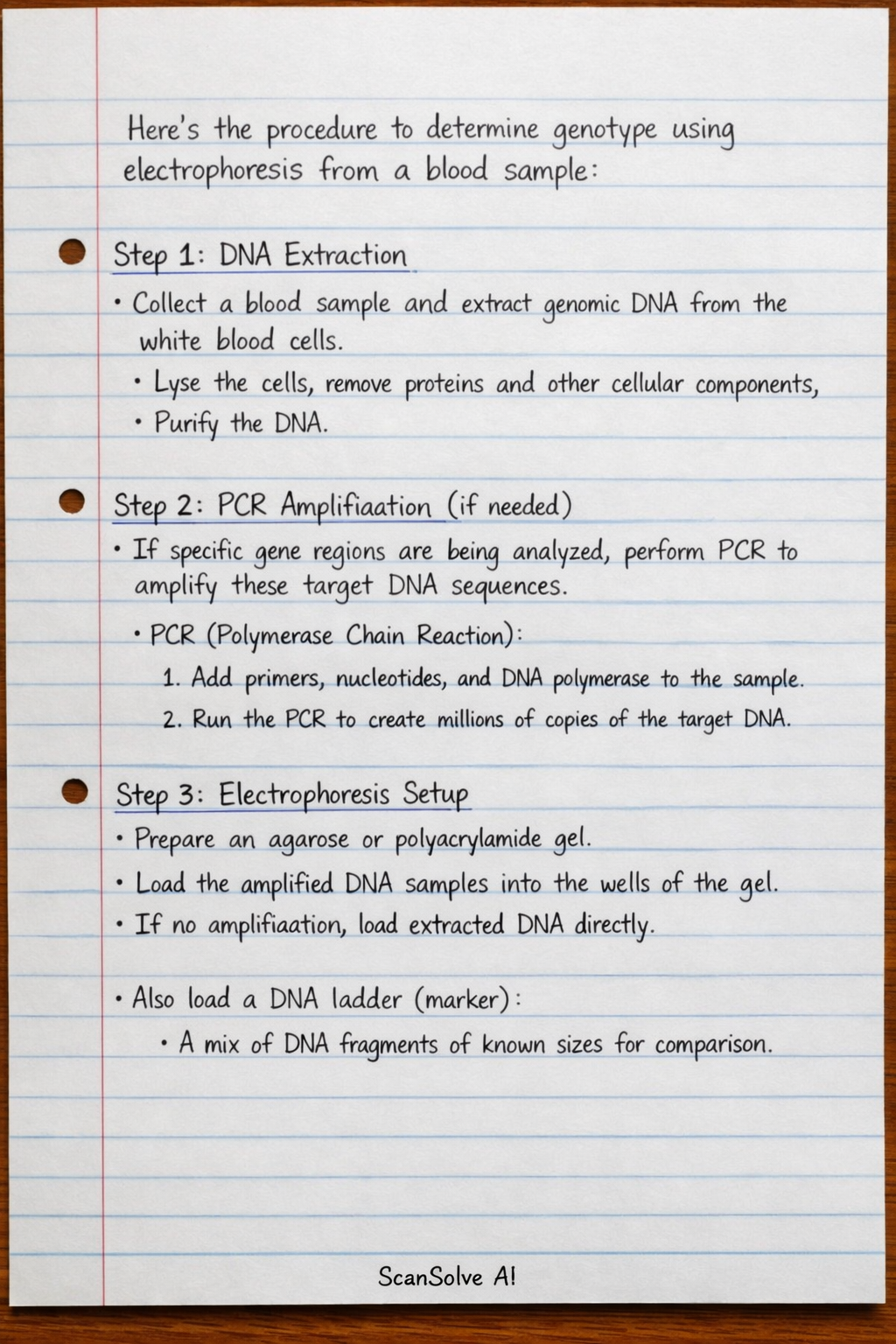
Here's the procedure to determine genotype using electrophoresis from a blood sample:
-
Step 1: DNA Extraction Collect a blood sample and extract genomic DNA from the white blood cells. This involves lysing the cells, removing proteins and other cellular components, and purifying the DNA.
-
Step 2: PCR Amplification (if needed) If specific gene regions or markers are being analyzed, perform Polymerase Chain Reaction (PCR) to amplify these target DNA sequences. This creates millions of copies, making them detectable.
-
Step 3: Electrophoresis Setup Prepare an agarose or polyacrylamide gel. Load the amplified DNA samples (or extracted DNA if no amplification is needed, e.g., for larger fragments) into wells in the gel. A DNA ladder (marker) with known fragment sizes is also loaded for comparison.
-
Step 4: Electrophoresis Run Place the gel in an electrophoresis chamber filled with a buffer solution. Apply an electric current, causing the negatively charged DNA fragments to migrate through the gel towards the positive electrode. Smaller fragments move faster and further than larger ones.
-
Step 5: Visualization and Analysis After the run, stain the gel with a DNA-binding dye (e.g., ethidium bromide or SYBR Safe) and visualize the DNA bands under UV light. Compare the migration patterns and sizes of the bands to a known standard or control to determine the genotype.
Still stuck on this one?
Ask a follow-up, and the answer starts from this question.
More Biology Questions
Handwritten Step-by-Step Solution
Get this as a handwritten image on WhatsApp — like a tutor wrote it for you.
Try on WhatsApp