
We read your photo as:
Referencing a DNA double helix image, identify its bases, describe the ribbon-like structures, explain its relation to genetic activities, and differentiate it from other nucleic acids.
ScanSolve AI Answer
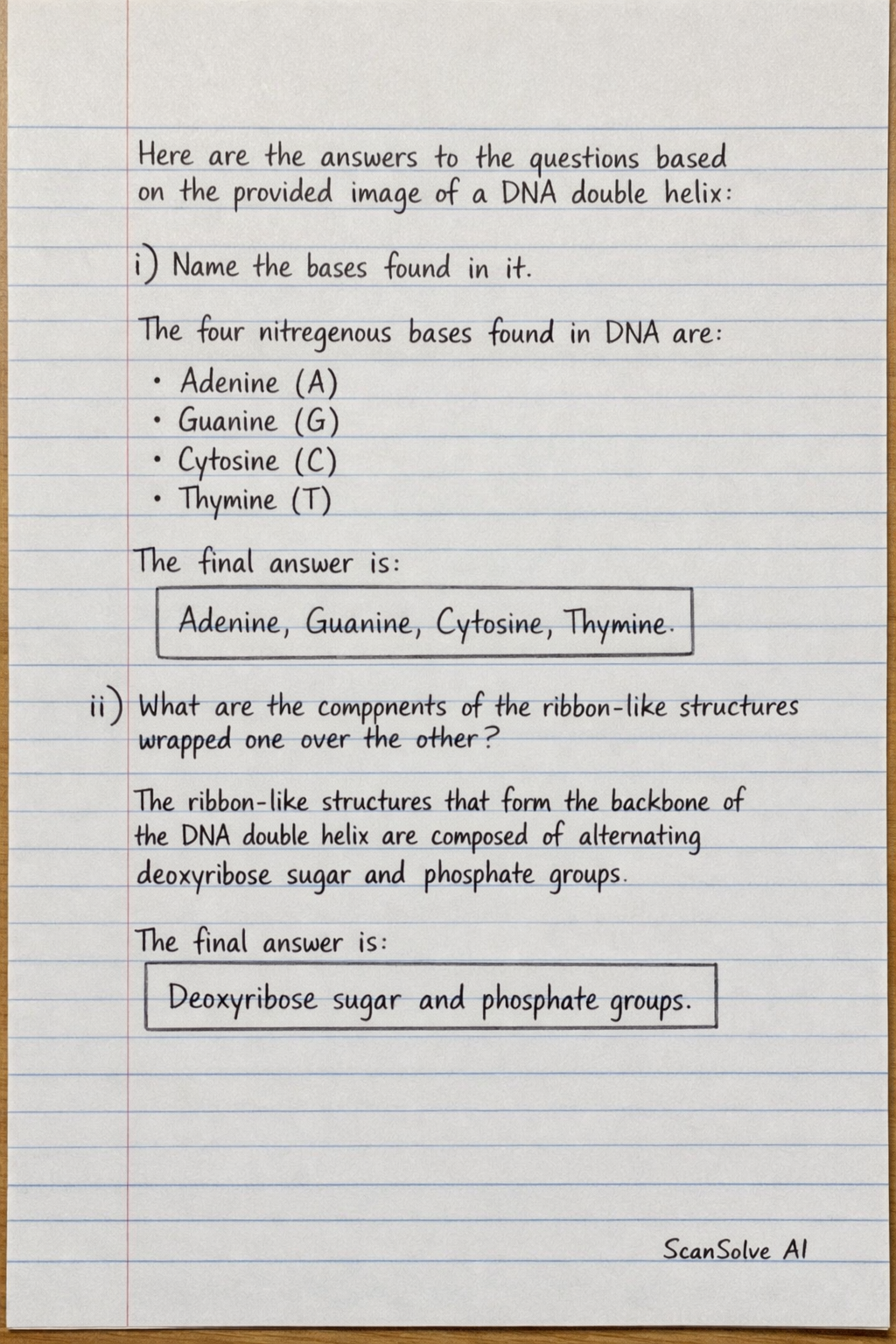
Here are the answers to the questions based on the provided image of a DNA double helix:
i) Name the bases found in it.
The four nitrogenous bases found in DNA are:
- Adenine (A)
- Guanine (G)
- Cytosine (C)
- Thymine (T) The final answer is .
ii) What are the components of the ribbon-like structures wrapped one over the other?
The ribbon-like structures that form the backbone of the DNA double helix are composed of alternating deoxyribose sugar and phosphate groups.
The final answer is .
iii) How is the structure related to genetic activities? Explain in short.
The DNA structure, a double helix, is crucial for genetic activities because it stores genetic information in the sequence of its bases. Its double-stranded nature allows for accurate replication, ensuring genetic information is passed faithfully to new cells and offspring. This information is also used as a template for transcription into RNA, which then guides protein synthesis.
The final answer is .
iv) How does nucleic acid differ from the other types of nucleic acid found in cells? Mention any two points.
Assuming "nucleic acid" refers to DNA (as shown in the image) and "other types of nucleic acid" refers primarily to RNA, here are two differences:
- Sugar: DNA contains deoxyribose sugar, while RNA contains ribose sugar.
- Bases: DNA contains the base Thymine (T), whereas RNA contains Uracil (U) in place of Thymine.
- Structure: DNA is typically a double-stranded helix, while RNA is typically single-stranded. The final answer is
Still stuck on this one?
Ask a follow-up, and the answer starts from this question.
More Biology Questions
Handwritten Step-by-Step Solution
Get this as a handwritten image on WhatsApp — like a tutor wrote it for you.
Try on WhatsApp