

This biology question covers important biological concepts and processes. The step-by-step explanation below helps you understand the underlying mechanisms and reasoning.
ScanSolve AI Answer
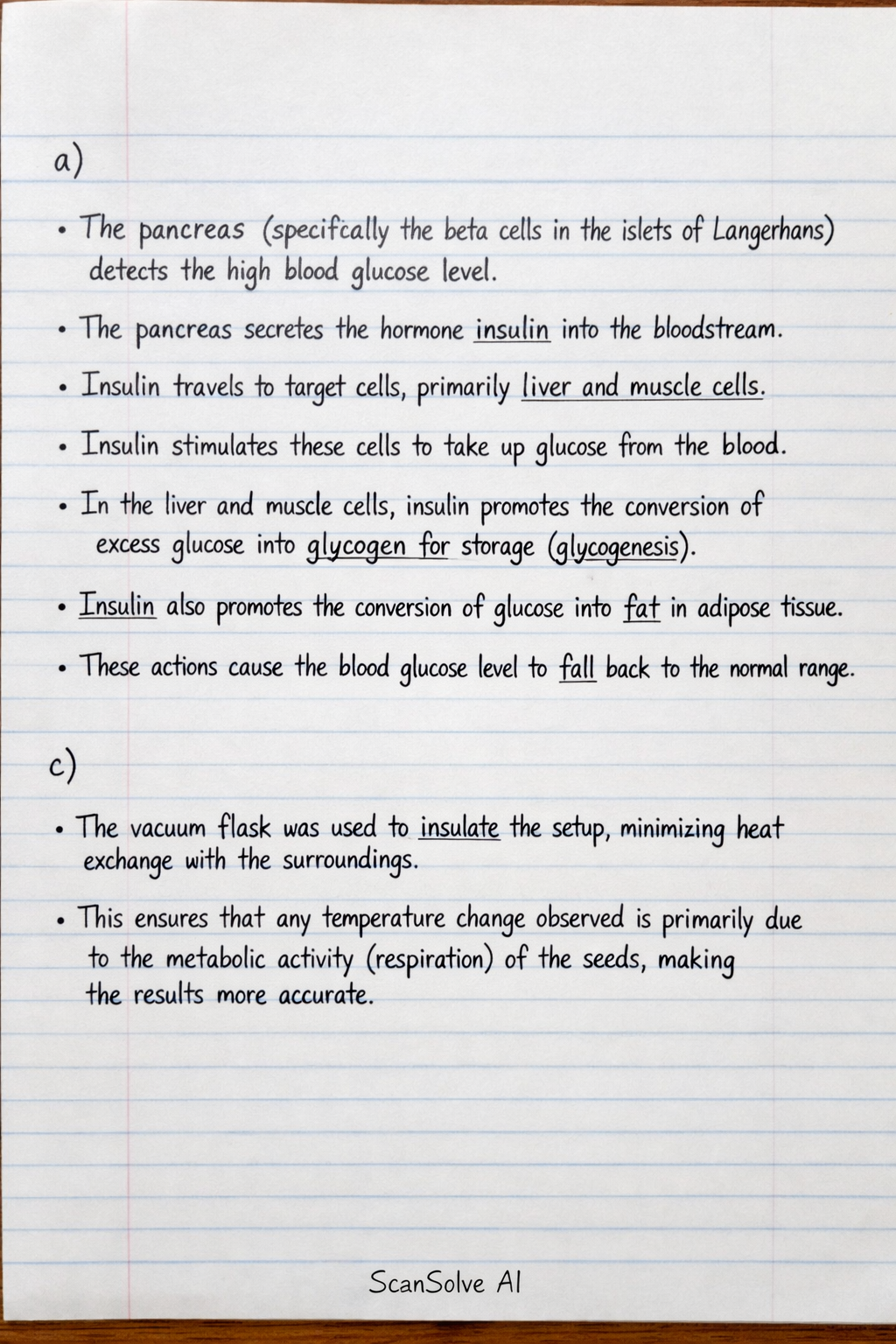
a) During corrective mechanism P, when blood glucose levels rise above normal: • The pancreas (specifically the beta cells in the islets of Langerhans) detects the high blood glucose level. • The pancreas secretes the hormone insulin into the bloodstream. • Insulin travels to target cells, primarily liver and muscle cells. • Insulin stimulates these cells to take up glucose from the blood. • In the liver and muscle cells, insulin promotes the conversion of excess glucose into glycogen for storage (glycogenesis). • Insulin also promotes the conversion of glucose into fat in adipose tissue. • These actions cause the blood glucose level to fall back to the normal range. c) The vacuum flask was used to insulate the setup, minimizing heat exchange with the surroundings. This ensures that any temperature change observed is primarily due to the metabolic activity (respiration) of the seeds, making the results more accurate. e) Beans were washed in ethanol to sterilize their surface, preventing the growth of microorganisms (like bacteria and fungi) that could also respire and produce heat, thus interfering with the experimental results. f) One alteration to make the results more reliable would be to repeat the experiment multiple times and calculate an average of the readings.