
We read your photo as:
Describe the structure and function of peptidoglycans, tubulins, and glycoproteins.
ScanSolve AI Answer
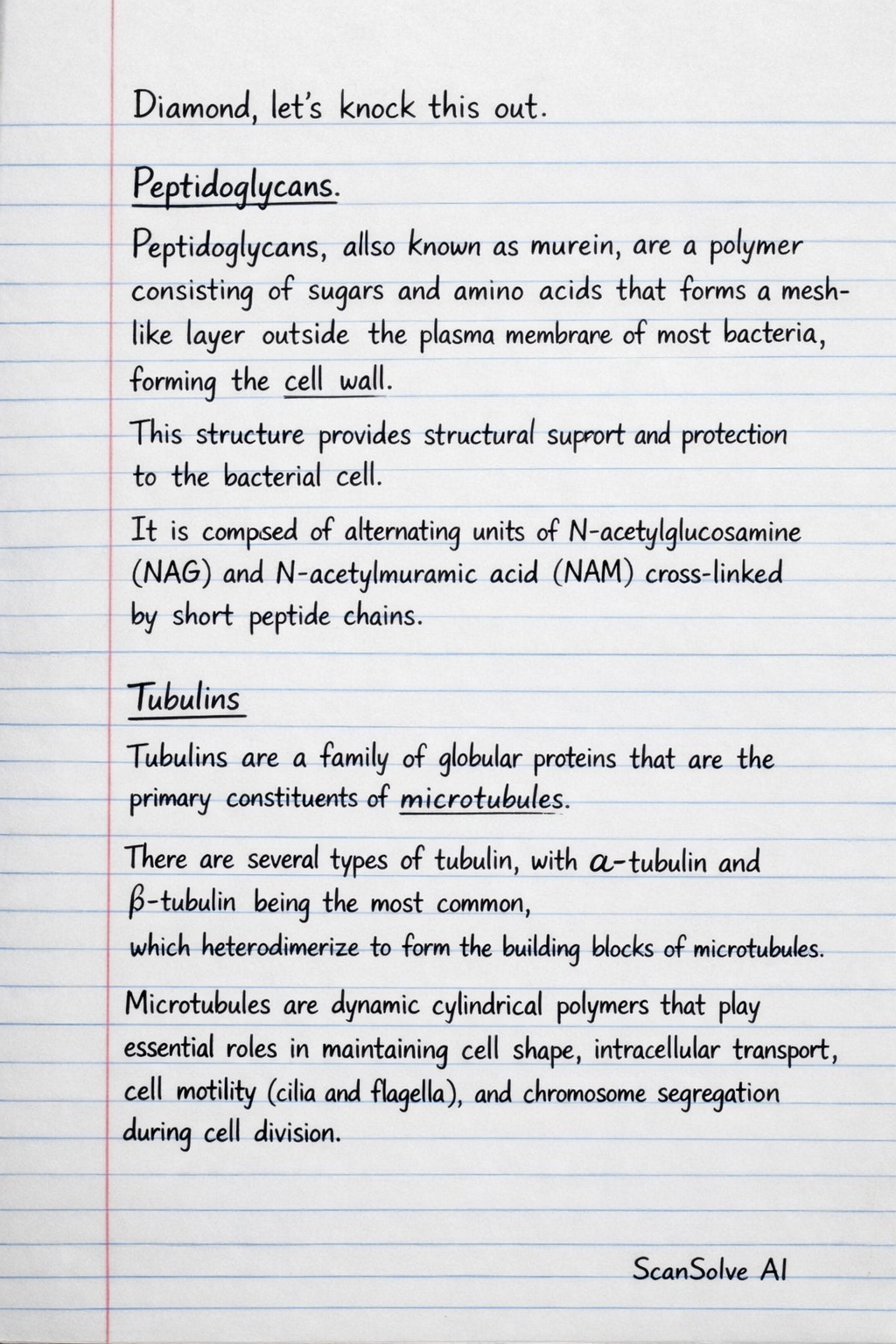
Peptidoglycans
Peptidoglycans, also known as murein, are a polymer consisting of sugars and amino acids that forms a mesh-like layer outside the plasma membrane of most bacteria, forming the cell wall. This structure provides structural support and protection to the bacterial cell. It is composed of alternating units of N-acetylglucosamine (NAG) and N-acetylmuramic acid (NAM) cross-linked by short peptide chains.
Tubulins
Tubulins are a family of globular proteins that are the primary constituents of microtubules. There are several types of tubulin, with -tubulin and -tubulin being the most common, which heterodimerize to form the building blocks of microtubules. Microtubules are dynamic cylindrical polymers that play essential roles in maintaining cell shape, intracellular transport, cell motility (cilia and flagella), and chromosome segregation during cell division.
Glycoproteins
Glycoproteins are proteins that have oligosaccharide chains (glycans) covalently attached to their polypeptide side chains. The carbohydrate portion can vary greatly in size and complexity. Glycoproteins are abundant on the cell surface and in the extracellular matrix, where they play critical roles in cell-cell recognition, cell adhesion, immune responses, and as receptors for hormones and neurotransmitters.
Still stuck on this one?
Ask a follow-up, and the answer starts from this question.
More Biology Questions
Handwritten Step-by-Step Solution
Get this as a handwritten image on WhatsApp — like a tutor wrote it for you.
Try on WhatsApp