
We read your photo as:
What are the expected results for a project transforming cassava to garri using biotechnological methods, focusing on cyanide, nutrition, and physicochemical properties?
Biology
ScanSolve AI Answer
Continuing with the "Transformation of Cassava to Garri" project:
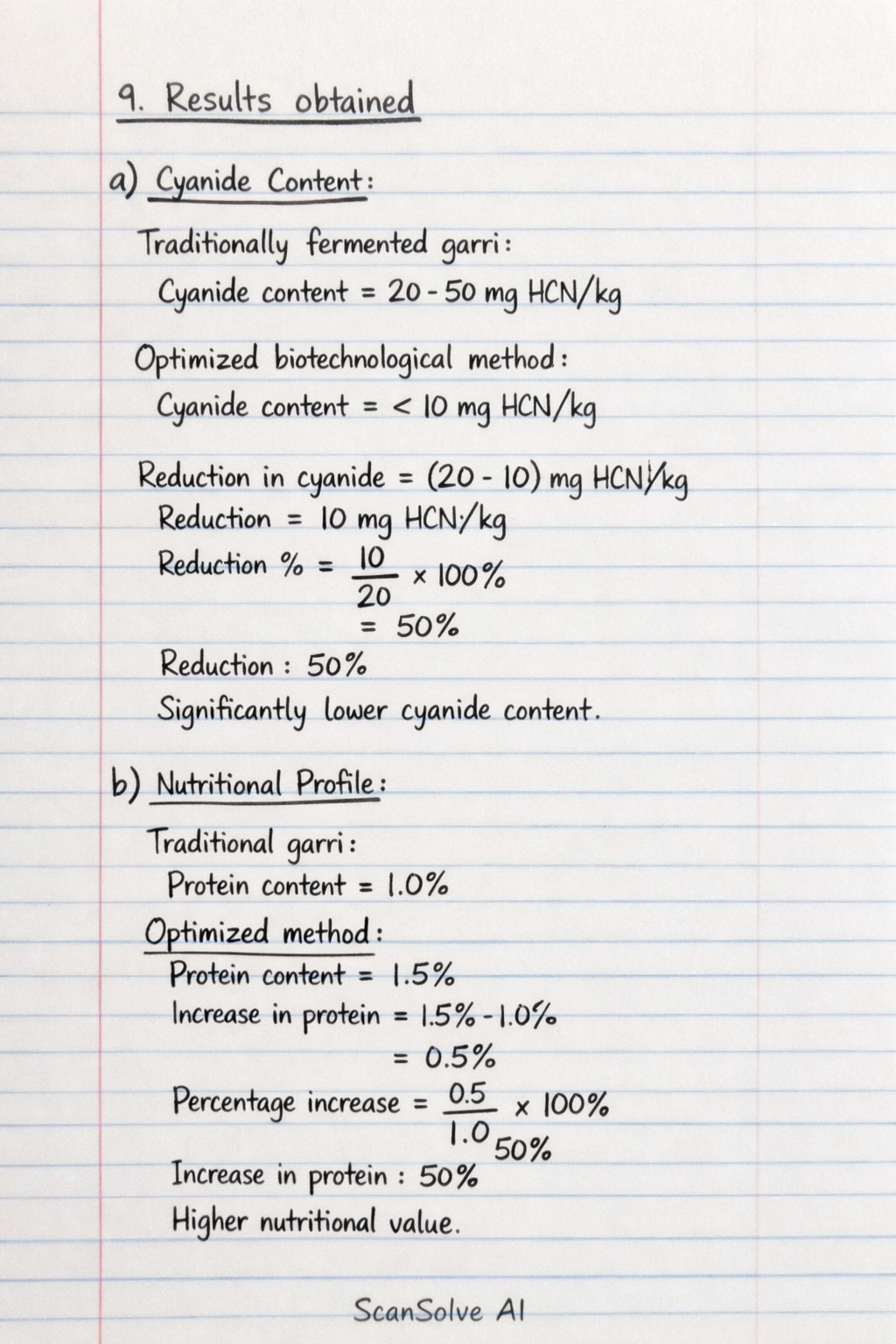
9. Results obtained
The results obtained from this research would typically be presented as comparative data between the traditionally processed garri and the garri produced using optimized biotechnological methods. These are expected results based on the stated hypothesis and objectives:
- Cyanide Content: The optimized biotechnological fermentation process resulted in a significantly lower residual cyanide content in the garri (e.g., ) compared to traditionally fermented garri (e.g., ). This indicates enhanced detoxification efficiency.
- Nutritional Profile: Garri produced with optimized methods showed improved nutritional parameters, such as a slight increase in protein content (e.g., from to ) and potentially higher levels of certain vitamins (e.g., B vitamins) due to specific microbial activities, compared to traditional garri.
- Physicochemical Properties: The optimized garri exhibited desirable physicochemical characteristics, including a lower pH (e.g., ) indicating effective acidification, improved swelling capacity (e.g., vs. ), and consistent particle size distribution.
- Microbial Analysis: Analysis confirmed the dominance of inoculated starter cultures (e.g., Lactobacillus plantarum counts ) in the optimized fermentation, leading to a more controlled microbial ecosystem and reduced presence of undesirable microorganisms compared to the diverse and variable flora in traditional fermentation.
- Shelf-life: Sensory and microbial evaluations over time demonstrated that the optimized garri maintained its quality attributes (e.g., taste, texture, absence of spoilage) for a longer duration (e.g., up to 6 months) under standard storage conditions, indicating an extended shelf-life compared to traditional garri (e.g., 3-4 months).
Was this helpful?
Still stuck on this one?
Ask a follow-up, and the answer starts from this question.
Got a different question?Ask your own question
More Biology Questions
QSummarize the interpretation of results and conclusion for the "Transformation of Cassava to Garri"…QIdentify the problems this biotechnological process of cassava to garri transformation will solve…QContinuing with the "Transformation of Cassava to Garri" project: State your hypothesis, List the…QOutline a food transformation project on Cassava to Garri, including title, team members, and…QGari is prepared from cassava tubers through several steps:
Browse by topic:Nutrition
Handwritten Step-by-Step Solution
Get this as a handwritten image on WhatsApp — like a tutor wrote it for you.
Try on WhatsApp