
We read your photo as:
What are the ways a person becomes immune, the definitions of antigen and antibody, ways to maintain good health, and functions of public health authorities?
ScanSolve AI Answer
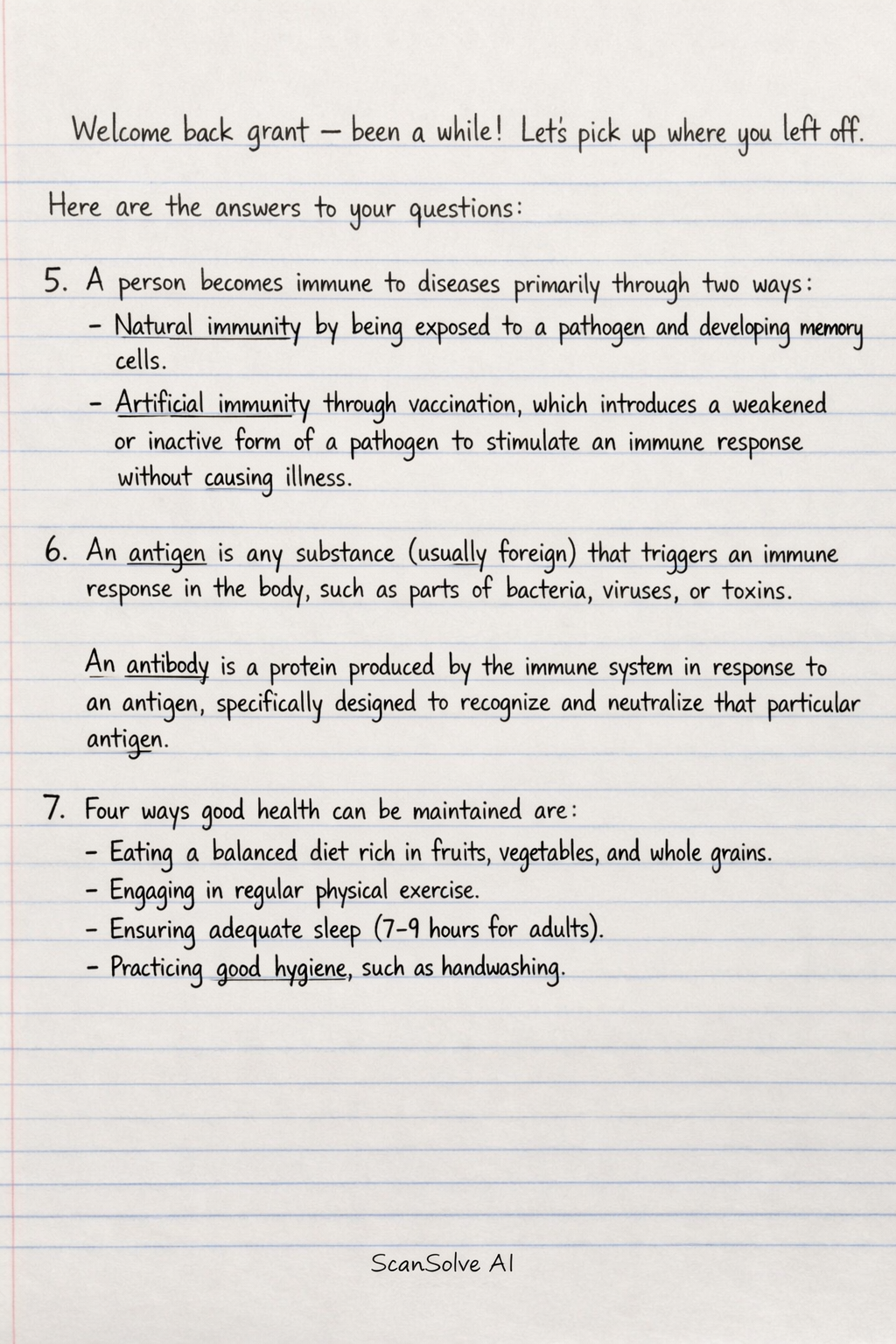
Here are the answers to your questions:
-
A person becomes immune to diseases primarily through two ways: natural immunity by being exposed to a pathogen and developing memory cells, or artificial immunity through vaccination, which introduces a weakened or inactive form of a pathogen to stimulate an immune response without causing illness.
-
An antigen is any substance (usually foreign) that triggers an immune response in the body, such as parts of bacteria, viruses, or toxins. An antibody is a protein produced by the immune system in response to an antigen, specifically designed to recognize and neutralize that particular antigen.
-
Four ways good health can be maintained are:
- Eating a balanced diet rich in fruits, vegetables, and whole grains.
- Engaging in regular physical exercise.
- Ensuring adequate sleep (7-9 hours for adults).
- Practicing good hygiene, such as handwashing.
-
Four functions of public health authorities are:
- Disease surveillance and control (e.g., tracking outbreaks).
- Health promotion and education (e.g., campaigns on healthy living).
- Ensuring environmental sanitation (e.g., clean water and waste management).
- Implementing vaccination programs to prevent infectious diseases.
Still stuck on this one?
Ask a follow-up, and the answer starts from this question.
More Biology Questions
Handwritten Step-by-Step Solution
Get this as a handwritten image on WhatsApp — like a tutor wrote it for you.
Try on WhatsApp