
We read your photo as:
Using appropriate genetic symbols, draw a genetic diagram to show the cross between two heterozygous parents for albinism and state the genotypic and phenotypic ratios.
ScanSolve AI Answer
let's finish up these genetics questions, Trésor.
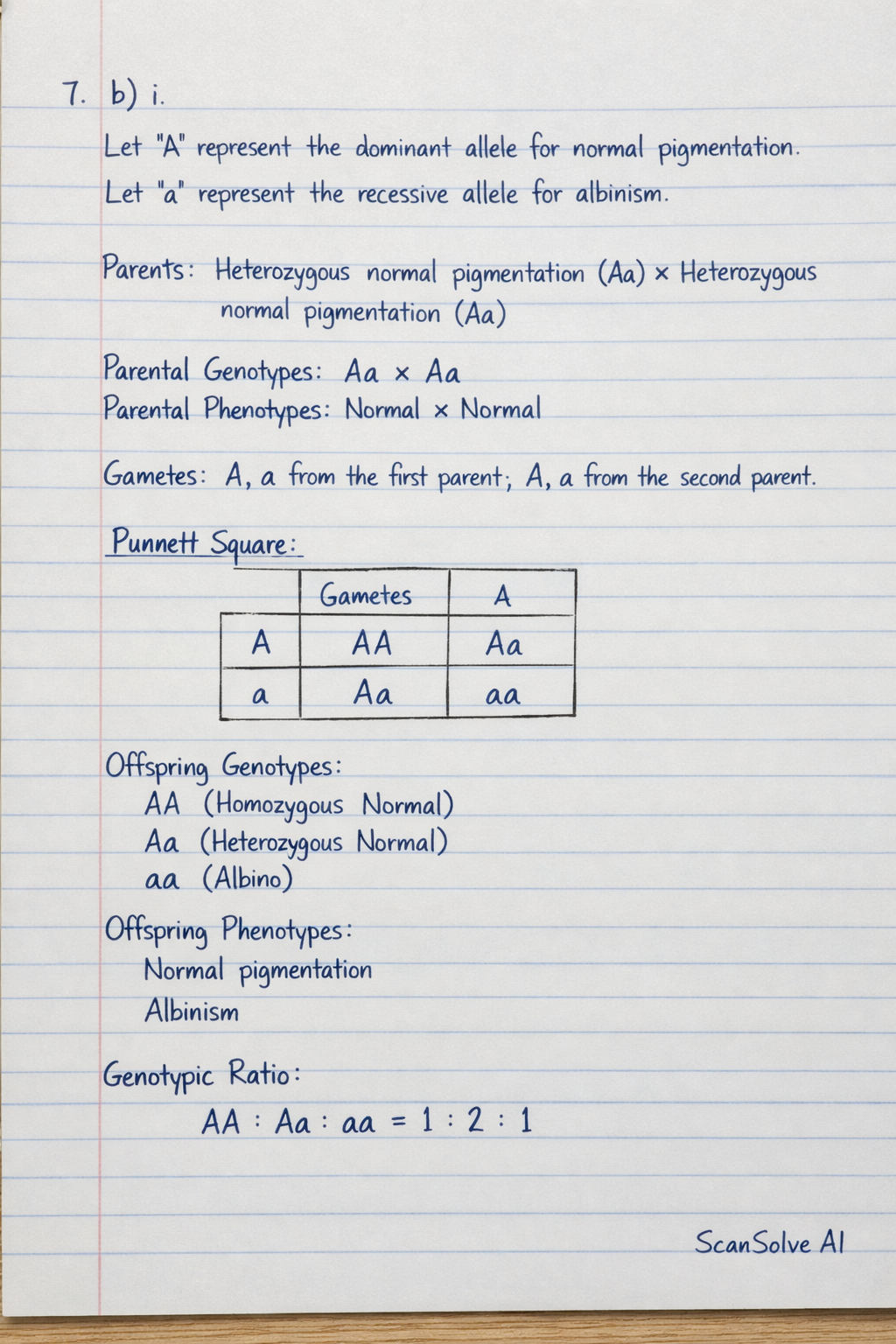
7. b) i. Using appropriate genetic symbols, draw a genetic diagram to show the cross between two heterozygous parents for albinism and state the genotypic and phenotypic ratios.
Let 'A' represent the dominant allele for normal pigmentation.
Let 'a' represent the recessive allele for albinism.
Parents: Heterozygous normal pigmentation () Heterozygous normal pigmentation ()
Parental Genotypes:
Parental Phenotypes: Normal Normal
Gametes: from the first parent; from the second parent.
Punnett Square:
Offspring Genotypes:
(Homozygous Normal)
(Heterozygous Normal)
(Albino)
Offspring Phenotypes:
Normal pigmentation
Albinism
Genotypic Ratio:
Phenotypic Ratio:
Normal pigmentation : Albinism
7. b) ii. Describe the observable characteristics (phenotype) of an individual with albinism and explain two challenges they might face due to their conditions.
Observable characteristics (phenotype) of an individual with albinism include:
- Very pale skin due to the absence or significant reduction of melanin.
- White or very light-colored hair (e.g., blonde, light brown) because of the lack of pigment.
- Light-colored eyes, often blue, grey, or even appearing pink/red due to the blood vessels showing through the unpigmented iris.
Two challenges they might face due to their condition are:
- Increased sensitivity to sunlight and higher risk of skin cancer: Melanin provides natural protection against harmful UV radiation. Without it, individuals with albinism are highly susceptible to sunburn, skin damage, and have a significantly increased risk of developing skin cancers.
- Vision problems: The lack of pigment in the eyes can lead to various visual impairments, including reduced visual acuity (poor eyesight), nystagmus (involuntary eye movements), photophobia (extreme sensitivity to light), and strabismus (misalignment of the eyes).
Still stuck on this one?
Ask a follow-up, and the answer starts from this question.
More Biology Questions
Handwritten Step-by-Step Solution
Get this as a handwritten image on WhatsApp — like a tutor wrote it for you.
Try on WhatsApp