
We read your photo as:
Explain the channels of communication with appropriate examples.
ScanSolve AI Answer
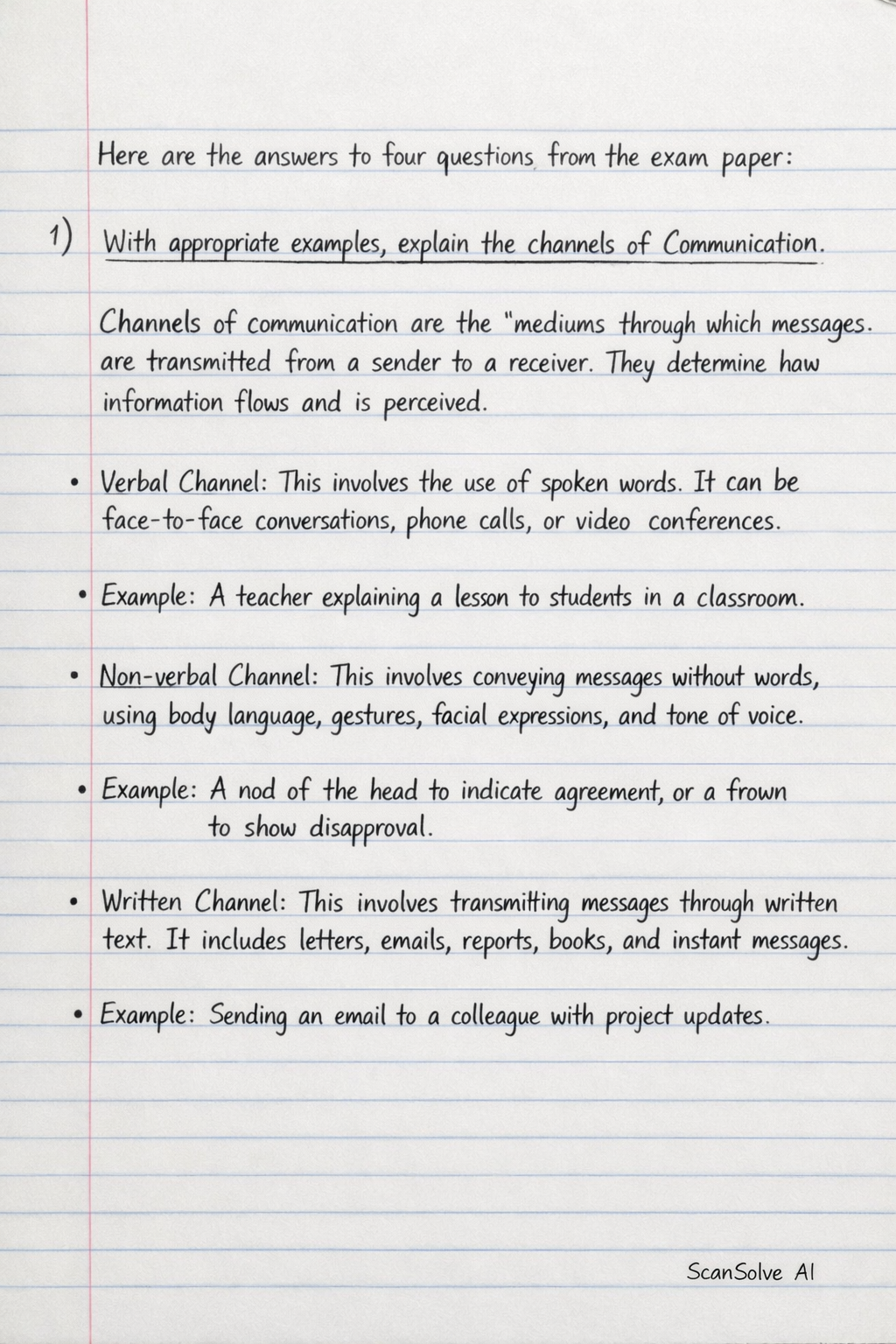
Here are the answers to four questions from the exam paper:
1) With appropriate examples, explain the channels of Communication
Channels of communication are the mediums through which messages are transmitted from a sender to a receiver. They determine how information flows and is perceived.
- Verbal Channel: This involves the use of spoken words. It can be face-to-face conversations, phone calls, or video conferences.
- Example: A teacher explaining a lesson to students in a classroom.
- Non-verbal Channel: This involves conveying messages without words, using body language, gestures, facial expressions, and tone of voice.
- Example: A nod of the head to indicate agreement, or a frown to show disapproval.
- Written Channel: This involves transmitting messages through written text. It includes letters, emails, reports, books, and instant messages.
- Example: Sending an email to a colleague with project updates.
- Electronic/Digital Channel: This encompasses modern technological mediums like social media platforms, websites, podcasts, and television broadcasts.
- Example: A news report broadcast on television or a post shared on Facebook.
2) Evaluate the significance of Mass communications in the 21st century.
Mass communication in the 21st century holds immense significance due to its pervasive reach and transformative impact on society. It plays a crucial role in shaping public opinion, disseminating information rapidly, and fostering global interconnectedness.
- Information Dissemination: Mass media, including news websites, social media, and broadcast channels, provides instant access to information, allowing for rapid awareness of local and global events. This is vital for public safety, education, and informed decision-making.
- Cultural Influence: It significantly influences cultural trends, values, and lifestyles through entertainment, advertising, and lifestyle programming, often leading to the globalization of cultural norms.
- Political Engagement: Mass communication platforms are central to political discourse, enabling campaigns, debates, and public mobilization. They can empower citizens by providing platforms for expression and holding leaders accountable.
- Economic Impact: Advertising and marketing through mass communication drive consumer behavior and economic activity, while also creating new industries and job opportunities in media production and distribution.
- Social Change: It can act as a catalyst for social change by highlighting injustices, promoting awareness, and mobilizing support for various causes, from environmental protection to human rights.
4a) What are Virtual Communities?
Virtual communities are groups of people who interact primarily through digital platforms rather than face-to-face, sharing common interests, goals, or social connections. These communities are formed and maintained online, allowing members to communicate, collaborate, and build relationships regardless of geographical location.
4b) Outline and Discuss the Merits of Virtual Communities.
Virtual communities offer several significant advantages:
- Enhanced Connection and Support: They provide a platform for individuals with niche interests or unique experiences to connect with like-minded people, offering emotional support, advice, and a sense of belonging that might be difficult to find in their physical surroundings.
- Information Sharing and Learning: Members can easily share knowledge, resources, and expertise on specific topics, facilitating continuous learning and problem-solving. This collective intelligence can be highly beneficial for personal and professional development.
- Accessibility and Inclusivity: Virtual communities break down geographical barriers, allowing people from diverse backgrounds and locations to participate. This inclusivity can be particularly beneficial for individuals with mobility issues or those in remote areas.
- Cost-Effectiveness: Participating in virtual communities often requires minimal to no financial cost, making it an accessible way for many to engage in social interaction, networking, and information exchange without the expenses associated with physical gatherings.
- Diverse Perspectives: The global nature of many virtual communities exposes members to a wide range of viewpoints and cultures, fostering a broader understanding and appreciation of different ideas and experiences.
5a) Explain to your unschooled relatives, your understanding of nonverbal communications.
Nonverbal communication is simply talking without using words. It's how we show what we mean or feel with our bodies, faces, and even how close we stand to someone. For example, if you nod your head, it means "yes" without saying the word. If you frown, it shows you're unhappy. These actions speak louder than words sometimes and help us understand each other better, even if we don't speak the same language.
5b) Highlight and explain 3 examples of nonverbal communications.
- Body Language (Kinesics): This refers to communication through physical movements and postures. It includes gestures, stance, and how one carries their body.
- Example: Crossing your arms might signal defensiveness or disagreement, while leaning forward can show engagement and interest.
- Facial Expressions: These are movements of the facial muscles that convey emotions and intentions. They are often universal across cultures.
- Example: A smile typically indicates happiness or friendliness, while a furrowed brow can express confusion or anger.
- Proxemics (Use of Space): This is the study of how people use and perceive space in communication. The distance maintained between individuals can convey intimacy, formality, or social status.
- Example: Standing very close to someone usually indicates a close relationship or intimacy, whereas maintaining a greater distance suggests a more formal or impersonal interaction.
Still stuck on this one?
Ask a follow-up, and the answer starts from this question.
More Business/Management Questions
Handwritten Step-by-Step Solution
Get this as a handwritten image on WhatsApp — like a tutor wrote it for you.
Try on WhatsApp