
We read your photo as:
Explain the different communication contexts in an organization: formal, informal, internal, and external.
ScanSolve AI Answer
Answer
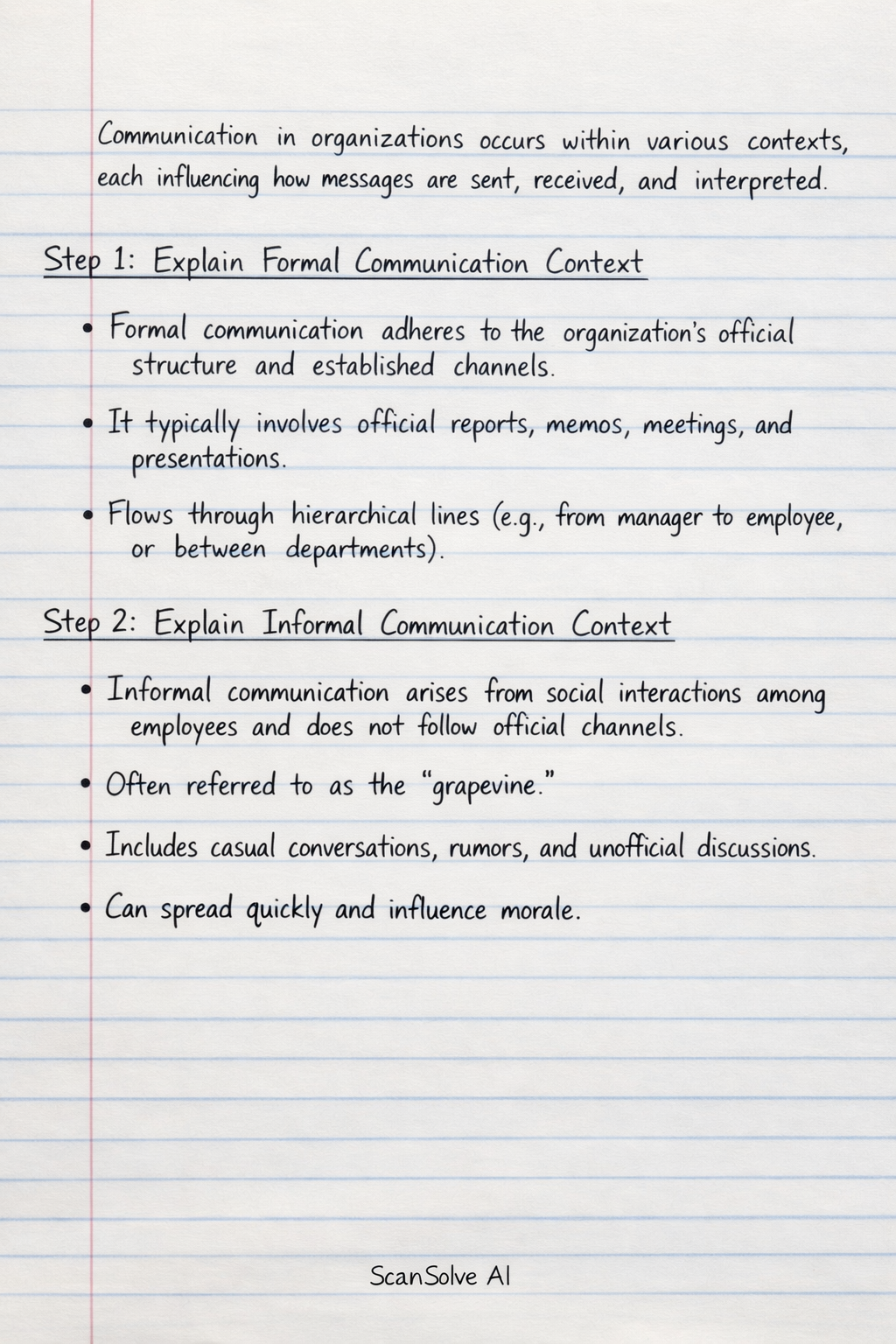
Communication in organizations occurs within various contexts, each influencing how messages are sent, received, and interpreted.
Step-by-step solution
4 stepsExplain Formal Communication Context.
Formal communication adheres to the organization's official structure and established channels. It typically involves official reports, memos, meetings, and presentations, flowing through hierarchical lines (e.g., from manager to employee, or between departments).
Explain Informal Communication Context.
Informal communication arises from social interactions among employees and does not follow official channels. Often referred to as the "grapevine," it includes casual conversations, rumors, and unofficial discussions, which can spread quickly and influence morale.
Explain Internal Communication Context.
Internal communication takes place within the organization, among its members. This context encompasses all exchanges between departments, teams, and individual employees, aimed at coordinating activities, sharing information, and fostering a shared understanding to achieve organizational goals.
Explain External Communication Context.
External communication involves interactions between the organization and outside stakeholders. This context includes communication with customers, suppliers, investors, the media, government bodies, and the general public, often for purposes like public relations, marketing, or regulatory compliance.
Still stuck on this one?
Ask a follow-up, and the answer starts from this question.
More Business/Management Questions
Handwritten Step-by-Step Solution
Get this as a handwritten image on WhatsApp — like a tutor wrote it for you.
Try on WhatsApp