

This business/management problem is solved step by step below, with detailed explanations to help you understand the method and arrive at the correct answer.
ScanSolve AI Answer
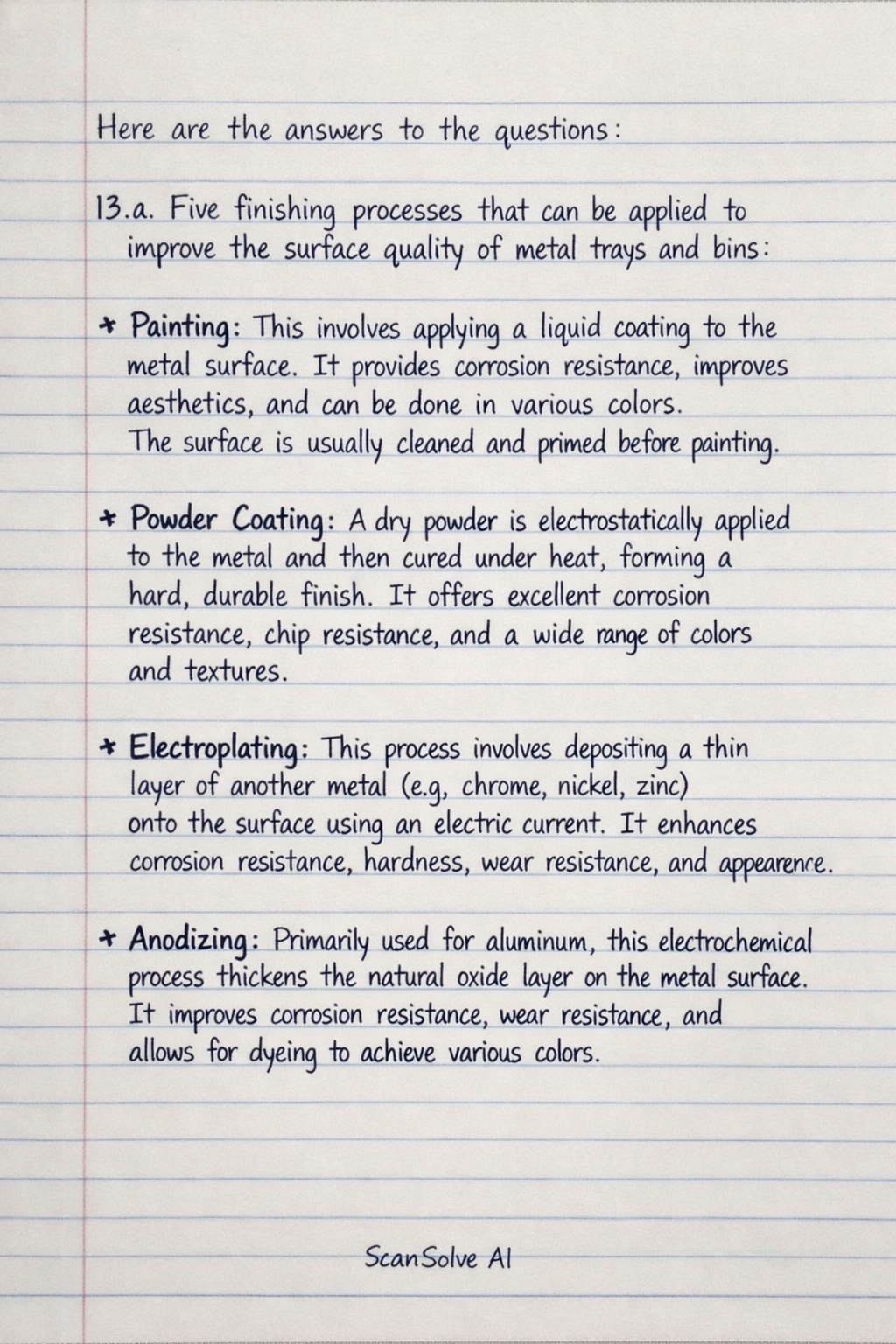
Here are the answers to the questions: 13.a. Five finishing processes that can be applied to improve the surface quality of metal trays and bins: Painting: This involves applying a liquid coating to the metal surface. It provides corrosion resistance, improves aesthetics, and can be done in various colors. The surface is usually cleaned and primed before painting. Powder Coating: A dry powder is electrostatically applied to the metal and then cured under heat, forming a hard, durable finish. It offers excellent corrosion resistance, chip resistance, and a wide range of colors and textures. Electroplating: This process involves depositing a thin layer of another metal (e.g., chrome, nickel, zinc) onto the surface using an electric current. It enhances corrosion resistance, hardness, wear resistance, and appearance. Anodizing: Primarily used for aluminum, this electrochemical process thickens the natural oxide layer on the metal surface. It improves corrosion resistance, wear resistance, and allows for dyeing to achieve various colors. Polishing: This mechanical process uses abrasive compounds to smooth and brighten the metal surface, removing minor scratches and imperfections. It enhances the aesthetic appeal and can reduce surface roughness. 13.b. Five major sheet metal operations you would use to fabricate a metal cabinet: Marking Out: This is the initial step where the design, dimensions, cut lines, and bend lines from the engineering drawing are accurately transferred onto the flat sheet metal using tools like a scriber, steel rule, and try square. Cutting: After marking out, the sheet metal is cut to the required shapes and sizes for the cabinet components (sides, top, bottom, doors). This can be done using tools such as a guillotine (power shear), tin snips, or plasma cutting. Bending/Folding: This operation involves forming the flat cut pieces into three-dimensional shapes by creating specific angles and folds. A bending machine (e.g., press brake or folding machine) is used to create the cabinet's structure, such as the flanges for joining or the cabinet's corners. Notching: This involves cutting out small sections or V-shapes from the edges or corners of the sheet metal pattern. Notching is crucial for allowing clean bends, preventing material overlap at corners, and creating features for interlocking joints. Joining: Once the individual components are formed, they are assembled and permanently joined to create the complete cabinet structure. Common joining methods include welding (e.g., spot welding, MIG welding), riveting, or forming mechanical seams (e.g., Pittsburgh lock seams). 13.c. Four methods for segregating and disposing of scrap and offcuts in a sheet metal workshop: Dedicated Bins for Different Metal Types: Provide clearly labeled bins or containers for segregating scrap based on the type of metal (e.g., steel, aluminum, stainless steel, copper). This prevents contamination and facilitates efficient recycling. Separate Bins for Usable Offcuts: Create a designated area or bins for larger offcuts that are still usable for smaller projects. This reduces waste and saves material costs by allowing reuse. Hazardous Waste Containers: If any processes generate hazardous waste (e.g., oily rags, chemical residues from cleaning), ensure these are collected in appropriate, sealed containers and disposed of according to environmental regulations. Regular Collection and Recycling Program: Establish a routine schedule for collecting segregated scrap metal and arranging for its pickup by a reputable metal recycling company. This ensures proper disposal and can generate revenue from the scrap. 13.d. Six systematic procedures to restore rusty, blunt, and difficult-to-operate hand shears and snips to working condition: Step 1: Disassembly and Initial Cleaning: Carefully disassemble the shears/snips, separating the blades and pivot mechanism. Use a wire brush or abrasive pad to remove loose rust and dirt from all components. Step 2: Rust Removal: Apply a rust-removing solution (e.g., rust converter, penetrating oil, or a mild acid solution like vinegar) to the rusty parts. Allow it to soak for the recommended time, then scrub off the remaining rust. Rinse and dry thoroughly. Step 3: Sharpening the Blades: Using a sharpening stone, file, or grinding wheel, carefully sharpen the cutting edges of both blades. Maintain the original bevel angle and ensure a consistent, sharp edge along the entire length of the blade. Deburr any rough edges created during sharpening. Step 4: Lubrication of Pivot Point: Apply a suitable lubricant (e.g., machine oil, grease) to the pivot pin and the mating surfaces of the blades. This will reduce friction and allow for smooth operation. Step 5: Reassembly and Adjustment: Reassemble the shears/snips, ensuring all parts are correctly aligned. Adjust the pivot screw or bolt to achieve the correct tension. The blades should close smoothly without excessive play or binding, allowing for a clean cut. Step 6: Testing and Storage: Test the shears/snips on a piece of scrap sheet metal to ensure they cut cleanly and easily. If satisfactory, wipe off any excess lubricant and store them in a dry, clean place to prevent future rust and damage.