
We read your photo as:
What are the mechanisms and key criteria for effective and efficient service delivery?
ScanSolve AI Answer
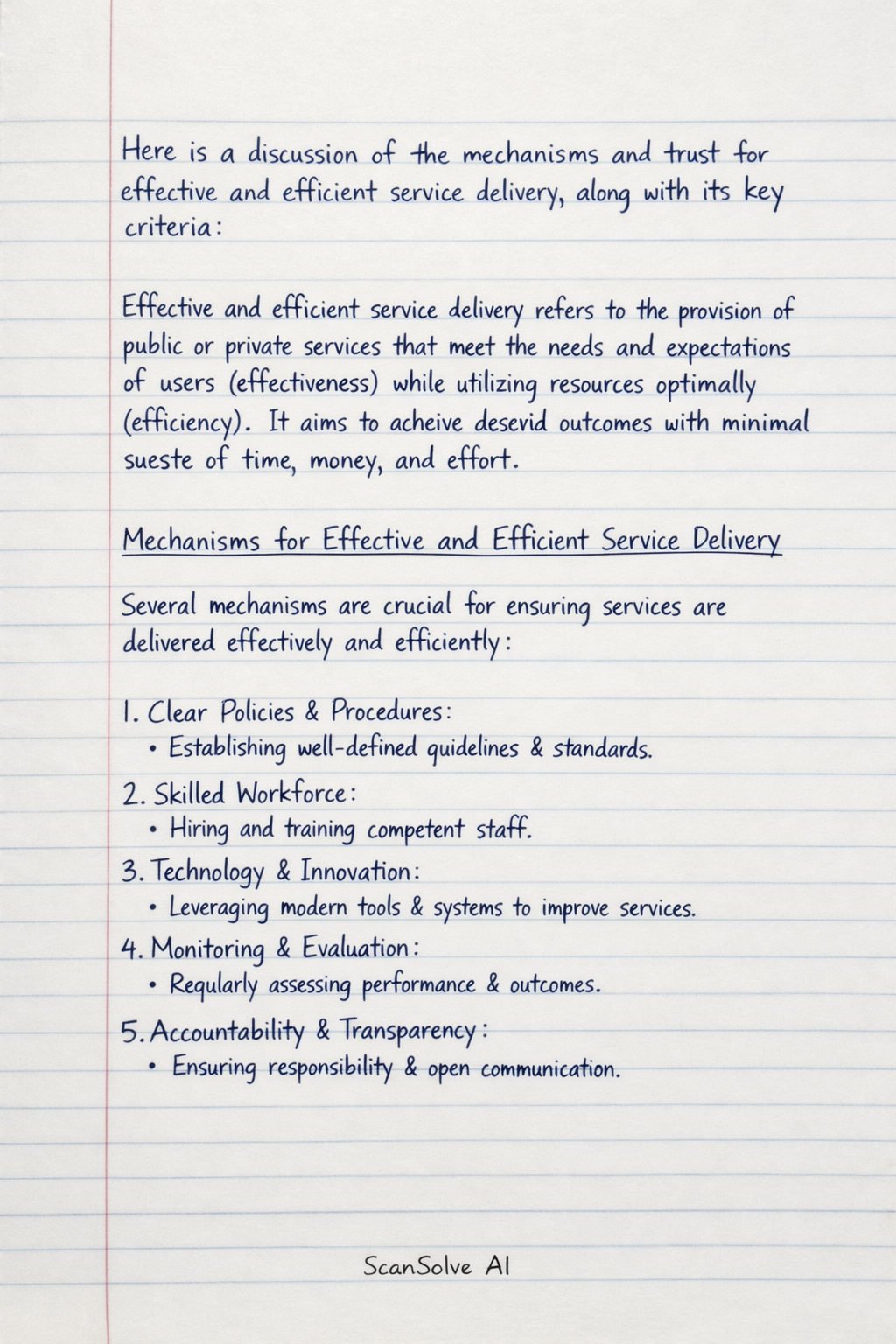
Here is a discussion of the mechanisms and trust for effective and efficient service delivery, along with its key criteria:
Effective and efficient service delivery refers to the provision of public or private services that meet the needs and expectations of users (effectiveness) while utilizing resources optimally (efficiency). It aims to achieve desired outcomes with minimal waste of time, money, and effort.
Mechanisms for Effective and Efficient Service Delivery
Several mechanisms are crucial for ensuring services are delivered effectively and efficiently:
- Clear Policies and Procedures: Well-defined policies and standardized operating procedures provide a framework for consistent service delivery, reducing ambiguity and ensuring fairness.
- Performance Management Systems: Establishing clear performance indicators (KPIs) and regularly monitoring, evaluating, and reporting on service outcomes helps identify areas for improvement and ensures accountability.
- Technology Integration: Utilizing appropriate technologies (e.g., digital platforms, automation, data analytics) can streamline processes, reduce manual errors, improve accessibility, and enhance speed of delivery.
- Skilled and Motivated Workforce: Investing in training, professional development, and fostering a positive work environment ensures that staff have the necessary skills and motivation to deliver high-quality services.
- Resource Optimization: Efficient allocation and management of financial, human, and material resources are essential to minimize waste and maximize output. This includes budgeting, procurement, and inventory management.
- Feedback Mechanisms: Implementing channels for user feedback (e.g., surveys, complaint systems, suggestion boxes) allows service providers to understand user needs, identify shortcomings, and make necessary adjustments.
- Inter-agency Collaboration: For complex services, collaboration and coordination among different departments or organizations can prevent duplication of effort and ensure a seamless user experience.
Building Trust in Service Delivery
Trust is fundamental for the success and acceptance of any service delivery system. It is built through:
- Transparency: Openness about service standards, processes, costs, and decision-making builds confidence. Users should understand how services are delivered and what to expect.
- Accountability: Service providers must be held responsible for their performance. This includes clear lines of responsibility, mechanisms for redress, and consequences for failure to meet standards.
- Reliability and Consistency: Delivering on promises consistently and providing services that are dependable and predictable fosters user confidence.
- Fairness and Equity: Ensuring that services are accessible and delivered equitably to all eligible users, without discrimination, is crucial for building trust, especially among marginalized groups.
- Responsiveness: Being attentive to user needs, addressing complaints promptly, and adapting services based on feedback demonstrates a commitment to user satisfaction.
- Integrity: Upholding ethical standards, preventing corruption, and acting in the best interest of the public are paramount for maintaining trust.
Key Criteria for Effective and Efficient Service Delivery
The criteria for evaluating effective and efficient service delivery include:
- Relevance:
- Meeting User Needs: Services directly address the identified needs and priorities of the target population.
- Alignment with Objectives: Services contribute to broader organizational or societal goals.
- Effectiveness:
- Achievement of Outcomes: Services successfully achieve their intended results and impact.
- Quality: Services meet defined standards of excellence, accuracy, and reliability.
- User Satisfaction: Users are content with the service received.
- Efficiency:
- Resource Utilization: Services are delivered with optimal use of financial, human, and material resources.
- Timeliness: Services are delivered within reasonable and expected timeframes.
- Productivity: High output is achieved relative to input.
- Accessibility:
- Availability: Services are readily available to all eligible users.
- Ease of Access: Services are easy to find, understand, and utilize (e.g., physical location, digital platforms, language).
- Inclusivity: Services cater to diverse needs, including those of marginalized or vulnerable groups.
- Responsiveness:
- Adaptability: Services can be adjusted based on changing needs, feedback, or circumstances.
- Complaint Resolution: Mechanisms are in place for prompt and fair handling of grievances.
- Accountability and Transparency:
- Clear Responsibilities: Roles and responsibilities for service delivery are well-defined.
- Reporting: Performance data and information are regularly collected, analyzed, and publicly reported.
- Redress Mechanisms: Users have avenues to seek recourse for service failures.
By focusing on these mechanisms and criteria, organizations can build robust systems that not only deliver services efficiently but also foster public trust and contribute to overall societal well-being.
Still stuck on this one?
Ask a follow-up, and the answer starts from this question.
More Business/Management Questions
Handwritten Step-by-Step Solution
Get this as a handwritten image on WhatsApp — like a tutor wrote it for you.
Try on WhatsApp