
Chemical reaction for saponification
Chemistry
ScanSolve AI Answer
Here is the chemical reaction for saponification, Empress🥰🥰🥰:
Saponification is the process of making soap. It involves the hydrolysis of an ester (typically a triglyceride, which is a fat or oil) with a strong base (like sodium hydroxide or potassium hydroxide) to produce a fatty acid salt (soap) and glycerol.
For example, using a triglyceride (fat) and sodium hydroxide:
A more specific example using glyceryl tristearate (a common fat):
Where:
- is Glyceryl Tristearate (a fat)
- is Sodium Hydroxide (a strong base)
- is Glycerol
- is Sodium Stearate (a type of soap)
Was this helpful?
Still stuck on this one?
Ask a follow-up, and the answer starts from this question.
Got a different question?Ask your own question
More Chemistry Questions
QDescribe the process of soap preparation using cocoa pod ash and palm oil, including the scientific…QDescribe the Solvay process and related chemical reactions, including calculations for the reaction…QOutline the steps in soap preparation from palm oil, identify the scientific principle, catalysts…QHow can I start making soap using things around the houseQProcess of making sulphuric acid
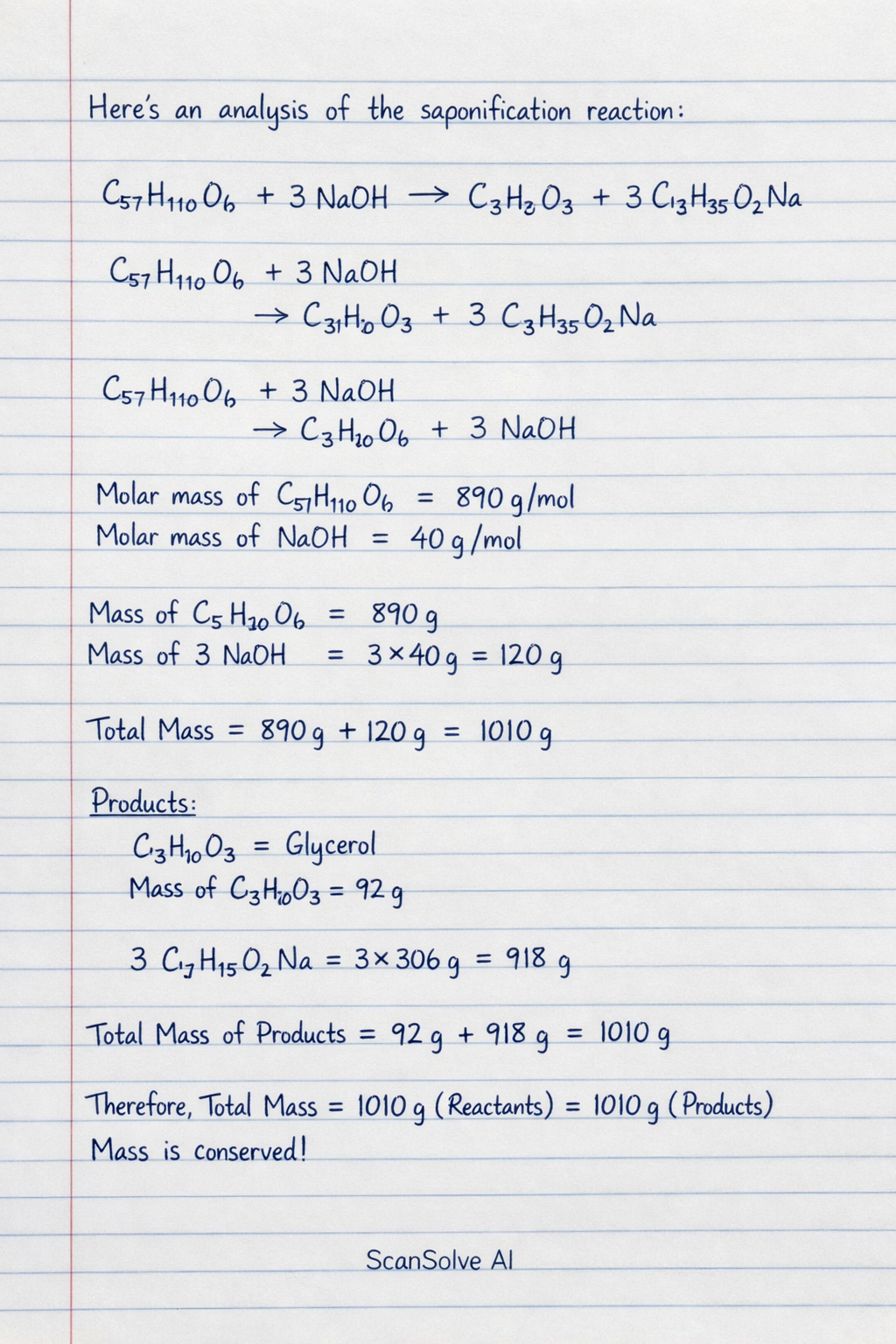
Handwritten Step-by-Step Solution
Get this as a handwritten image on WhatsApp — like a tutor wrote it for you.
Try on WhatsApp