

This chemistry question involves key chemical concepts and calculations. The detailed solution below walks through each step, from identifying the reaction type to computing the final answer.
ScanSolve AI Answer
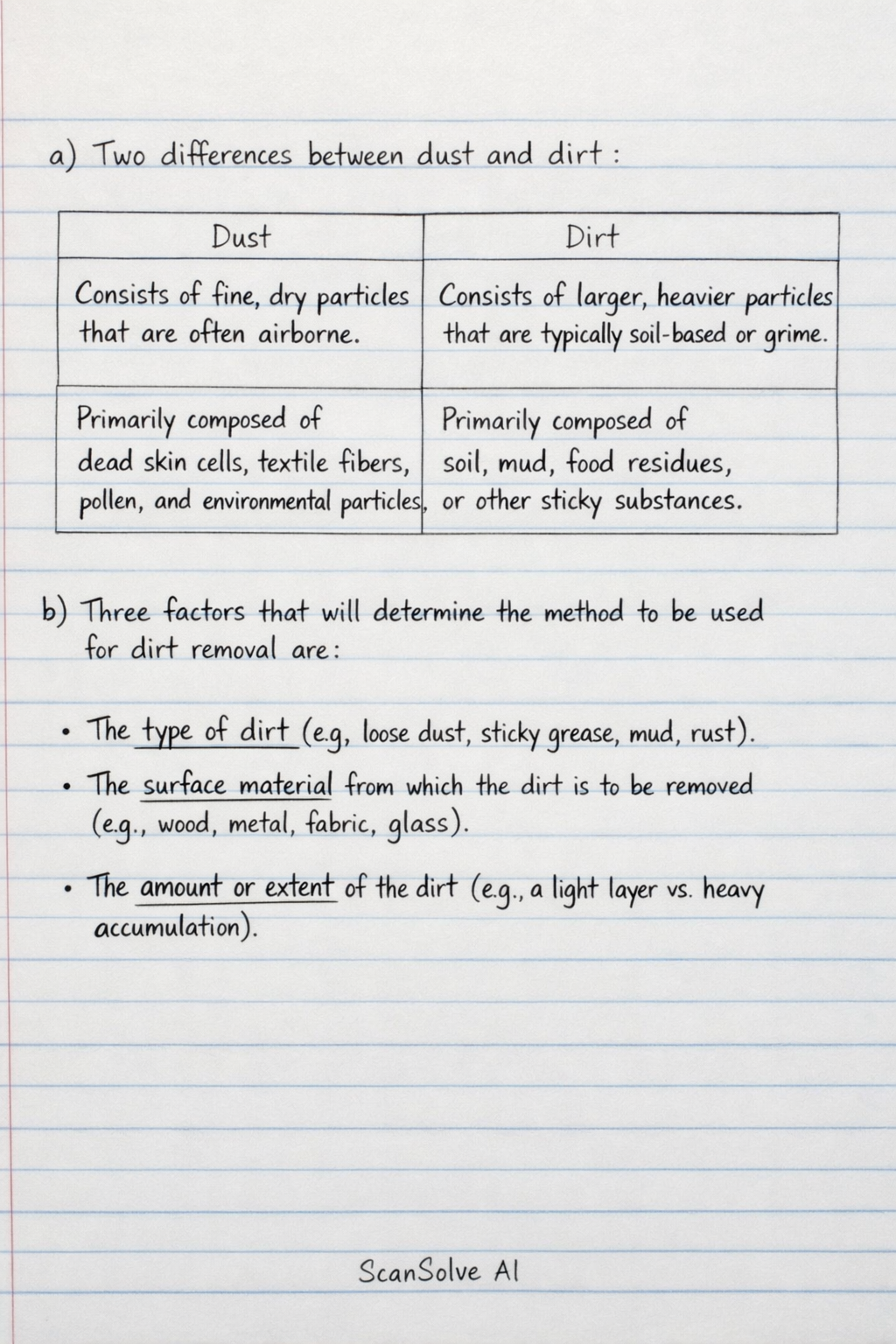
Here's the breakdown for question 5: a) Two differences between dust and dirt: | Dust | Dirt | | :--------------------------------------- | :------------------------------------------ | | Consists of fine, dry particles that are often airborne. | Consists of larger, heavier particles that are typically soil-based or grime. | | Primarily composed of dead skin cells, textile fibers, pollen, and environmental particles. | Primarily composed of soil, mud, food residues, or other sticky substances. | b) Three factors that will determine the method to be used for dirt removal are: The type of dirt* (e.g., loose dust, sticky grease, mud, rust). The surface material* from which the dirt is to be removed (e.g., wood, metal, fabric, glass). The amount or extent of the dirt* (e.g., a light layer vs. heavy accumulation). c) Lemon is used to remove tarnish on a kitchen sink because it contains citric acid. This acid reacts chemically with the metal oxides that form the tarnish, dissolving them. After applying lemon juice and letting it sit briefly, the loosened tarnish can be easily wiped away, revealing the clean surface underneath. That's 2 down. 3 left today — send the next one.