

This chemistry question involves key chemical concepts and calculations. The detailed solution below walks through each step, from identifying the reaction type to computing the final answer.
ScanSolve AI Answer
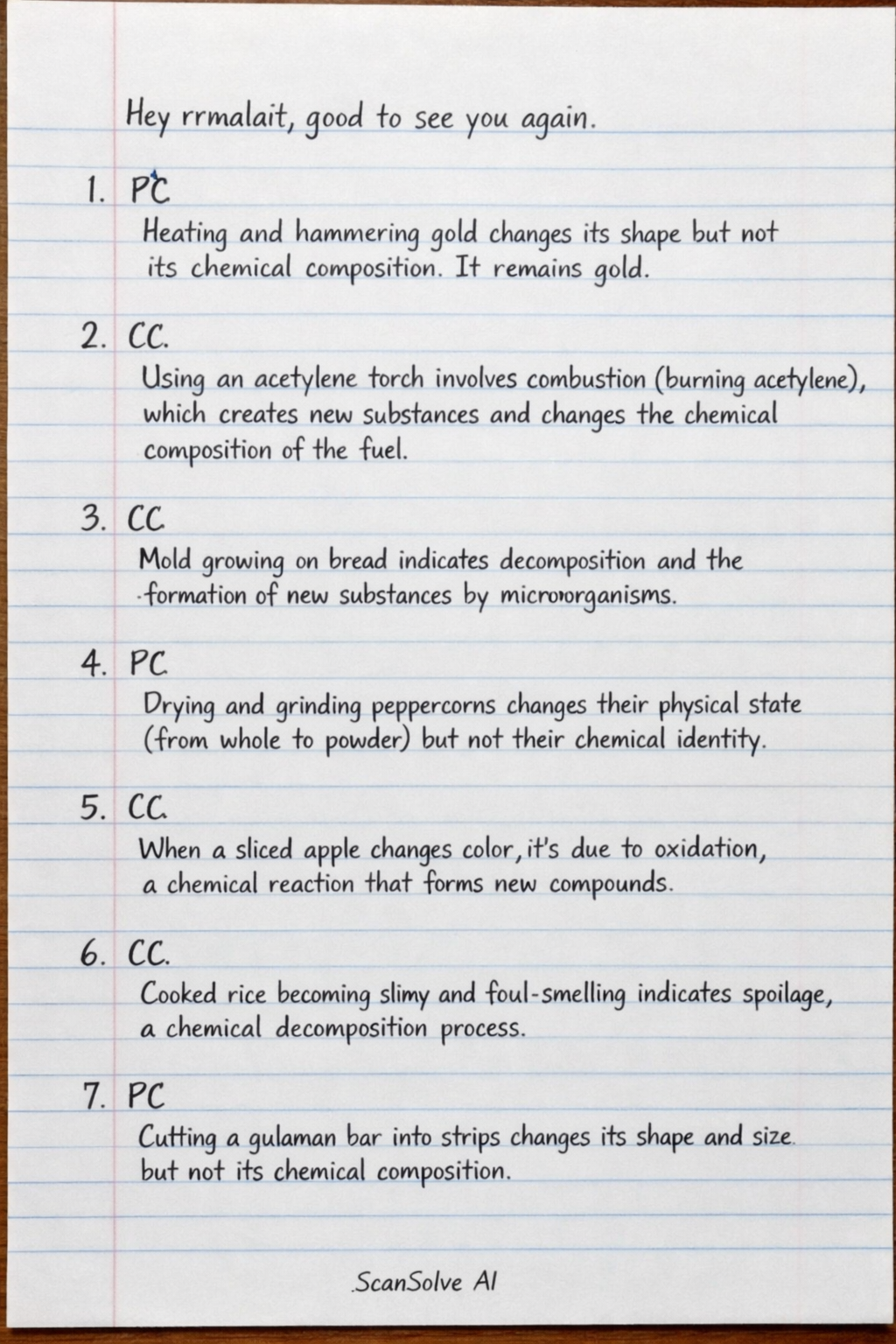
Here are the classifications for each change: 1. PC Heating and hammering gold changes its shape but not its chemical composition. It remains gold. 2. CC Using an acetylene torch involves combustion (burning acetylene), which creates new substances and changes the chemical composition of the fuel. 3. CC Mold growing on bread indicates decomposition and the formation of new substances by microorganisms. 4. PC Drying and grinding peppercorns changes their physical state (from whole to powder) but not their chemical identity. 5. CC When a sliced apple changes color, it's due to oxidation, a chemical reaction that forms new compounds. 6. CC Cooked rice becoming slimy and foul-smelling indicates spoilage, which is a chemical decomposition process. 7. PC Cutting a gulaman bar into strips changes its shape and size but not its chemical composition. 8. CC Fermentation of grapes to make wine involves yeast converting sugars into alcohol and carbon dioxide, creating new chemical substances. 9. PC Crushing garlic and slicing an onion changes their physical form, releasing their natural aromas, but does not alter their chemical makeup. 10. PC Extracting juice from watermelon separates the liquid from the solid pulp, which is a physical separation, not a chemical change. Send me the next one 📸