
We read your photo as:
Which alkali metal is least reactive and why? Include ionization energies for elements A, B, and C.
ScanSolve AI Answer
Step-by-step solution
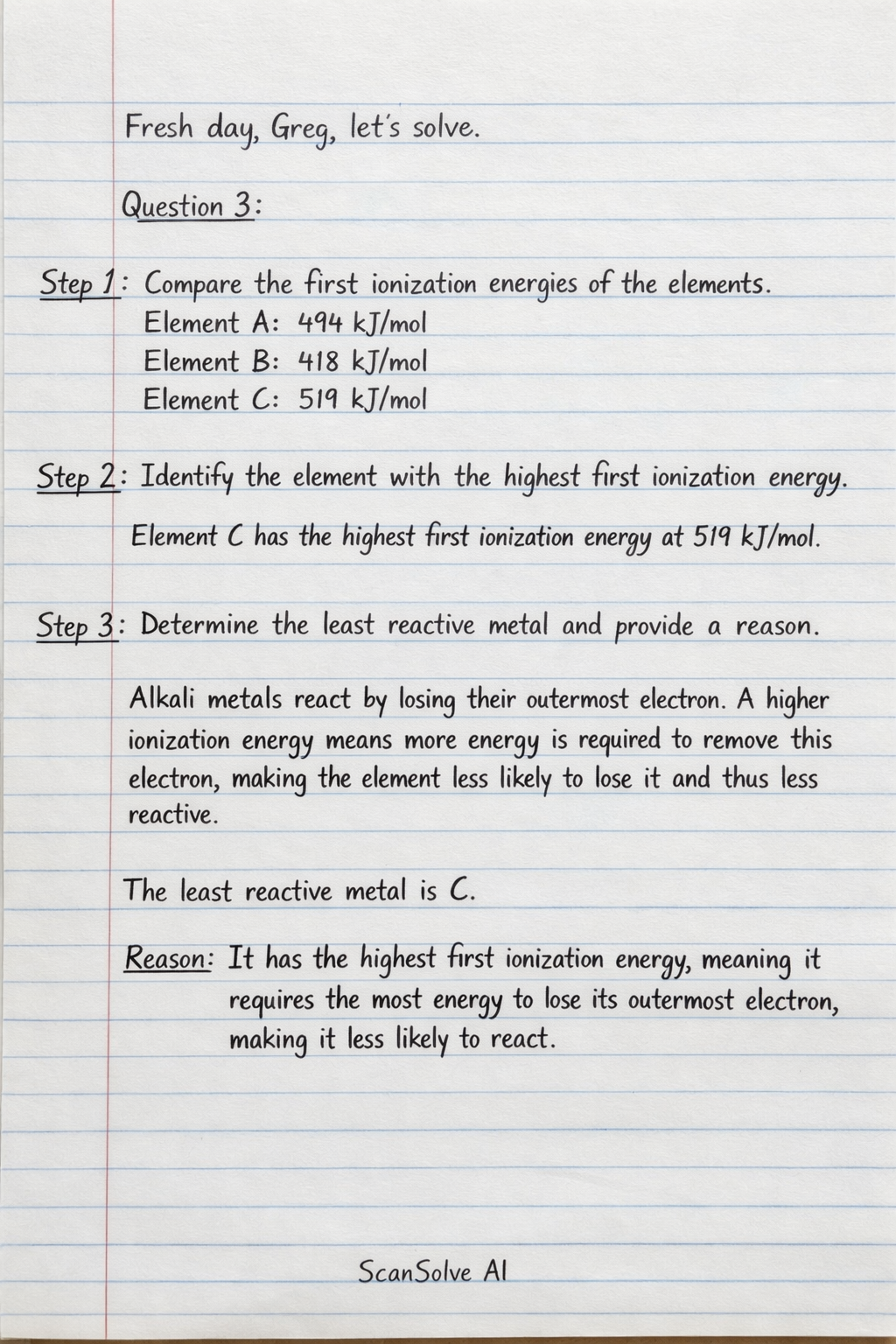
3 stepsQuestion 3:
Compare the first ionization energies of the elements.
Element A:
Element B:
Element C:Identify the element with the highest first ionization energy.
Element C has the highest first ionization energy at .
Determine the least reactive metal and provide a reason.
Alkali metals react by losing their outermost electron. A higher ionization energy means more energy is required to remove this electron, making the element less likely to lose it and thus less reactive.
The least reactive metal is C.
Reason: It has the highest first ionization energy, meaning it requires the most energy to lose its outermost electron, making it less likely to react.Question 4a:
When moist chlorine reacts with hydrogen sulphide, the following reaction occurs:The observation made is the formation of a yellow solid (sulfur) and the disappearance of the yellowish-green color of chlorine gas.
Observation: A yellow solid is formed, and the yellowish-green color of chlorine fades.
Still stuck on this one?
Ask a follow-up, and the answer starts from this question.
More Chemistry Questions
Handwritten Step-by-Step Solution
Get this as a handwritten image on WhatsApp — like a tutor wrote it for you.
Try on WhatsApp