
What of the reaction of koh
ScanSolve AI Answer
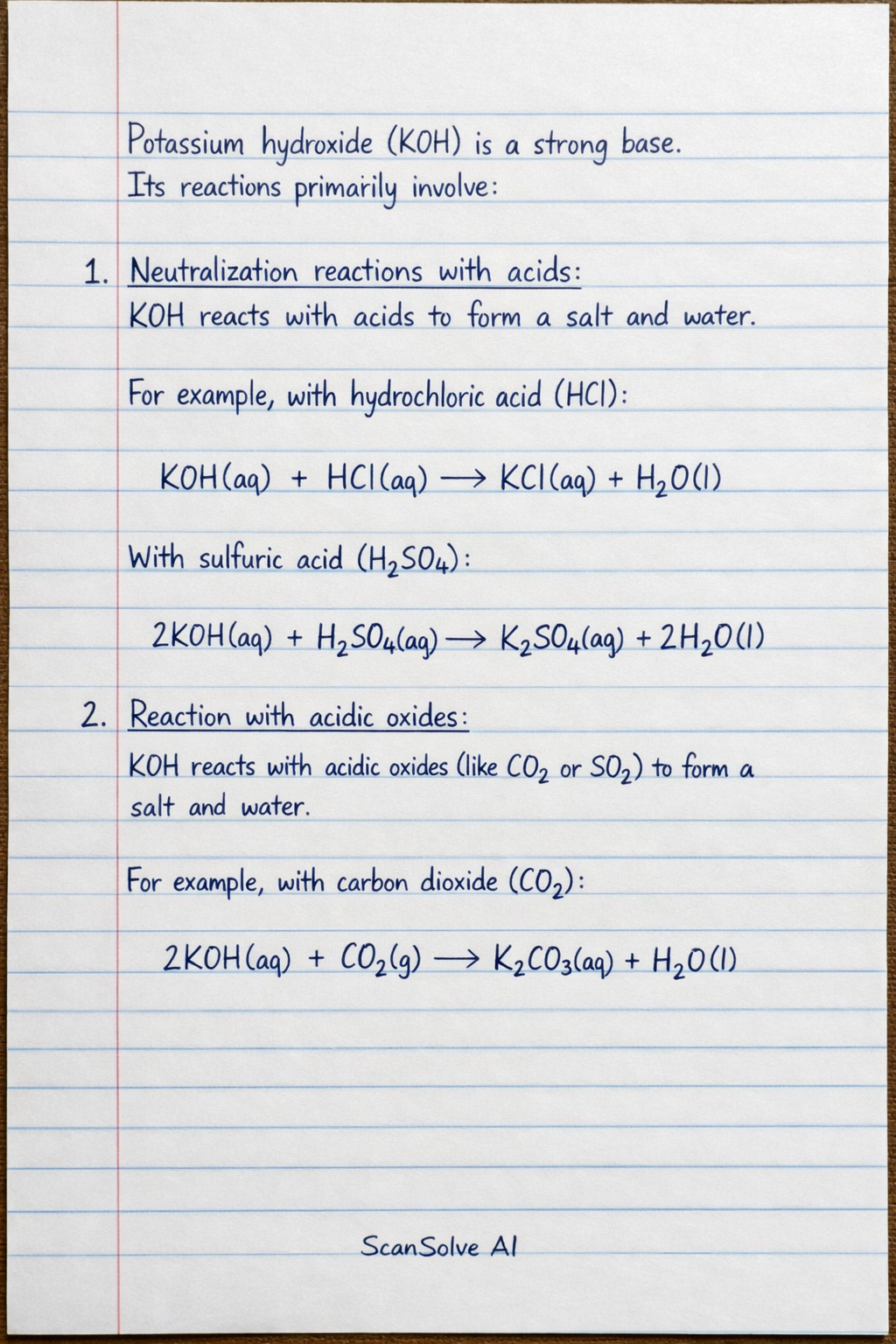
Potassium hydroxide () is a strong base. Its reactions primarily involve:
-
Neutralization reactions with acids: reacts with acids to form a salt and water. For example, with hydrochloric acid ():
With sulfuric acid ():
-
Reaction with acidic oxides: reacts with acidic oxides (like or ) to form a salt and water. For example, with carbon dioxide ():
-
Precipitation reactions with metal salts: can react with solutions of certain metal salts to precipitate insoluble metal hydroxides. For example, with copper(II) sulfate ():
Here, copper(II) hydroxide () is an insoluble precipitate.
Still stuck on this one?
Ask a follow-up, and the answer starts from this question.
More Chemistry Questions
Handwritten Step-by-Step Solution
Get this as a handwritten image on WhatsApp — like a tutor wrote it for you.
Try on WhatsApp