
We read your photo as:
Describe the physical properties of metals, including lustre, malleability, and ductility. Include safety precautions and scientific skills involved in observing these properties.
ScanSolve AI Answer
-
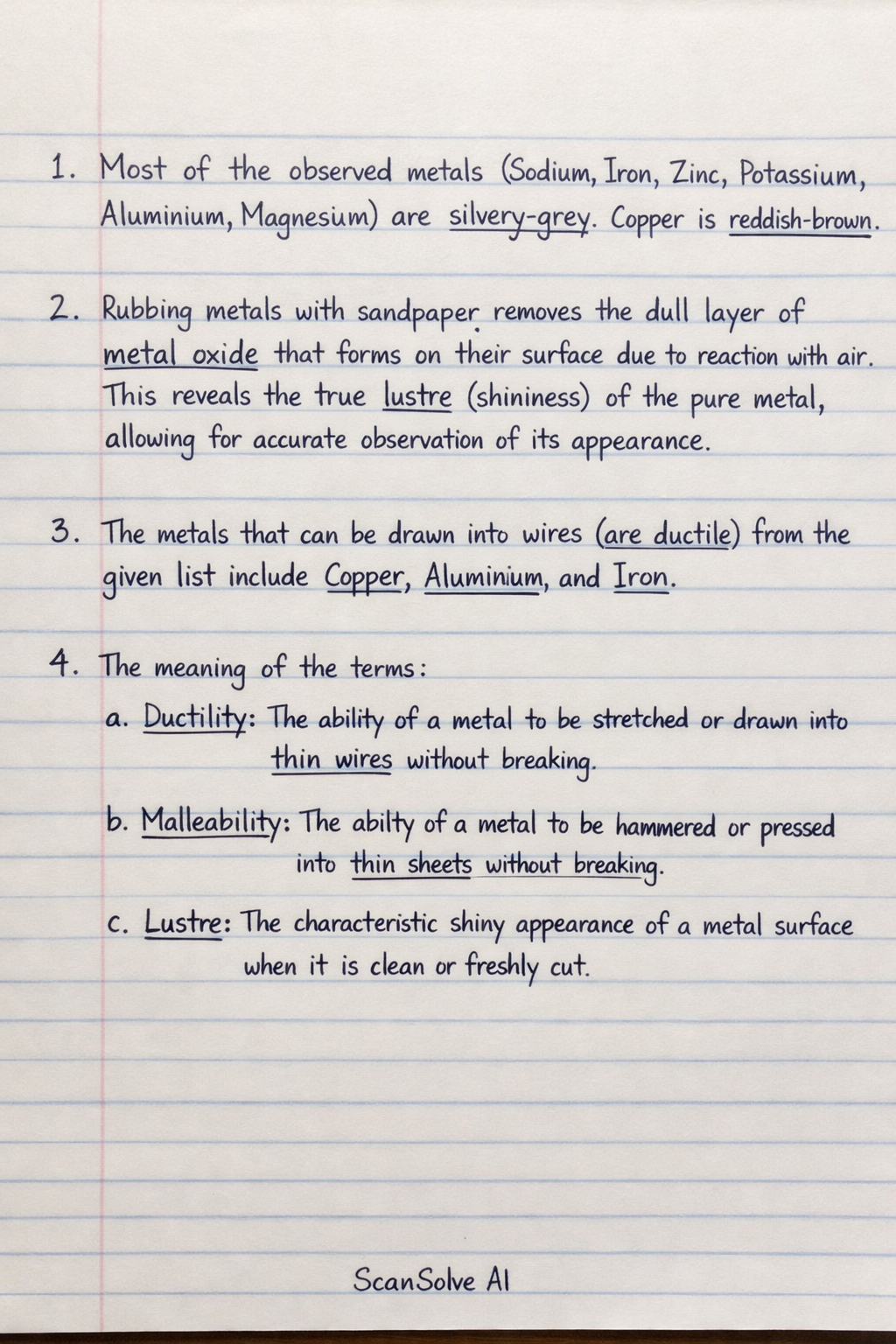
Most of the observed metals (Sodium, Iron, Zinc, Potassium, Aluminium, Magnesium) are silvery-grey. Copper is reddish-brown.
-
Rubbing metals with sandpaper removes the dull layer of metal oxide that forms on their surface due to reaction with air. This reveals the true lustre (shininess) of the pure metal, allowing for accurate observation of its appearance.
-
The metals that can be drawn into wires (are ductile) from the given list include Copper, Aluminium, and Iron.
-
The meaning of the terms: a. Ductility: The ability of a metal to be stretched or drawn into thin wires without breaking. b. Malleability: The ability of a metal to be hammered or pressed into thin sheets without breaking. c. Lustre: The characteristic shiny appearance of a metal surface when it is clean or freshly cut.
-
Two safety measures observed:
- Wearing protective clothing (e.g., gloves, lab coat) to prevent direct contact with metals or injuries.
- Using a pair of tongs to handle reactive metals like sodium, preventing direct skin contact and potential burns.
-
Two scientific skills acquired:
- Observation: Carefully noting the physical properties like colour, lustre, and changes during hammering or drawing.
- Manipulation: Safely and effectively using laboratory apparatus such as tongs, sandpaper, and a hammer.
-
Uses of the following metals in day-to-day life: a. Magnesium: Used in alloys for aircraft and car parts, and in flares and fireworks. b. Copper: Used extensively in electrical wiring, plumbing pipes, and for making coins. c. Zinc: Primarily used for galvanizing iron to prevent rust, and in batteries. d. Iron: A key component in steel for construction, and used in tools and machinery. e. Aluminium: Used in aircraft construction, drink cans, cooking foil, and window frames. f. Sodium: Used in street lamps (sodium vapor lamps) and as a coolant in nuclear reactors.
Still stuck on this one?
Ask a follow-up, and the answer starts from this question.
More Chemistry Questions
Handwritten Step-by-Step Solution
Get this as a handwritten image on WhatsApp — like a tutor wrote it for you.
Try on WhatsApp