
We read your photo as:
Poly(lactic-co-glycolic acid) (PLGA) is a prominent polymer used in pharmaceutical products, notably in biodegradable microspheres designed for sustained drug release. This polymer is classified as
ScanSolve AI Answer
Here is the research task response:
Poly(lactic-co-glycolic acid) (PLGA) is a prominent polymer used in pharmaceutical products, notably in biodegradable microspheres designed for sustained drug release. This polymer is classified as synthetic due to its chemical synthesis from non-biological precursors, and it exhibits a linear chain structure. A crucial property making PLGA ideal for drug delivery is its biodegradability and biocompatibility. PLGA undergoes hydrolysis in vivo, breaking down into lactic acid and glycolic acid, which are safely metabolized and excreted by the body. This controlled degradation allows for the gradual and sustained release of an encapsulated therapeutic agent over an extended period, thereby improving patient compliance and therapeutic efficacy by reducing dosing frequency. The synthesis of PLGA primarily occurs via ring-opening copolymerization of lactide and glycolide monomers, which is a form of condensation polymerization. This process involves the formation of ester linkages between the monomers, building the polymer chain.
Source:
Fredenberg, S., & Wahlgren, M. (2013). The use of PLGA and PLA for drug delivery applications. Journal of Controlled Release, 172(2), 349-362.
Still stuck on this one?
Ask a follow-up, and the answer starts from this question.
More Chemistry Questions
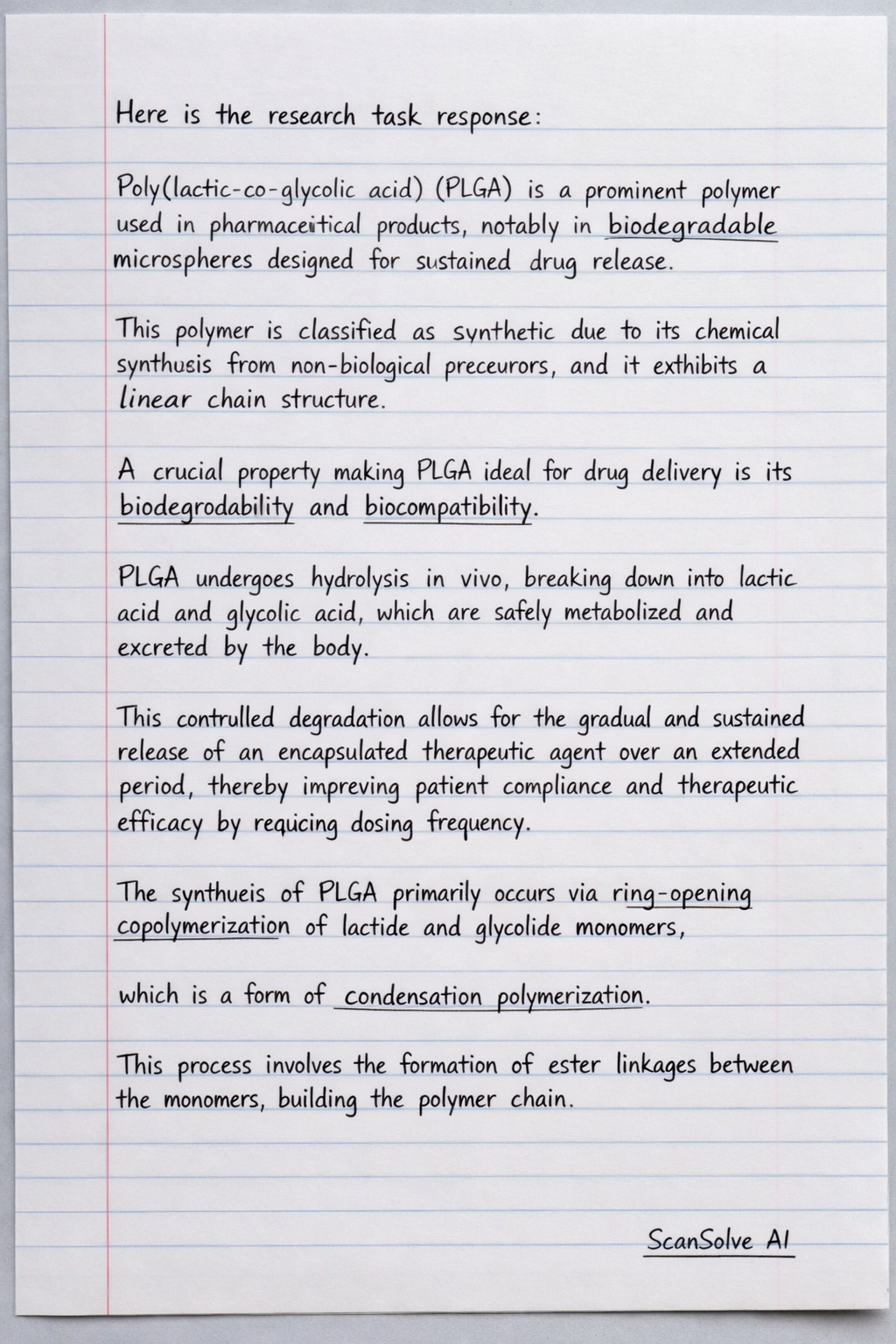
Handwritten Step-by-Step Solution
Get this as a handwritten image on WhatsApp — like a tutor wrote it for you.
Try on WhatsApp