
Total: 10 Marks Define Carbon(II) oxide and state one method of its preparation in the laboratory. (2 marks) State two physical properties and two chemical properties of Carbon(IV) oxide. (2 marks) Differentiate between an acid and a base, giving one example of each. (2 marks) Write the balanced chemical equation for the reaction between: Hydrochloric acid and sodium hydroxide. (2 marks) Explain what is meant by a salt and state two methods of preparing salts. (2 marks)
ScanSolve AI Answer
-
Carbon(II) oxide, also known as carbon monoxide, is a colorless, odorless, and highly toxic gas with the chemical formula . It is formed when carbon or carbon-containing compounds burn in a limited supply of oxygen (incomplete combustion).
One method of its preparation in the laboratory is by the dehydration of methanoic acid (formic acid) using concentrated sulfuric acid as a dehydrating agent:
-
Here are two physical and two chemical properties of Carbon(IV) oxide (carbon dioxide):
- Physical Properties:
- It is a colorless and odorless gas.
- It is denser than air.
- Chemical Properties:
- It is a non-supporter of combustion (does not burn and extinguishes flames).
- It reacts with water to form carbonic acid (), making it slightly acidic.
- Physical Properties:
-
An acid is a substance that produces hydrogen ions () when dissolved in water (Arrhenius definition) or is a proton () donor (Brønsted-Lowry definition). A base is a substance that produces hydroxide ions () when dissolved in water (Arrhenius definition) or is a proton () acceptor (Brønsted-Lowry definition).
- Example of an acid: Hydrochloric acid ()
- Example of a base: Sodium hydroxide ()
-
The balanced chemical equation for the reaction between hydrochloric acid and sodium hydroxide is:
-
A salt is an ionic compound formed when the hydrogen atom of an acid is replaced by a metal ion or an ammonium ion. It is typically formed from the reaction of an acid with a base, metal, or carbonate.
Two methods of preparing salts are:
- Neutralization reaction: Reacting an acid with a base (e.g., ).
- Reaction of an acid with a metal: Reacting a dilute acid with a reactive metal (e.g., ).
Still stuck on this one?
Ask a follow-up, and the answer starts from this question.
More Chemistry Questions
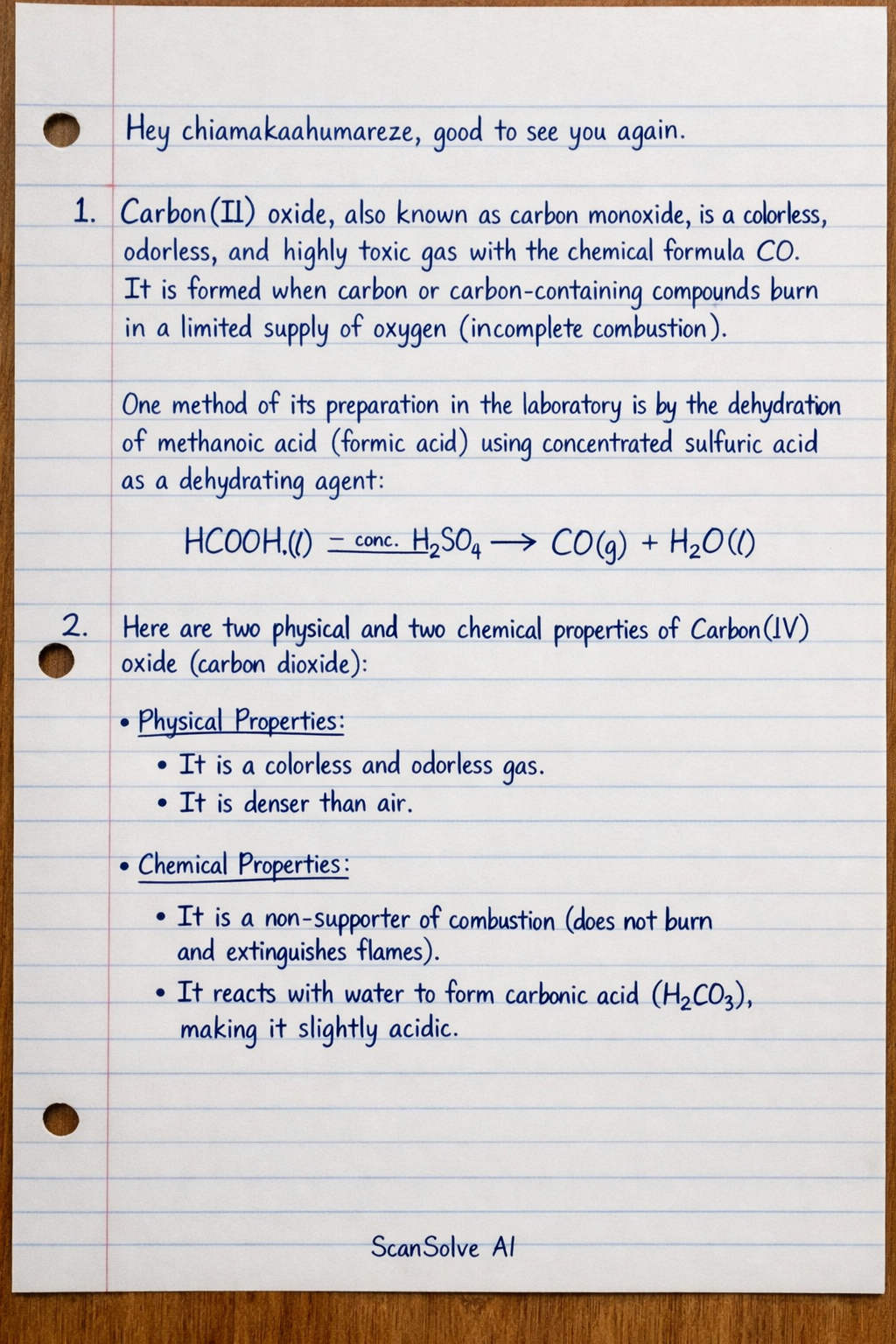
Handwritten Step-by-Step Solution
Get this as a handwritten image on WhatsApp — like a tutor wrote it for you.
Try on WhatsApp