
We read your photo as:
Q.1a. State and explain general drive train problems. Q.1b. State and explain the most common causes of bearing noise.
Computer Science
ScanSolve AI Answer
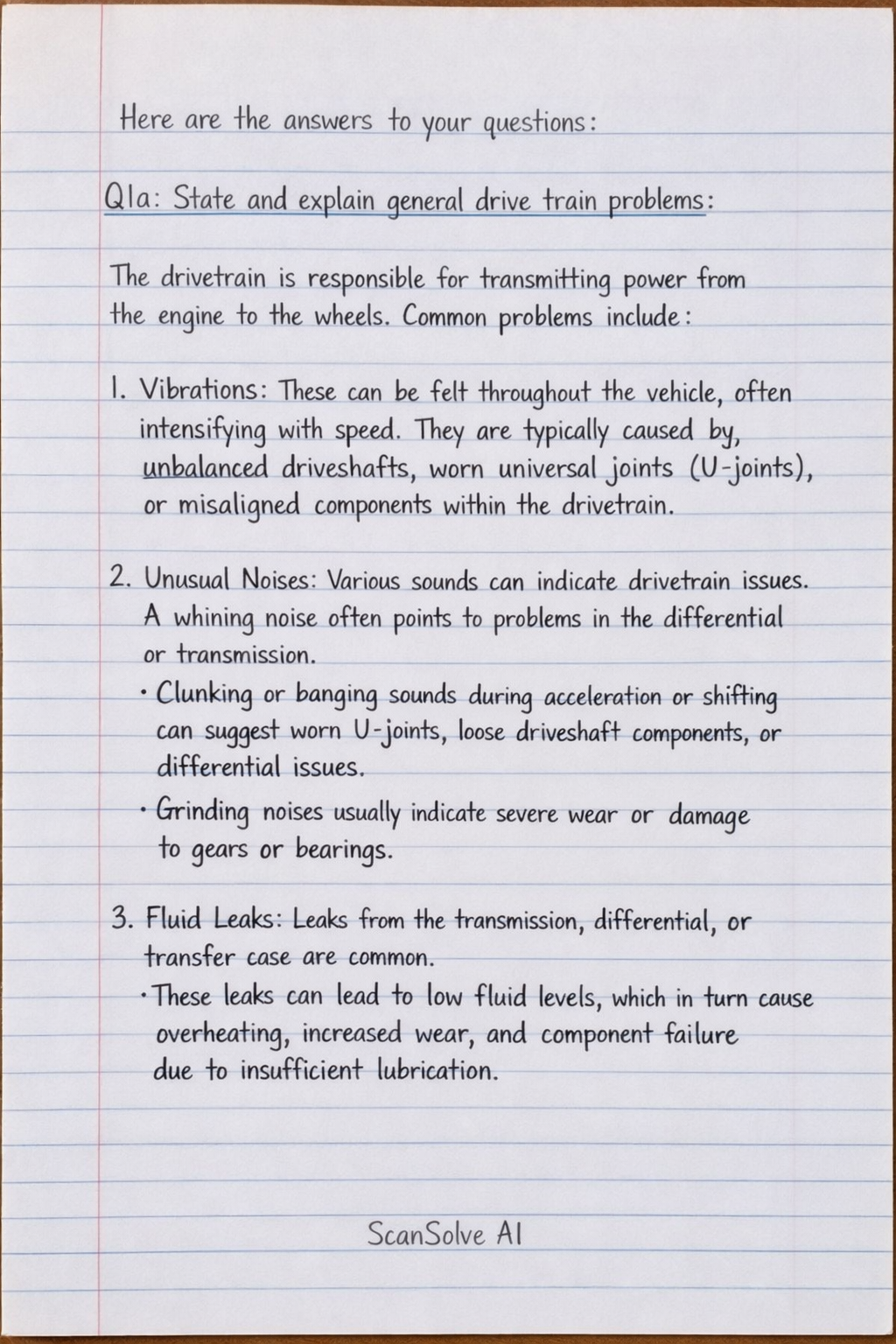
Here are the answers to your questions:
Q1a: State and explain general drive train problems.
The drivetrain is responsible for transmitting power from the engine to the wheels. Common problems include:
- Vibrations: These can be felt throughout the vehicle, often intensifying with speed. They are typically caused by unbalanced driveshafts, worn universal joints (U-joints), or misaligned components within the drivetrain.
- Unusual Noises: Various sounds can indicate drivetrain issues. A whining noise often points to problems in the differential or transmission. Clunking or banging sounds during acceleration or shifting can suggest worn U-joints, loose driveshaft components, or differential issues. Grinding noises usually indicate severe wear or damage to gears or bearings.
- Fluid Leaks: Leaks from the transmission, differential, or transfer case are common. These leaks can lead to low fluid levels, which in turn cause overheating, increased wear, and component failure due to insufficient lubrication.
- Shifting Problems (for automatic transmissions): This includes hard shifts, delayed engagement, or the transmission slipping out of gear. These issues often stem from low or contaminated transmission fluid, worn clutch packs, or faulty solenoids/sensors.
- Loss of Power or Slipping (for manual transmissions): A slipping clutch is a common problem where the engine revs increase but the vehicle does not accelerate proportionally. This is usually due to a worn clutch disc or pressure plate.
Q1b: State and explain the most common root causes of bearing noise.
Bearing noise typically indicates wear, damage, or improper operation. The most common root causes are:
- Lack of Lubrication: Insufficient or degraded lubricant is a primary cause. Without adequate lubrication, metal-on-metal contact increases friction, generates excessive heat, and leads to rapid wear and eventual failure of the bearing, producing a grinding or squealing noise.
- Contamination: The presence of dirt, debris, metal particles, or water within the bearing can cause pitting, scoring, and abrasive wear on the bearing surfaces. This damage disrupts the smooth operation and generates noise.
- Wear and Tear: Over time, due to continuous operation, load, and friction, bearings naturally fatigue and wear out. This leads to increased internal clearance, which can cause rattling, humming, or grinding noises as the components move excessively.
- Improper Installation: Incorrect installation practices, such as over-tightening, under-tightening, misalignment, or using improper tools during pressing, can damage the bearing components or create excessive stress, leading to premature failure and noise.
- Overloading: Exceeding the bearing's designed load capacity can cause excessive stress and deformation of the bearing components. This leads to accelerated wear, fatigue, and eventual failure, often accompanied by a loud humming or grinding sound.
Was this helpful?
Still stuck on this one?
Ask a follow-up, and the answer starts from this question.
Got a different question?Ask your own question
More Computer Science Questions
Q3.3 Do you think geartrain B will provide a speed advantage? Explain your answer. 1.3.4 Explain how…QQ2aii) Demonstrate clearly how the operations in (Q2ai) above are used in machine tools. Q3b)…QQUESTION 2: a) Name the components labelled A, C, D and E. b) Complete the steering circuit in…QFailures of rolling element bearingQQ4. a) Define i. Couple ii. Torque and state it units b) A pulley is 600mm in diameter and the…
Handwritten Step-by-Step Solution
Get this as a handwritten image on WhatsApp — like a tutor wrote it for you.
Try on WhatsApp