
We read your photo as:
Substrate-level phosphorylation is the direct transfer of a phosphate group from a high-energy substrate molecule to ADP to form ATP. This process does not require oxygen and occurs in the cyt
Computer Science
ScanSolve AI Answer
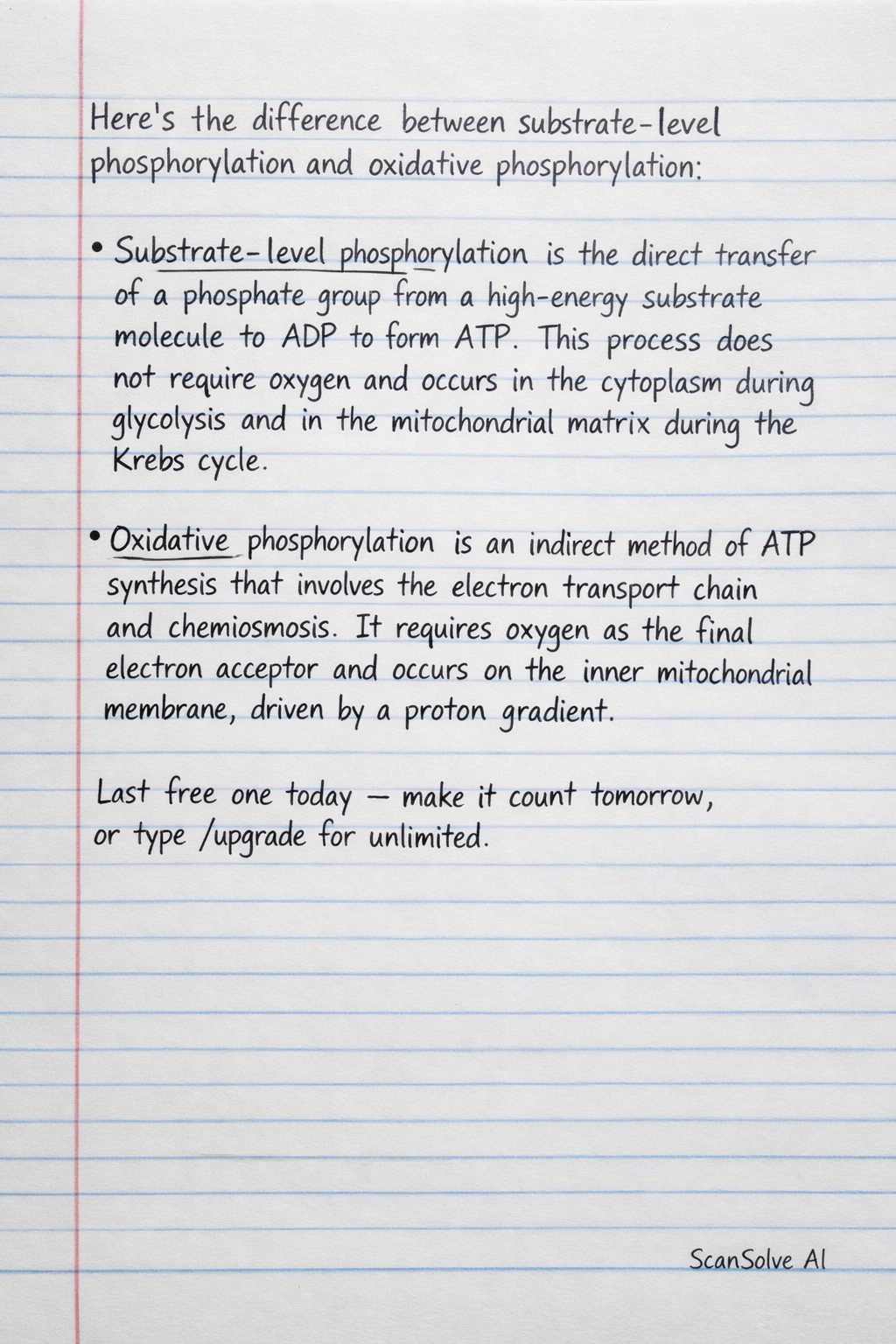
Here's the difference between substrate-level phosphorylation and oxidative phosphorylation:
- Substrate-level phosphorylation is the direct transfer of a phosphate group from a high-energy substrate molecule to ADP to form ATP. This process does not require oxygen and occurs in the cytoplasm during glycolysis and in the mitochondrial matrix during the Krebs cycle.
- Oxidative phosphorylation is an indirect method of ATP synthesis that involves the electron transport chain and chemiosmosis. It requires oxygen as the final electron acceptor and occurs on the inner mitochondrial membrane, driven by a proton gradient.
Was this helpful?
Still stuck on this one?
Ask a follow-up, and the answer starts from this question.
Got a different question?Ask your own question
More Computer Science Questions
QOutline the glycolytic pathway, indicate the regulatory and energy-related steps, and define…QThe Concept of ATP ATP, or Adenosine Triphosphate, acts as the primary energy currency of every…QDuring which phase of the cellular respiration process is the majority of adenosine triphosphate…QState THREE (3) enzymes and their specific substrate involved in Phase II metabolic reaction:QDuring glycolysis, the oxidation of 3-phosphoglyceraldehyde (PGAL, also known as…
Handwritten Step-by-Step Solution
Get this as a handwritten image on WhatsApp — like a tutor wrote it for you.
Try on WhatsApp