This computer science problem involves algorithmic thinking and programming concepts. The solution below explains the approach, logic, and implementation step by step.
Select cables by size and colour coding as instructed, then install, join and terminate them as per statutory requirement.
Computer Science

ScanSolve AI Answer
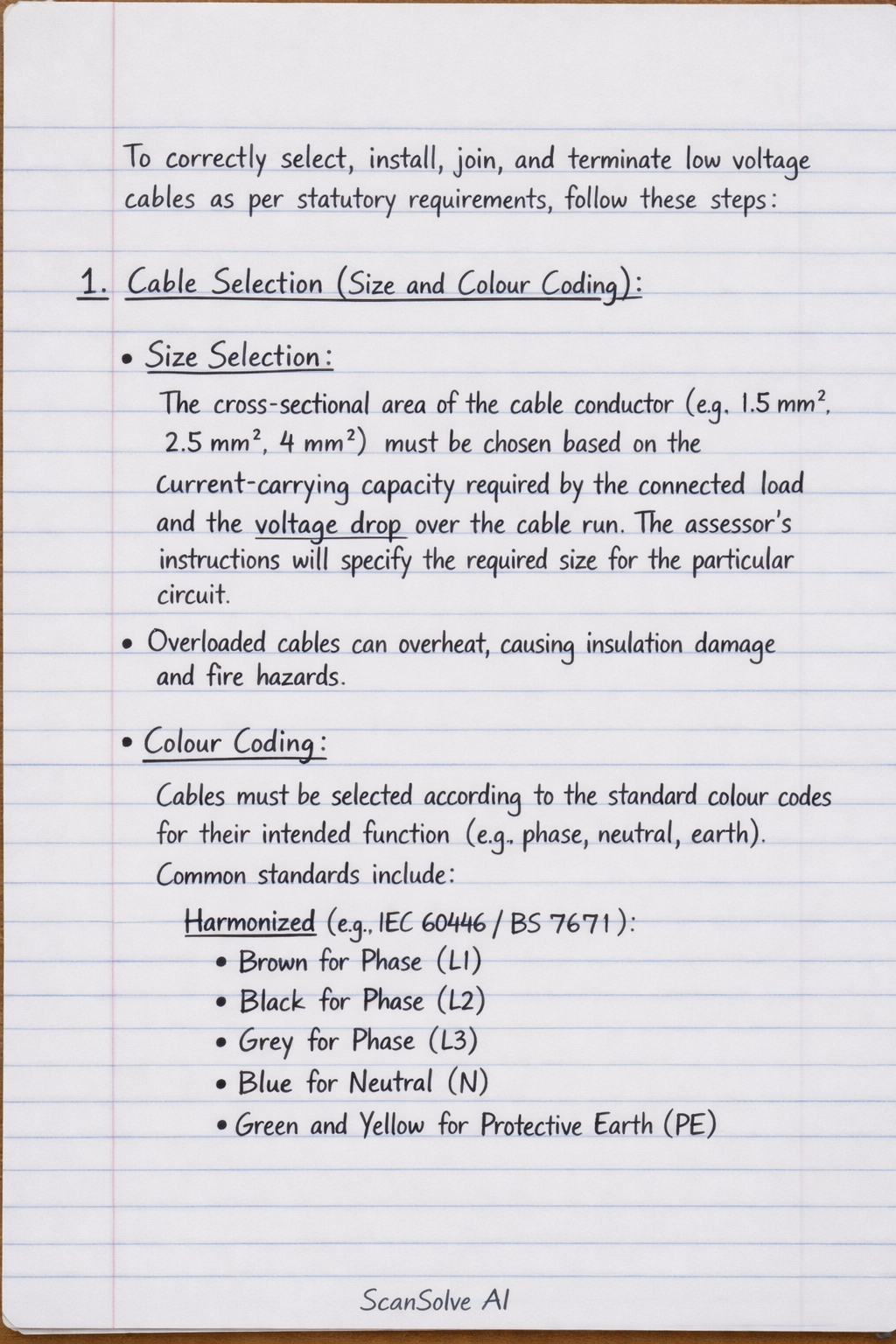
4 stepsTo correctly select, install, join, and terminate low voltage cables as per statutory requirements, follow these steps:
-
Cable Selection (Size and Colour Coding):
- Size Selection: The cross-sectional area of the cable conductor (e.g., , , ) must be chosen based on the current-carrying capacity required by the connected load and the voltage drop over the cable run. The assessor's instructions will specify the required size for the particular circuit. Overloaded cables can overheat, causing insulation damage and fire hazards.
- Colour Coding: Cables must be selected according to the standard colour codes for their intended function (e.g., phase, neutral, earth). Common standards include:
- Harmonized (e.g., IEC 60446/BS 7671): Brown for Phase (L1), Black for Phase (L2), Grey for Phase (L3), Blue for Neutral (N), Green and Yellow for Protective Earth (PE).
- North American (e.g., NEC): Black, Red, Blue for Phases, White or Grey for Neutral, Green or bare copper for Ground (Earth). The assessor's instructions will specify the exact colour coding to be used for the given task.
-
Installation:
- Install the selected cables following the procedures for securing, positioning, and routing as detailed in previous responses. Ensure compliance with statutory requirements regarding support intervals, bending radii, and protection against mechanical damage.
-
Joining:
- Join cables using appropriate jointing kits and techniques, adhering strictly to the manufacturer's specifications. As previously explained, ensure proper preparation of cable cores and conduct continuity, insulation, and mechanical testing.
-
Termination:
- Terminate the cables by correctly positioning and assembling cable glands, preparing cable ends (stripping insulation, crimping lugs/ferrules if necessary), and securing connections to the specified torque settings. Ensure all connections are tight, secure, and correctly identified with marking and numbering procedures.
Throughout all these stages, the safe use of tools and PPE is paramount, and all work must comply with relevant statutory requirements and local wiring regulations to ensure safety and functionality.
Was this helpful?
Need help with your own homework?
Get instant step-by-step solutions to any question. Free to start.
Ask Your Question
Handwritten Step-by-Step Solution
Get this as a handwritten image on WhatsApp — like a tutor wrote it for you.
Try on WhatsAppMore Computer Science Questions
QAlright baby Lions 😂😂❤️ let's go 🌚🌚 🤓🤓 You are fixing a patient monitor at Bamenda Regional Ho…QThe installation of system software and application software for a single-user personal computer.Q4th generation of ComputerQWrite the generation of the computer, their years, their future, their example, and technologies of…QWork out a flow chart detailing the sequence of manufacture of the crane with its electromagnet.
Still have questions?
Quick Answer
To correctly select, install, join, and terminate low voltage cables as per statutory requirements, follow these steps: 1.
ScanSolve AI Answer
To correctly select, install, join, and terminate low voltage cables as per statutory requirements, follow these steps: 1. Cable Selection (Size and Colour Coding): Size Selection: The cross-sectional area of the cable conductor (e.g., 1.5\, mm^2, 2.5\, mm^2, 4\, mm^2) must be chosen based on the current-carrying capacity required by the connected load and the voltage drop* over the cable run. The assessor's instructions will specify the required size for the particular circuit. Overloaded cables can overheat, causing insulation damage and fire hazards. Colour Coding*: Cables must be selected according to the standard colour codes for their intended function (e.g., phase, neutral, earth). Common standards include: Harmonized (e.g., IEC 60446/BS 7671): Brown for Phase (L1), Black for Phase (L2), Grey for Phase (L3), Blue for Neutral (N), Green and Yellow for Protective Earth (PE). North American (e.g., NEC): Black, Red, Blue for Phases, White or Grey for Neutral, Green or bare copper for Ground (Earth). The assessor's instructions will specify the exact colour coding to be used for the given task. 2. Installation: Install the selected cables following the procedures for securing, positioning, and routing as detailed in previous responses. Ensure compliance with statutory requirements regarding support intervals, bending radii, and protection against mechanical damage. 3. Joining: Join cables using appropriate jointing kits and techniques, adhering strictly to the manufacturer's specifications. As previously explained, ensure proper preparation of cable cores and conduct continuity, insulation, and mechanical testing. 4. Termination: Terminate the cables by correctly positioning and assembling cable glands, preparing cable ends (stripping insulation, crimping lugs/ferrules if necessary), and securing connections to the specified torque settings. Ensure all connections are tight, secure, and correctly identified with marking and numbering procedures. Throughout all these stages, the safe use of tools and PPE is paramount, and all work must comply with relevant statutory requirements and local wiring regulations to ensure safety and functionality.