
We read your photo as:
TEST 5: INFLATION PART A: MULTIPLE CHOICE QUESTIONS Circle the correct answer for each question from the given alternatives A, B, C or D.
ScanSolve AI Answer
Answers
5 partsStep-by-step solution
2 stepsHere are the answers to your questions on inflation:
Part 1
Inflation is defined as a general increase in the average price of goods and services over a period of time. This reflects a sustained rise in the overall price level, leading to a decrease in the purchasing power of money.
The final answer is
Part 2
All the options listed (Cost-push inflation, Imported inflation, Excess demand inflation, Wage spiral inflation) are generally considered causes or types of inflation. However, "Wage spiral inflation" is often described as a process or mechanism that perpetuates inflation once it has started, rather than an initial, independent cause. It's a feedback loop where rising wages lead to rising prices, which then lead to further demands for higher wages. The initial trigger for inflation typically comes from demand-pull (excess demand) or cost-push factors.
The final answer is
Part 3
The Consumer Price Index (CPI) is a widely used economic indicator that measures the average change over time in the prices paid by urban consumers for a market basket of consumer goods and services. It is used to gauge inflation and the cost of living.
The final answer is
Part 4
A 'wage freeze' is an economic policy implemented, often during times of high inflation, to temporarily halt or prevent any increases in wages. The goal is to control rising labor costs, which are a component of production costs, and thereby help curb inflationary pressures.
The final answer is
Part 5
To calculate the inflation rate, we use the formula for percentage change:
Identify the initial and final prices.
Initial Price (Old Price) = K20
Final Price (New Price) = K25Apply the inflation rate formula.
The final answer is
Try one yourself
A new problem that tests the same skill.
Still stuck on this one?
Ask a follow-up, and the answer starts from this question.
More Economics Questions
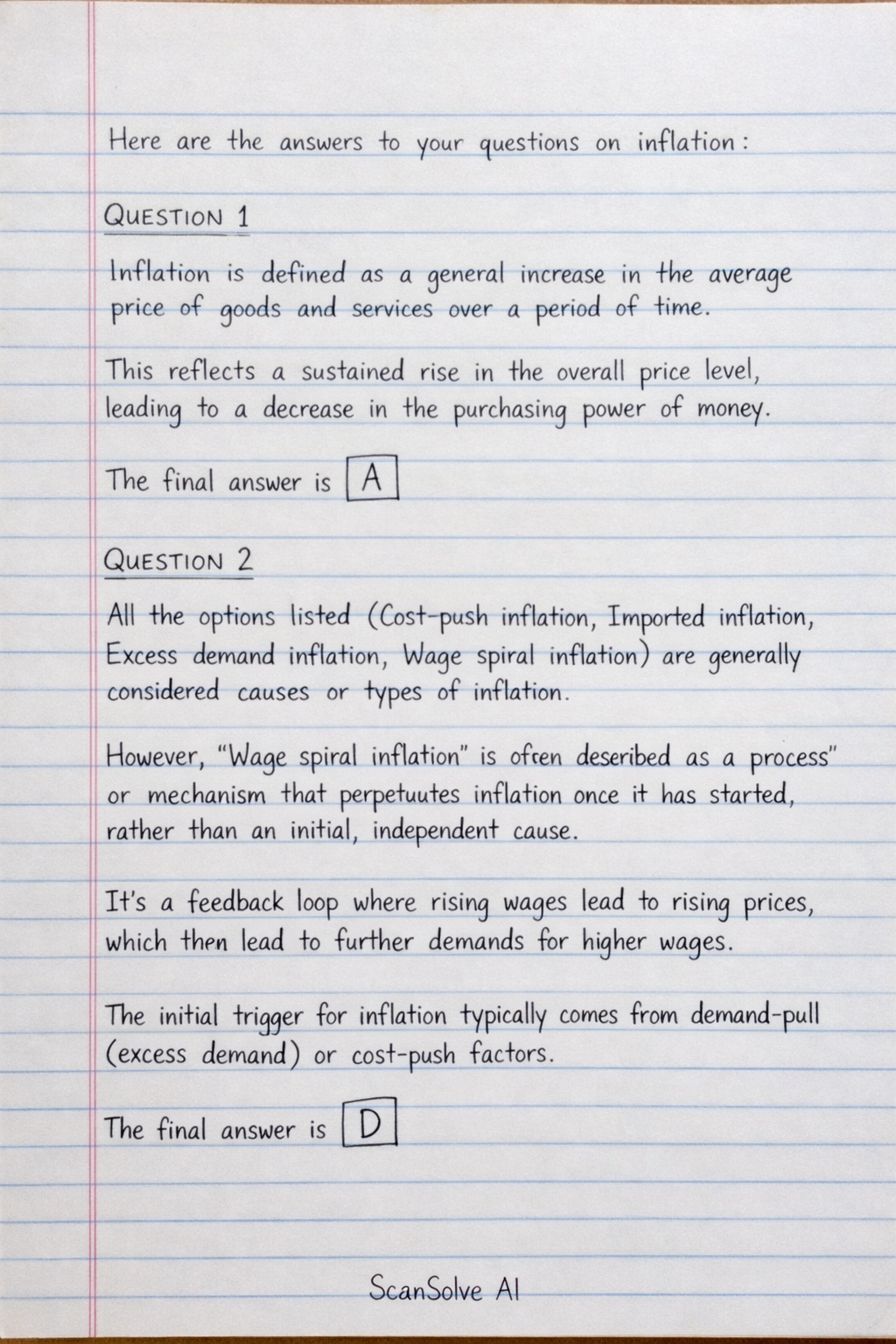
Handwritten Step-by-Step Solution
Get this as a handwritten image on WhatsApp — like a tutor wrote it for you.
Try on WhatsApp