
We read your photo as:
What is a metamorphic rock? (b) List two examples of metamorphic rocks. (c) Outline five differences between a sedimentary rock and a metamorphic rock.
Geography
ScanSolve AI Answer
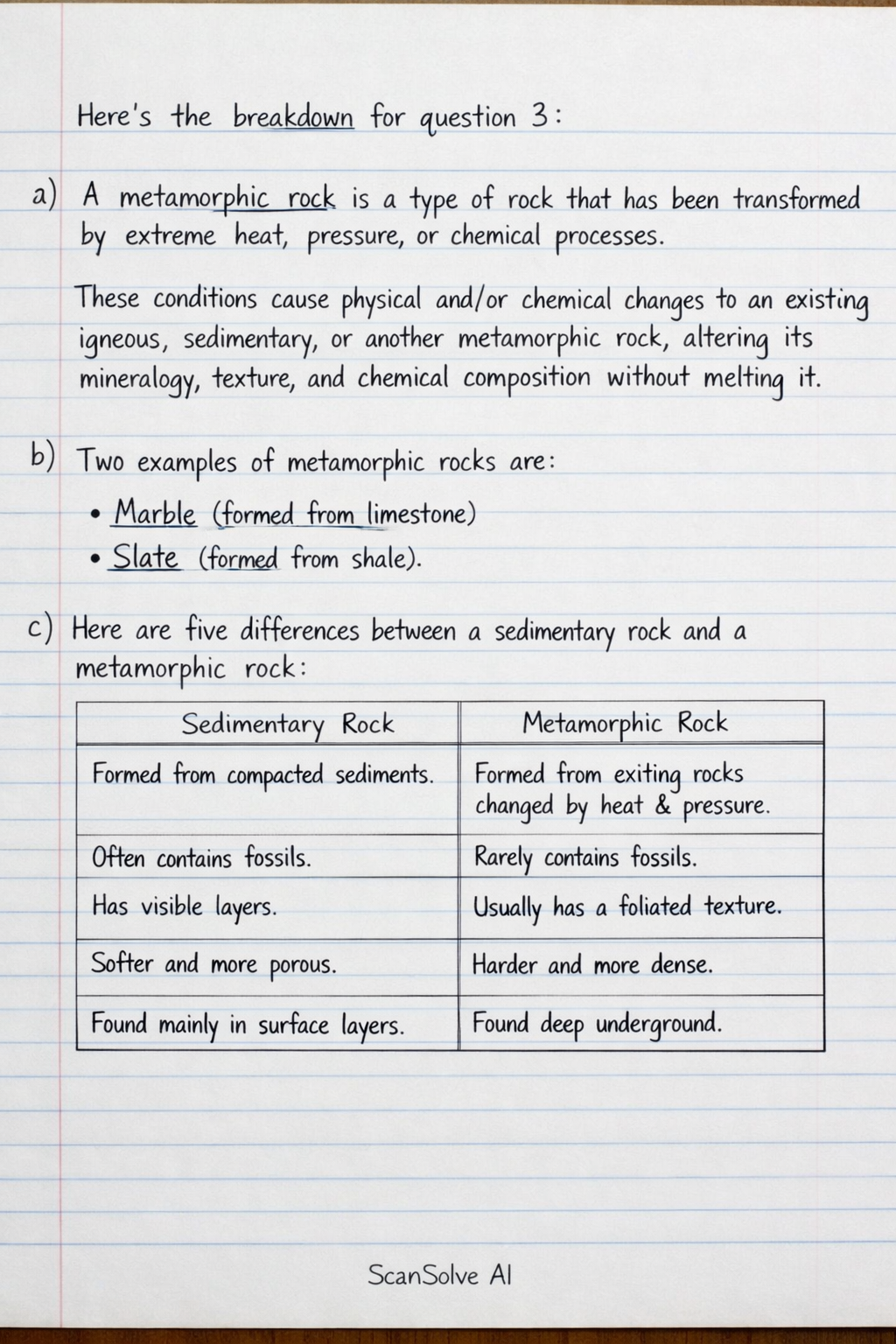
Here's the breakdown for question 3:
a)
A metamorphic rock is a type of rock that has been transformed by extreme heat, pressure, or chemical processes. These conditions cause physical and/or chemical changes to an existing igneous, sedimentary, or another metamorphic rock, altering its mineralogy, texture, and chemical composition without melting it.
b)
Two examples of metamorphic rocks are:
- Marble (formed from limestone)
- Slate (formed from shale)
c)
Here are five differences between a sedimentary rock and a metamorphic rock:
- Formation Process: Sedimentary rocks form from the accumulation and compaction of sediments (fragments of other rocks, organic matter, or chemical precipitates) over time. Metamorphic rocks form when existing rocks are subjected to intense heat, pressure, or chemical alteration.
- Texture: Sedimentary rocks often have a clastic texture (visible grains or fragments) or a layered appearance (bedding). Metamorphic rocks typically exhibit a foliated texture (minerals aligned in parallel bands, like slate or schist) or a non-foliated texture (interlocking grains, like marble or quartzite).
- Presence of Fossils: Sedimentary rocks frequently contain fossils, as the conditions of their formation can preserve organic remains. Metamorphic rocks rarely contain recognizable fossils because the intense heat and pressure involved in their formation usually destroy any organic material.
- Original Material: Sedimentary rocks are formed from weathered and eroded material (sediments) from pre-existing rocks or organic matter. Metamorphic rocks are formed from the transformation of pre-existing igneous, sedimentary, or other metamorphic rocks.
- Mineral Alignment: Sedimentary rocks generally do not show mineral alignment unless they have undergone some deformation. Metamorphic rocks, especially foliated ones, often show a distinct alignment of mineral grains due to directed pressure during metamorphism.
Was this helpful?
Still stuck on this one?
Ask a follow-up, and the answer starts from this question.
Got a different question?Ask your own question
More Geography Questions
QWhat is metamorphism? How are sedimentary rocks formed? Identify the main physical features shown in…QDefine the three main types of rocks and provide an example of each. Explain the rock cycle.QWhat are metamorphic and sedimentary rocks, and how are faults and folds formed and their impact on…QDescribe characteristics of sedimentary rocks, factors affecting physical weathering, and energy…Qb) (i) List one land form each of the erosional agents. -wind -Rain water -Wave action - Running…
Browse by topic:Earth Science
Handwritten Step-by-Step Solution
Get this as a handwritten image on WhatsApp — like a tutor wrote it for you.
Try on WhatsApp