
Analysis and synthesis of data for rural urban migration in Alexandra township situated in Johannesburg south Africa
ScanSolve AI Answer
Answer
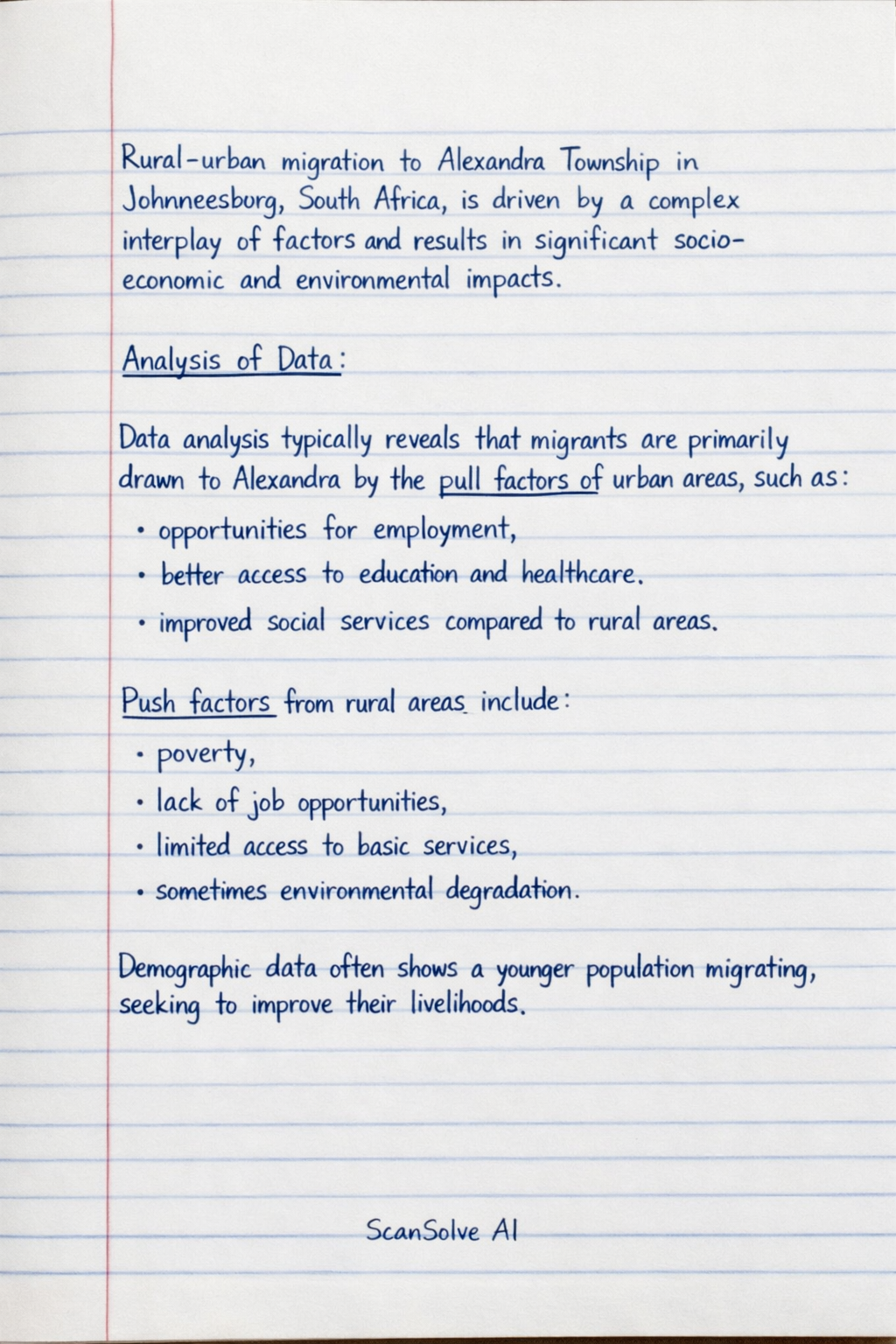
Rural-urban migration to Alexandra Township in Johannesburg, South Africa, is driven by a complex interplay of factors and results in significant socio-economic and environmental impacts.
Analysis of Data:
Data analysis typically reveals that migrants are primarily drawn to Alexandra by the pull factors of urban areas, such as perceived opportunities for employment, better access to education and healthcare, and improved social services compared to rural areas. Push factors from rural areas include poverty, lack of job opportunities, limited access to basic services, and sometimes environmental degradation. Demographic data often shows a younger population migrating, seeking to improve their livelihoods.
Synthesis of Data:
The synthesis of this data highlights several key outcomes:
- Population Pressure: Alexandra, already a densely populated informal settlement, experiences immense pressure on its limited resources and infrastructure due to continuous influx. This leads to overcrowding, the proliferation of informal housing, and strain on water, sanitation, and electricity services.
- Economic Impact: While migrants seek economic opportunities, the high unemployment rate in Alexandra means many struggle to find formal jobs, leading to reliance on the informal sector, increased competition for low-wage jobs, and persistent poverty. Remittances sent back to rural areas can be a positive outcome, but are often insufficient to lift families out of poverty.
- Social Challenges: Rapid migration can exacerbate social issues such as crime, inadequate housing, and health problems due to poor living conditions. It can also lead to cultural integration challenges and strain on community resources.
- Environmental Degradation: Increased population density often results in environmental issues like waste accumulation, pollution, and inadequate waste management systems, further deteriorating living conditions.
In essence, while rural-urban migration offers hope for individual migrants, the synthesis of data for Alexandra reveals a cycle where the township's existing vulnerabilities are intensified, creating a complex challenge for sustainable urban development and service provision.
Still stuck on this one?
Ask a follow-up, and the answer starts from this question.
More History Questions
Handwritten Step-by-Step Solution
Get this as a handwritten image on WhatsApp — like a tutor wrote it for you.
Try on WhatsApp