

This history question requires analysis of historical events, causes, and consequences. The detailed answer below provides context, evidence, and a well-structured explanation.
ScanSolve AI Answer
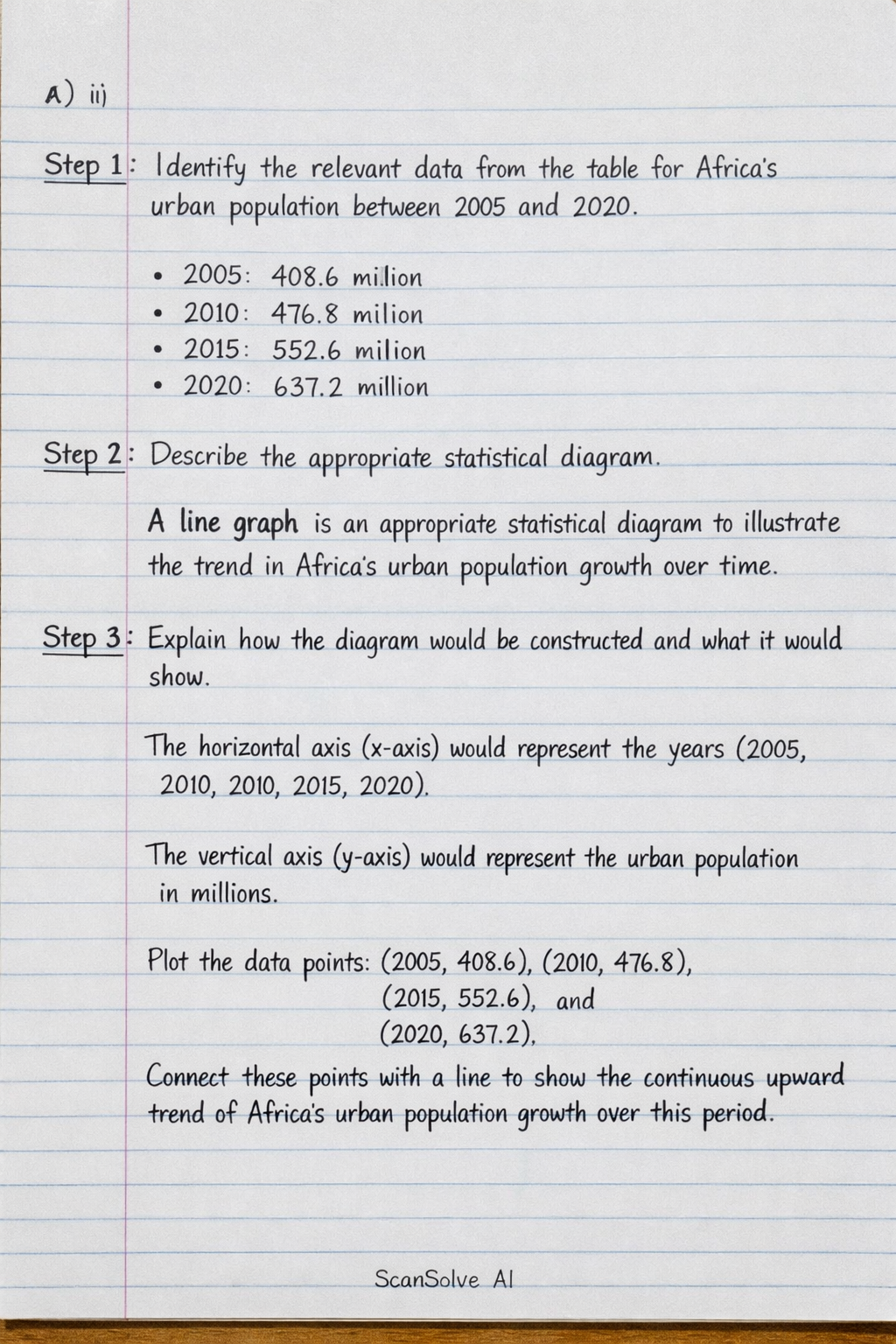
a) ii) Step 1: Identify the relevant data from the table for Africa's urban population between 2005 and 2020. • 2005: 408.6 million • 2010: 476.8 million • 2015: 552.6 million • 2020: 637.2 million Step 2: Describe the appropriate statistical diagram. A line graph is an appropriate statistical diagram to illustrate the trend in Africa's urban population growth over time. Step 3: Explain how the diagram would be constructed and what it would show. The horizontal axis (x-axis) would represent the years (2005, 2010, 2015, 2020). The vertical axis (y-axis) would represent the urban population in millions. Plot the data points: (2005, 408.6), (2010, 476.8), (2015, 552.6), and (2020, 637.2). Connect these points with a line to show the continuous upward trend of Africa's urban population growth over this period. b) To address the negative effects of rapid urban growth, city leadership should implement comprehensive urban planning focusing on sustainable infrastructure development, including affordable housing, efficient public transportation, and improved sanitation systems. Simultaneously, they must invest in rural development by promoting agricultural productivity, creating non-farm employment opportunities, and enhancing rural services to reduce rural-urban migration pressures and ensure balanced regional growth.