
We read your photo as:
Women's organizations were central to civil resistance in South Africa from 1950 to the 1990s, playing a multifaceted and critical role in challenging Apartheid. The Federation of South African Wom
ScanSolve AI Answer
Women's organizations were central to civil resistance in South Africa from 1950 to the 1990s, playing a multifaceted and critical role in challenging Apartheid. The Federation of South African Women (FEDSAW), established in 1954, was instrumental in organizing the historic 1956 Women's March to the Union Buildings, where 20,000 women protested against the extension of pass laws to women. This demonstration highlighted women's direct defiance of discriminatory legislation. The Black Sash, a non-racial organization of women, primarily white, actively monitored human rights abuses, provided legal advice to victims of Apartheid laws, and held silent vigils to protest injustices, thereby exposing the regime's brutality both domestically and internationally. The ANC Women's League (ANCWL) mobilized women within the broader liberation movement, organizing boycotts, supporting political prisoners and their families, and advocating for women's rights within the struggle. Women also played significant roles in community-based resistance through organizations like the United Democratic Front (UDF), participating in consumer boycotts, stayaways, and grassroots campaigns that undermined the Apartheid state's control and fostered a culture of resistance. Their collective efforts, spanning from mass protests to quiet advocacy, were indispensable in sustaining the anti-Apartheid movement and ultimately contributed to its success.
Still stuck on this one?
Ask a follow-up, and the answer starts from this question.
More History Questions
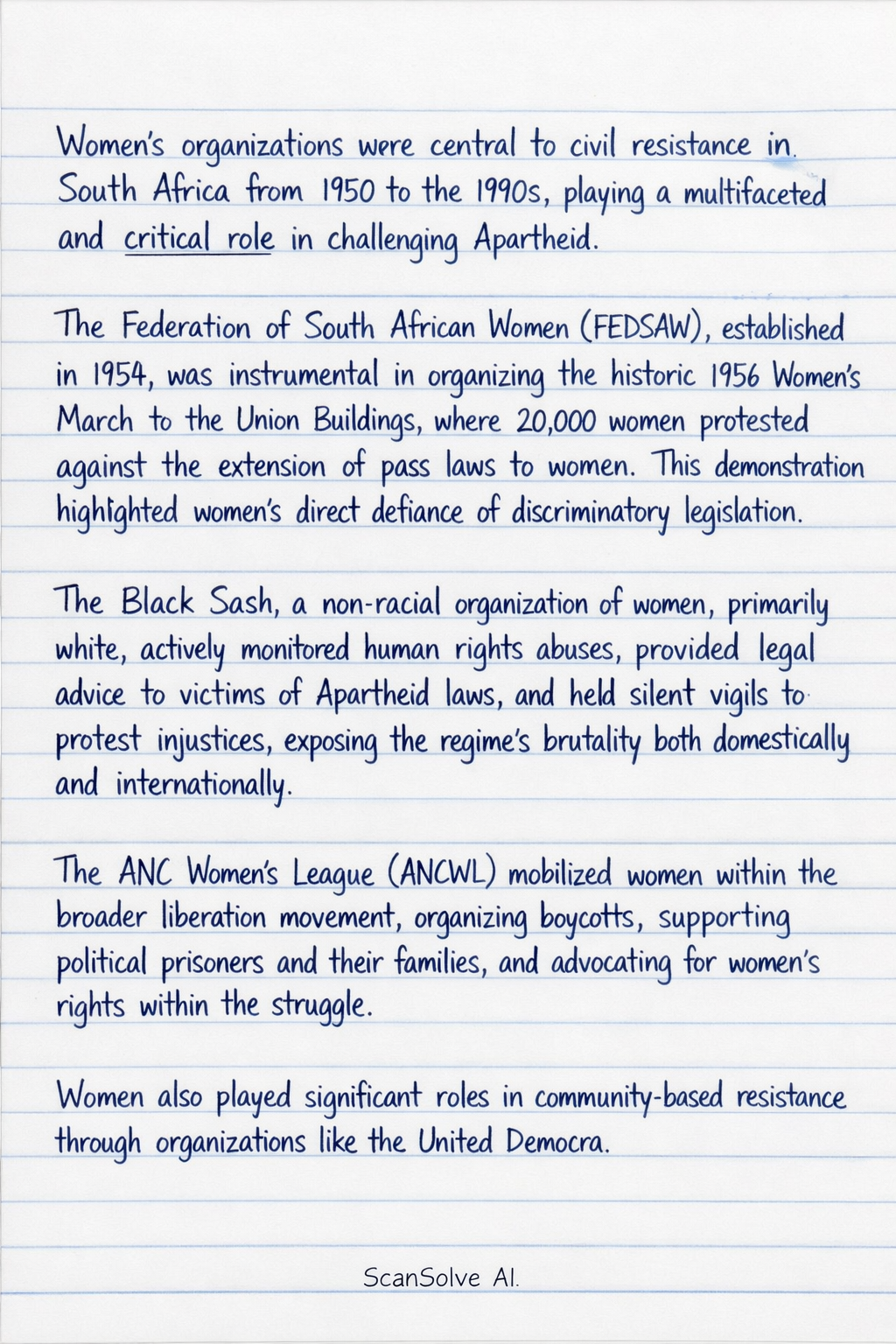
Handwritten Step-by-Step Solution
Get this as a handwritten image on WhatsApp — like a tutor wrote it for you.
Try on WhatsApp