
We read your photo as:
A) Oneni's low yields are due to a combination of his farming practices and environmental conditions:
Mathematics
ScanSolve AI Answer
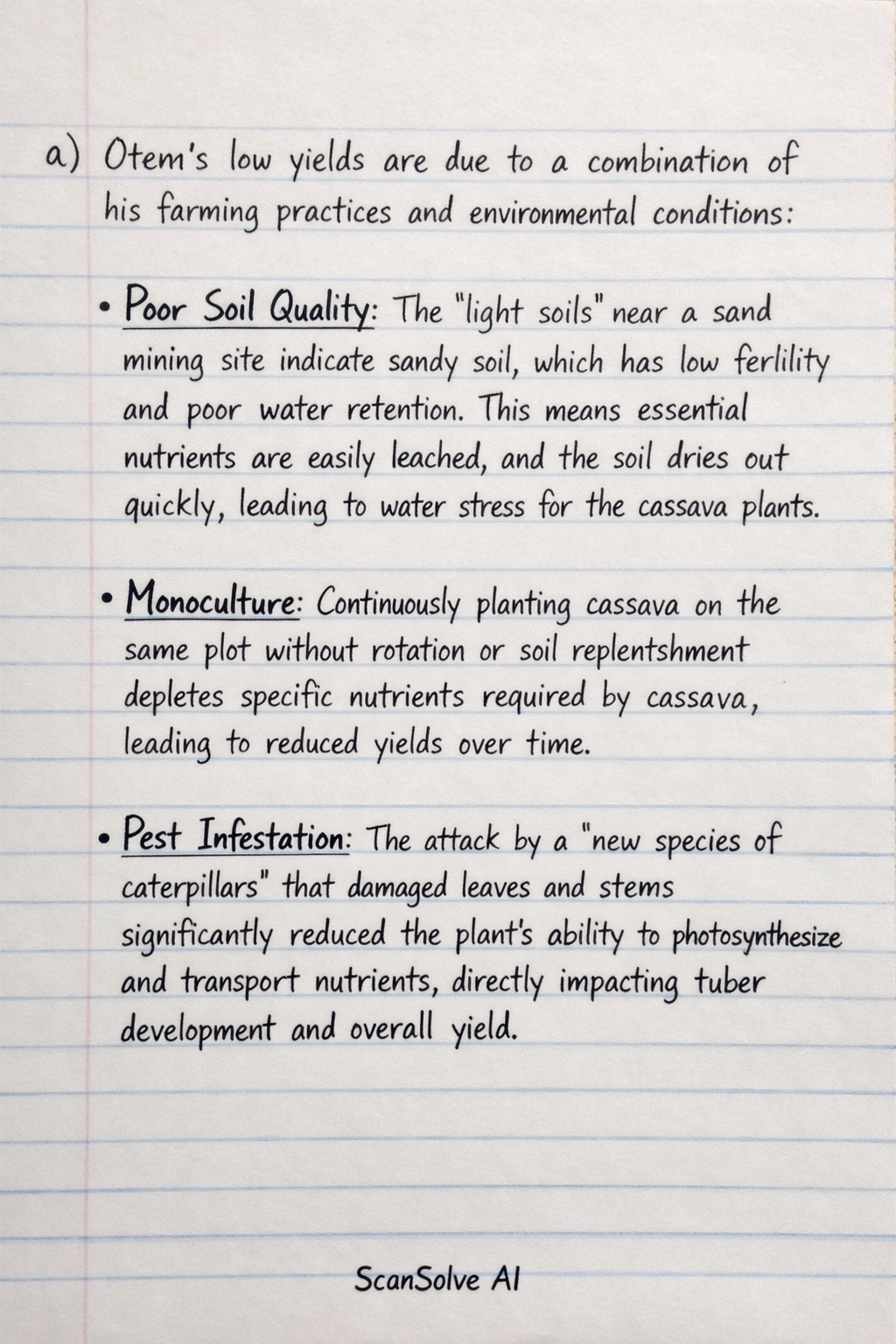
a) Oneni's low yields are due to a combination of his farming practices and environmental conditions:
- Poor Soil Quality: The "light soils" near a sand mining site indicate sandy soil, which has low fertility and poor water retention. This means essential nutrients are easily leached, and the soil dries out quickly, leading to water stress for the cassava plants.
- Monoculture: Continuously planting cassava on the same plot without rotation or soil replenishment depletes specific nutrients required by cassava, leading to reduced yields over time.
- Pest Infestation: The attack by a "new species of caterpillars" that damaged leaves and stems significantly reduced the plant's ability to photosynthesize and transport nutrients, directly impacting tuber development and overall yield.
b) To improve his soils and conditions for a better yield without shifting land, Oneni should implement the following:
- Incorporate Organic Matter: Add compost, farmyard manure, or green manure to the soil. This will improve soil structure, increase water-holding capacity, and gradually release essential nutrients, making the sandy soil more fertile.
- Mulching: Cover the soil surface with organic materials like straw or dry leaves. Mulching conserves soil moisture by reducing evaporation, suppresses weeds, and adds organic matter as it decomposes.
- Crop Rotation: Instead of continuous cassava, practice crop rotation with legumes (e.g., beans, groundnuts). Legumes fix nitrogen in the soil, improving its fertility and breaking pest cycles.
- Intercropping: Plant cassava alongside other beneficial crops, such as legumes, to enhance soil health and nutrient cycling.
- Pest Management: Implement integrated pest management strategies for the caterpillars. This could include hand-picking the pests, using biological control agents (natural predators), or applying botanical pesticides derived from plants, which are less harmful to the environment.
Was this helpful?
Still stuck on this one?
Ask a follow-up, and the answer starts from this question.
Got a different question?Ask your own question
More Mathematics Questions
QA) The processes affected in the plant that led to the decline in the yield are:QDefine bush fallowing, plantation agriculture, mixed cropping, and irrigation. Explain four causes…QAcheng faces challenges including limited resources, reliance on rain-fed agriculture, lack of…QThree effects of soil erosion on agricultural productivityQA farmer wants to maximize profit from selling onions and greens. Onions yield 500,000 profit/ton…
Handwritten Step-by-Step Solution
Get this as a handwritten image on WhatsApp — like a tutor wrote it for you.
Try on WhatsApp