
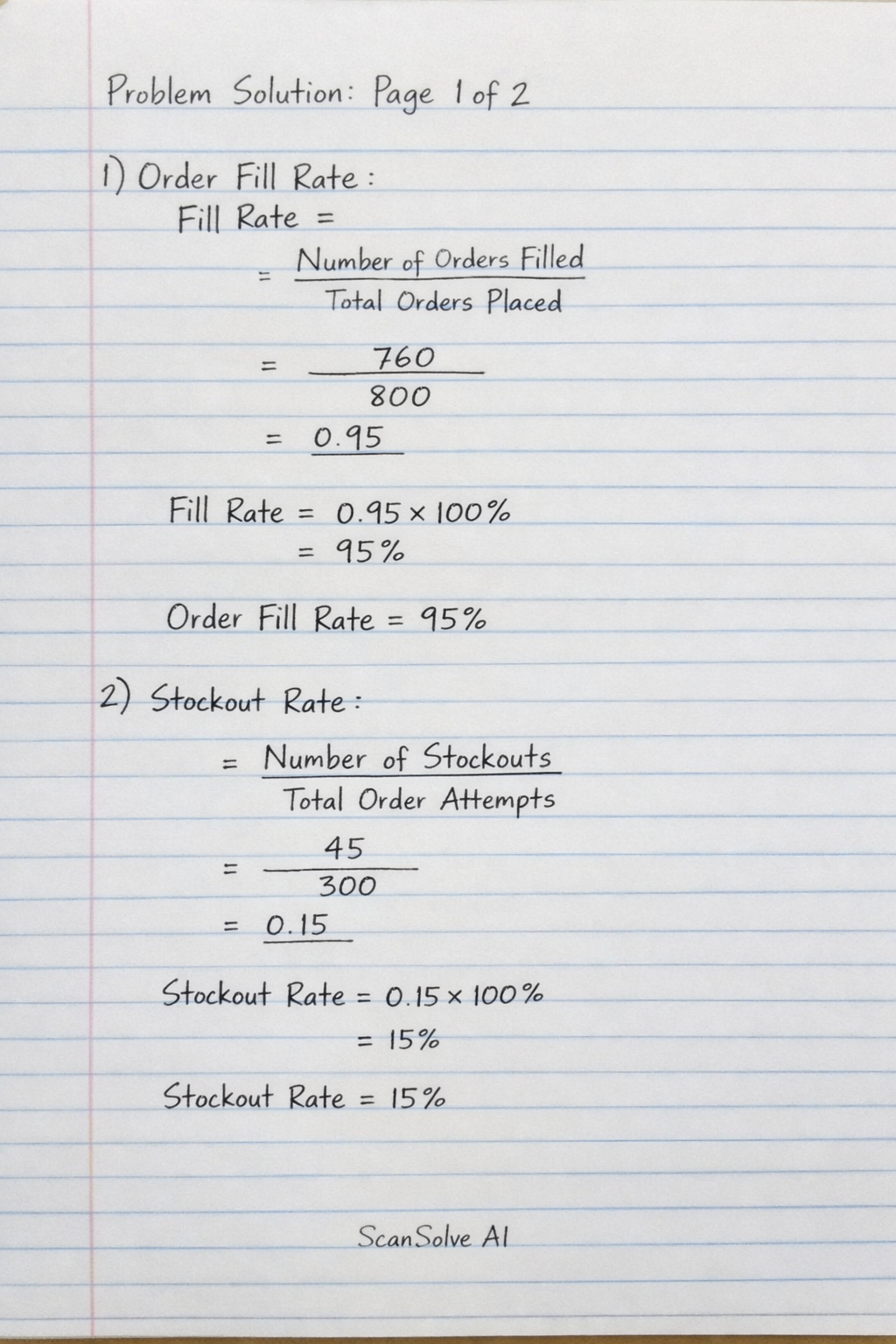
This mathematics problem involves applying core mathematical principles and formulas. Below you will find a complete step-by-step solution with detailed explanations for each step, helping you understand not just the answer but the method behind it.
ScanSolve AI Answer
Here are the explanations for each term: Order fill rate: This metric measures the percentage of customer orders that can be completely fulfilled from available stock at the time the order is placed. It indicates the ability of a company to meet customer demand immediately without any shortages or delays. A high order fill rate suggests efficient inventory management and high customer satisfaction, as customers receive their full order without waiting for backordered items. Stockout rate: This is the frequency or percentage of times that a particular item is out of stock when a customer places an order for it. It quantifies the occurrence of inventory shortages. A high stockout rate means customers are frequently unable to purchase desired items, leading to lost sales, customer dissatisfaction, and potential switching to competitors. Backorder level: This refers to the total quantity of items that customers have ordered but are currently unavailable in stock. These items will be shipped at a later date once new inventory arrives. A high backorder level indicates significant unmet demand and potential issues with inventory planning or supply chain delays, which can impact customer waiting times and satisfaction. Probability of on-time delivery: This is the statistical likelihood or percentage that a shipment or order will reach its destination by the scheduled or promised delivery date. It is a key performance indicator for logistics and supply chain efficiency, directly impacting customer trust and satisfaction. A high probability of on-time delivery signifies reliable operations and strong customer service.