Compare the take-off techniques used in the high jump (Fosbury Flop) and the long jump. Explain two differences in how each technique helps the athlete achieve better performance. (3 marks)

Physics
Compare the take-off techniques used in the high jump (Fosbury Flop) and the long jump. Explain two differences in how each technique helps the athlete achieve better performance. (3 marks)

ScanSolve AI Answer

2 steps

Here are two differences in the take-off technique for the high jump (Fosbury Flop) and the long jump, explaining how each helps achieve better performance:

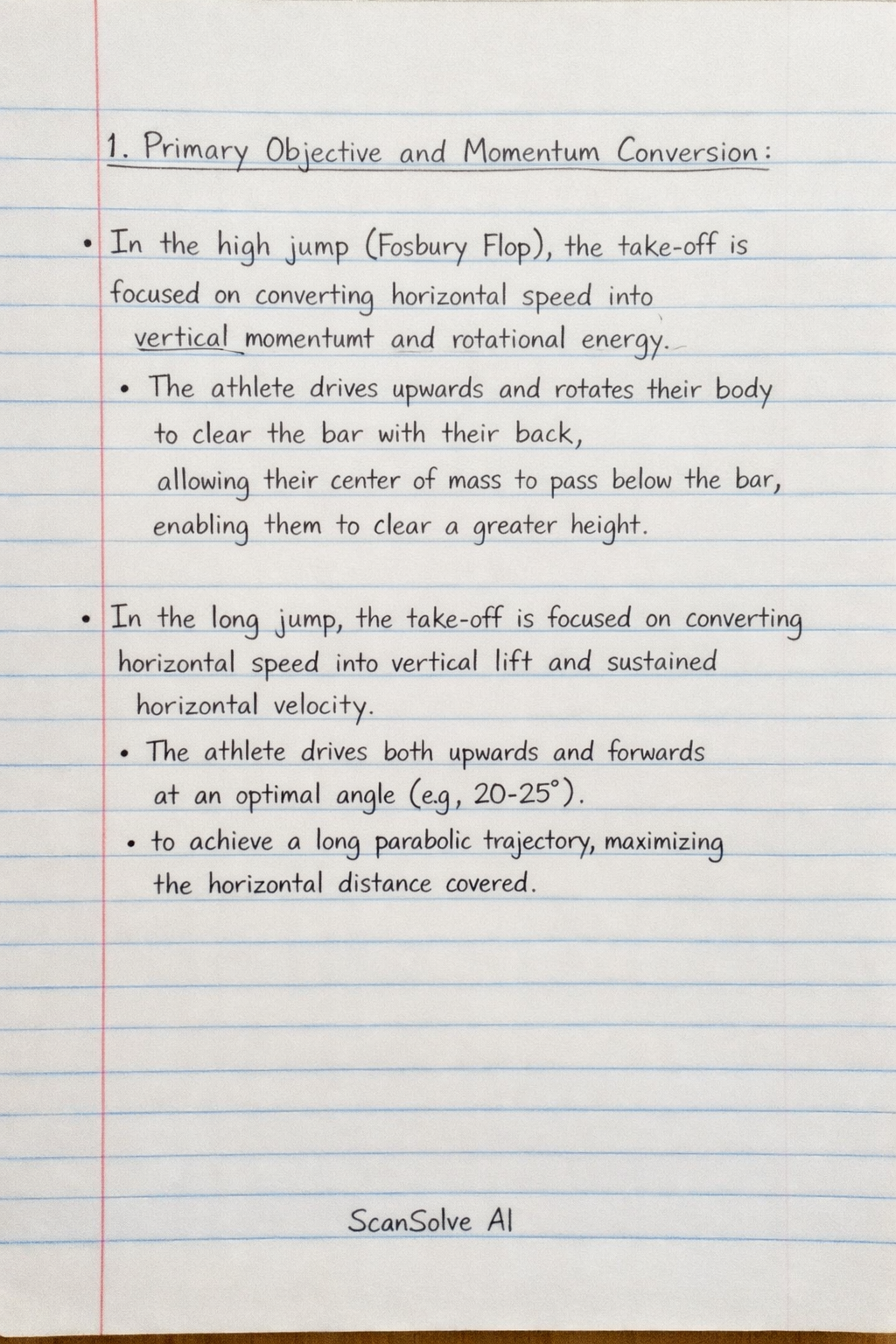
  1. Primary Objective and Momentum Conversion:

    • In the high jump (Fosbury Flop), the take-off is primarily focused on converting horizontal speed into vertical momentum and rotational energy. The athlete drives upwards and rotates their body to clear the bar with their back, which allows their center of mass to pass below the bar, enabling them to clear a greater height.
    • In the long jump, the take-off is focused on converting horizontal speed into a combination of vertical lift and sustained horizontal velocity. The athlete drives both upwards and forwards at an optimal angle (e.g., 202520-25 degrees) to achieve a long parabolic trajectory, maximizing the horizontal distance covered.
  2. Take-off Leg Action and Body Orientation:

    • In the high jump (Fosbury Flop), the take-off involves planting the outside leg and driving upwards while initiating a rotation away from the bar. The non-take-off leg swings upwards to aid lift and rotation. This rotational action helps the athlete get into the "flop" position, allowing for efficient clearance of the bar with the back.
    • In the long jump, the take-off involves a powerful, explosive extension of the take-off leg, propelling the body forward and upward from a flat-footed or heel-to-toe plant. The free leg and arms swing vigorously to generate maximum lift and maintain forward momentum. The body remains relatively aligned with the direction of travel to maximize forward projection and distance.
Was this helpful?

Need help with your own homework?

Get instant step-by-step solutions to any question. Free to start.

Ask Your Question
Handwritten step-by-step solution preview

Handwritten Step-by-Step Solution

Get this as a handwritten image on WhatsApp — like a tutor wrote it for you.

Try on WhatsApp

Still have questions?

Quick Answer

1. Primary Objective and Momentum Conversion: In the high jump (Fosbury Flop), the take-off is primarily focused on converting horizontal speed into vertical momentum and rotational energy.

Compare the take-off techniques used in the high jump (Fosbury Flop) and the long jump. Explain two differences in how each technique helps the athlete achieve better performance. (3 marks)
Physics

This physics problem tests your understanding of fundamental physical laws and their applications. The step-by-step solution below breaks down the problem using relevant equations and physical reasoning.

ScanSolve AI Answer
Here are two differences in the take-off technique for the high jump (Fosbury Flop) and the long jump, explaining how each helps achieve better performance: 1. Primary Objective and Momentum Conversion: In the high jump (Fosbury Flop), the take-off is primarily focused on converting horizontal speed into vertical momentum and rotational energy. The athlete drives upwards and rotates their body to clear the bar with their back, which allows their center of mass to pass below* the bar, enabling them to clear a greater height. In the long jump, the take-off is focused on converting horizontal speed into a combination of vertical lift and sustained horizontal velocity*. The athlete drives both upwards and forwards at an optimal angle (e.g., 20-25 degrees) to achieve a long parabolic trajectory, maximizing the horizontal distance covered. 2. Take-off Leg Action and Body Orientation: In the high jump (Fosbury Flop), the take-off involves planting the outside leg and driving upwards while initiating a rotation away from the bar. The non-take-off leg swings upwards to aid lift and rotation. This rotational action helps the athlete get into the "flop" position, allowing for efficient clearance of the bar with the back. In the long jump, the take-off involves a powerful, explosive extension of the take-off leg, propelling the body forward and upward* from a flat-footed or heel-to-toe plant. The free leg and arms swing vigorously to generate maximum lift and maintain forward momentum. The body remains relatively aligned with the direction of travel to maximize forward projection and distance.